Sony ZV-1F Vlogging Camera Review 2026: Top Tier or Trash?
You want a vlogging camera that fits your pocket, shoots crisp 4K video, and costs less than a flagship smartphone. The Sony ZV-1F promises all of that and more. But does it actually deliver in 2026, when smartphones keep getting better and new competitors flood the market every month?
This camera launched back in late 2022 as a stripped down version of the popular Sony ZV-1. It targets beginners, solo content creators, and anyone who wants better video quality than a phone without the bulk of a mirrorless setup.
It packs a 1 inch sensor, a fixed ultra wide 20mm lens, and a long list of creator friendly features into a body that weighs just 256 grams.
Key Takeaways
- The Sony ZV-1F shoots 4K video at 30fps with impressive detail from its 1 inch Exmor RS CMOS sensor. This is a significant upgrade over smartphone video, especially in low light conditions where the larger sensor captures more light.
- Its fixed 20mm ultra wide lens with an f/2.0 aperture is perfect for handheld vlogging at arm’s length. You get yourself and the background in frame without needing any accessories or attachments.
- The autofocus system uses fast contrast detection with face and eye tracking. It locks onto your face reliably and holds focus even as you move around. The Product Showcase mode is a clever addition for review style content.
- Battery life is the biggest weak point. Sony rates it at about 60 minutes of actual movie recording, which means you will need spare batteries or a power bank for longer shoots.
- At around $400 to $500, the ZV-1F remains one of the most affordable dedicated vlogging cameras in 2026. It competes directly with the Canon PowerShot V10 and the DJI Osmo Pocket 3 in this price range.
- It cannot shoot RAW photos and has no optical zoom. If photography is a priority for you, this camera has clear limitations. It is built for video first, and everything else comes second.


Sony ZV-1F Vlogging Camera Overview
The Sony ZV-1F is a compact vlogging camera built for content creators who want simplicity. Sony designed it as an entry point into dedicated camera gear. It sits below the ZV-1 II and the ZV-E10 II in Sony’s creator lineup.
This camera uses a 1 inch type Exmor RS CMOS sensor with 20.1 megapixels. That sensor size is the same one found in higher end compact cameras. It gives you noticeably better image quality than the small sensors inside smartphones, particularly in dim lighting.
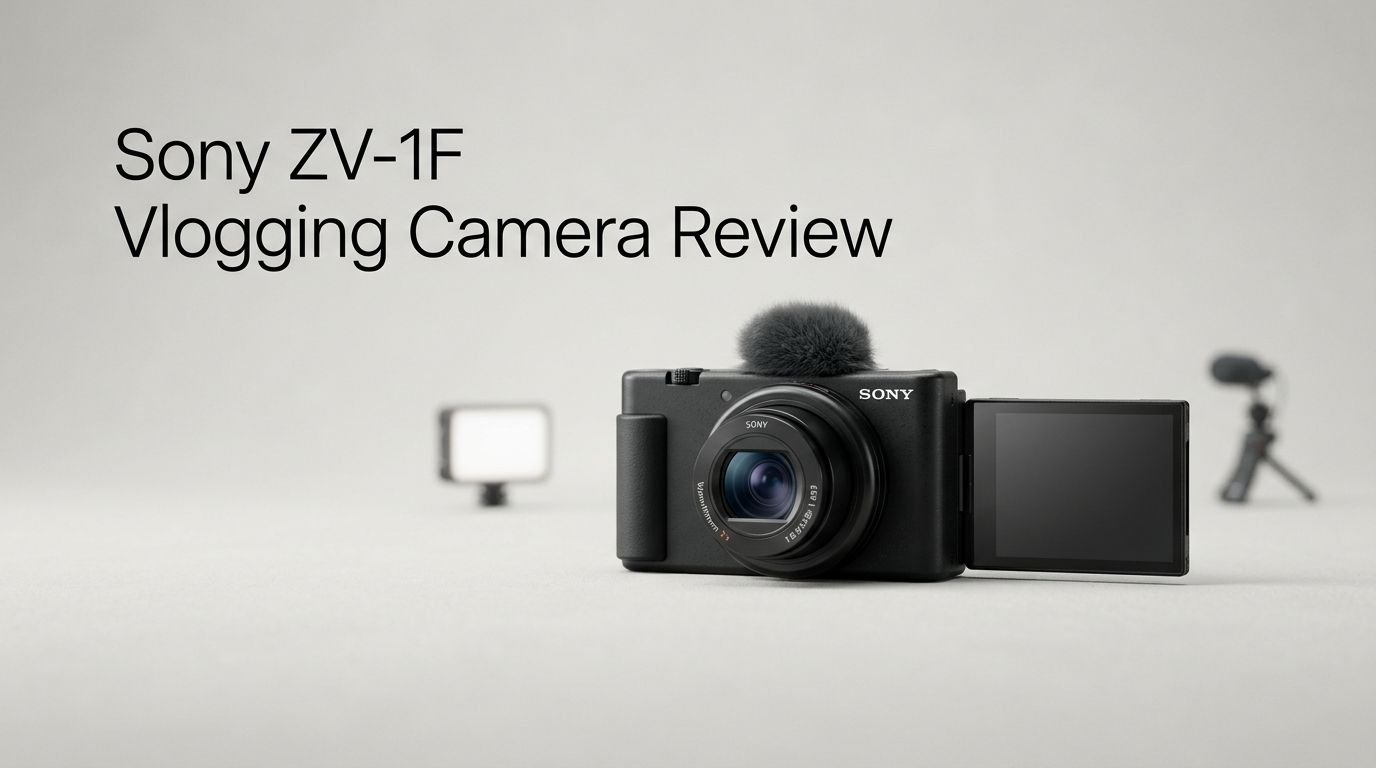
The body measures 106 x 60 x 46 mm and weighs just 256 grams with the battery and memory card. You can slip it into a jacket pocket or toss it in a small bag without thinking twice. The matte finish and textured grip make it comfortable to hold for extended filming sessions.
Sony included a 3 inch side flip LCD touchscreen. This screen faces forward when you flip it out, so you can see yourself while recording. It is responsive and bright enough for outdoor use, though it can struggle under direct sunlight.
The camera runs on the NP-BX1 battery, a small rechargeable cell that Sony uses across many of its compact cameras. You charge it via USB-C, which is convenient. The overall build quality feels solid for its price point, and the button layout stays clean and easy to learn.
4K Video Quality and Performance
The Sony ZV-1F records 4K UHD video at 30 frames per second. The footage looks sharp with good color accuracy straight out of the camera. Sony’s BIONZ X image processor handles the video encoding well, and the 1 inch sensor delivers pleasing depth of field.
You also get Full HD 1080p recording at up to 120fps for slow motion shots. This is great for adding creative flair to your vlogs. The slow motion footage looks smooth, though it does crop the frame slightly compared to standard recording.
One standout feature is S-Log shooting. This flat color profile captures a wider dynamic range, giving you more flexibility in post production. If you like color grading your videos, S-Log 3 is a powerful tool that you rarely find at this price point.
The camera also supports HLG (Hybrid Log Gamma) for HDR content. This lets you produce HDR videos that look stunning on compatible displays. The bitrate maxes out at around 100 Mbps in 4K, which is respectable for this class of camera.
Video stabilization is digital through Sony’s Active SteadyShot system. It works well for walking and light movement, but it does add a slight crop to the frame. For truly stable footage during heavy movement, you may want to pair it with a small gimbal.
The 20mm Ultra Wide Lens
The Sony ZV-1F features a fixed ZEISS Tessar T lens at 20mm equivalent*. This is wider than the 24mm lens on the original ZV-1, and that extra width makes a real difference for vlogging.
At arm’s length, the 20mm field of view captures your face, shoulders, and a generous portion of the background. You do not need a selfie stick to get a good framing for solo vlogs. Group selfies and walk and talk style content also look natural without distortion at the edges.
The lens has a maximum aperture of f/2.0, which lets plenty of light reach the sensor. This helps in low light scenarios and allows for pleasing background blur when your subject is close to the camera. The bokeh is soft and round thanks to the 7 blade circular aperture.
However, this is a fixed focal length lens with no optical zoom. You cannot zoom in closer to your subject optically. The camera offers a Clear Image Zoom function that digitally crops the frame, but this reduces resolution. If you need versatile focal lengths, an interchangeable lens camera would serve you better.
The lens coating helps reduce flare and ghosting, though you may still notice some artifacts when pointing directly at bright light sources. Overall, the optics deliver sharp results across the frame, and the wide angle perspective makes it a natural fit for self shooting.
Top 3 Alternatives for Sony ZV-1F
1. Canon PowerShot V10

2. DJI Osmo Pocket 3

3. Sony ZV-E10 II

Autofocus System and Face Tracking
The Sony ZV-1F uses a contrast detection autofocus system with 425 points covering a wide area of the frame. It locks onto subjects quickly and tracks movement with solid reliability. For vlogging, this matters a lot because you are often the only subject in the frame.
Face priority and eye AF are built into the system. The camera detects your face the moment you step in front of it and keeps focus locked on your eyes. This works well even when you tilt your head or look away briefly. It gives your videos a professional, focused look without manual adjustments.
Sony’s Product Showcase AF mode is a standout feature for review content. This mode shifts focus from your face to an object you hold up in front of the camera. It reacts quickly and smoothly, making product demos and unboxing videos look polished.
Touch tracking on the LCD screen lets you tap a subject to lock focus. This is useful when you are filming someone else or want to highlight a specific element in the scene. The response is accurate and the camera holds the tracking well.
The autofocus does slow down slightly in very low light conditions. It can also hunt briefly when shifting between subjects at vastly different distances. But for typical vlogging scenarios, the AF performance is very dependable and above what you would expect at this price.
Audio Quality and Built In Microphone
Audio quality can make or break a vlog, and the Sony ZV-1F handles this well. It features a 3 capsule directional microphone built into the top of the body. This mic array captures clear voice audio while reducing ambient noise from the sides and rear.
The directional pickup pattern focuses on sound coming from in front of the camera. Your voice comes through clearly even in moderately noisy environments like busy streets or cafes. Sony included a wind screen in the box, which is a nice touch. It reduces wind noise significantly during outdoor shooting.
You get a 3.5mm external microphone input for upgrading your audio. If you want to use a wireless lavalier mic or a shotgun microphone, you can plug it right in. This flexibility makes the ZV-1F versatile for different recording setups.
The camera also offers audio level monitoring on screen and the ability to adjust recording levels manually. This is helpful for ensuring consistent audio across different shooting environments. You can see the levels in real time and make adjustments before or during recording.
There is no headphone jack on the ZV-1F. This means you cannot monitor audio in real time through headphones while recording. For casual vlogging, this is usually fine. But if you record interviews or critical audio, the lack of a headphone port could be a limitation.
Battery Life and Charging
Battery life is the most common complaint about the Sony ZV-1F. The camera uses the NP-BX1 battery, which is a small cell originally designed for Sony’s compact camera line. Sony rates it for approximately 60 minutes of actual movie recording and about 90 minutes of continuous shooting.
In real world use, you can expect around 45 to 60 minutes of mixed recording with breaks. If you film in 4K with stabilization active, the battery drains faster. Cold weather also reduces battery performance noticeably.
The camera charges via USB-C, which is a huge convenience. You can top it up with a portable power bank between sessions. It also supports charging while recording, so you can connect a power bank and keep filming indefinitely if you are stationary.
Carrying at least one spare NP-BX1 battery is highly recommended. These batteries are affordable and widely available. Third party options work fine and cost even less. A full charge from empty takes about 65 minutes using the included USB-C cable.
Sony did not include a dedicated external charger in the box. You charge the battery inside the camera body. If you buy a separate charger, you can charge spare batteries while still using the camera. This small investment makes a big difference for longer shooting days.
Image Stabilization Performance
The Sony ZV-1F relies on electronic image stabilization called Active SteadyShot. There is no optical stabilization in the lens or sensor based stabilization in the body. The electronic system analyzes the image and corrects for shakes and vibrations digitally.
For stationary or slow walking shots, the stabilization works impressively well. Your footage looks smooth and steady. The correction is effective enough for standard vlogging situations like talking to the camera while standing or sitting.
The trade off is a visible crop on the video frame when stabilization is active. This means your already wide 20mm field of view gets slightly narrower. It is not a dramatic crop, but it is noticeable if you compare stabilized and unstabilized footage side by side.
During faster movement like jogging or climbing stairs, the electronic stabilization shows its limits. You may see jello effect or warping artifacts. For action heavy content, pairing the ZV-1F with a compact gimbal like the DJI OM series delivers much better results.
Sony’s standard SteadyShot mode offers a lighter level of stabilization with less crop. You can switch between standard and active modes depending on your shooting situation. This flexibility lets you choose between maximum stability and maximum field of view.
Connectivity and Streaming Features
The Sony ZV-1F offers Wi-Fi and Bluetooth connectivity for wireless control and file transfer. You can pair it with the Sony Imaging Edge Mobile app on your smartphone. This lets you remotely control the camera, adjust settings, and transfer photos and videos wirelessly.
USB-C connectivity handles both charging and data transfer. You can plug the camera into a computer and use it as a high quality webcam for video calls and live streams. The UVC/UAC support means it works plug and play with most video conferencing software.
The camera supports live streaming directly to platforms through a connected smartphone. You can go live on YouTube, Facebook, or other services using the camera’s superior image quality instead of your phone’s front camera. This is a huge plus for creators who stream regularly.
Bluetooth stays connected in low power mode for quick wake up and geotagging through your phone. The Wi-Fi transfer speeds are adequate for sharing photos, though transferring large 4K video files is still faster through USB-C or a card reader.
NFC is also available for quick pairing with compatible Android devices. Overall, the connectivity package covers all the essentials a modern content creator needs. The webcam function alone makes the ZV-1F a versatile tool beyond just vlogging.
Photo Capabilities and Limitations
The Sony ZV-1F captures 20.1 megapixel still photos. The images look sharp with accurate colors and good dynamic range for a compact camera. The f/2.0 lens produces nice background separation for portraits and product shots.
However, the ZV-1F has some significant photography limitations. It cannot shoot in RAW format. You are limited to JPEG output only. This means you have less flexibility for editing and recovering highlights or shadows in post production.
The fixed 20mm focal length is very wide for traditional photography. Portraits shot at this focal length can show perspective distortion, especially at close distances. The wide angle works great for landscapes and environmental shots but feels limiting for general purpose photography.
ISO performance tops out at 12800. Images stay clean up to about ISO 1600, and noise becomes noticeable above ISO 3200. The 1 inch sensor handles low light better than most smartphones, but it cannot compete with APS-C or full frame cameras in this area.
Burst shooting speed reaches about 5.3 frames per second. This is adequate for casual photography but not fast enough for action or sports. The camera also lacks a built in flash, so you need external lighting for indoor still photography. If photography is your main focus, the ZV-1F is not the right choice. It is a video first camera with photo capabilities as a secondary feature.
Screen and User Interface
The Sony ZV-1F has a 3 inch side articulating LCD touchscreen with approximately 921,600 dots. The screen flips out to the side and rotates to face forward, which is essential for solo vlogging. You can see your framing and expressions in real time.
The touchscreen is responsive and easy to use. You can tap to set focus, swipe through menus, and pinch to zoom on playback images. Sony kept the interface clean and straightforward, which helps beginners get started quickly.
The camera features a dedicated recording indicator around the screen. A red frame appears on the display when you are recording. This visual cue prevents the common mistake of thinking you are recording when you are not, or vice versa.
Sony’s Background Defocus button sits prominently on the top of the camera. One press toggles between a blurred background and a sharp background. This makes it easy to switch looks mid shoot without diving into aperture settings.
The menu system follows Sony’s standard layout, which can feel overwhelming at first glance. However, Sony simplified many options for the ZV-1F compared to its more advanced cameras. Beginners will find the most important settings accessible through the function menu and touch interface.
Who Should Buy the Sony ZV-1F
The Sony ZV-1F is ideal for first time vloggers and beginner content creators. If you are starting a YouTube channel, creating TikTok content, or building a presence on Instagram, this camera gives you a meaningful upgrade over smartphone video.
Solo vloggers benefit the most from the 20mm wide angle lens and excellent face tracking autofocus. The camera practically films itself once you point it in your direction. The flip screen, one touch bokeh, and Product Showcase mode are all features built for one person content creation.
Travelers looking for a lightweight camera will appreciate the compact size and simple operation. You can pack the ZV-1F without adding significant weight to your bag. The 4K video and large sensor deliver travel footage that looks noticeably better than phone video.
Students and budget conscious creators also find great value here. The ZV-1F offers professional looking video output at a price that does not require a major financial commitment. Compared to an interchangeable lens setup with body and lenses, it saves you hundreds of dollars.
However, this camera is not the best choice for professional videographers, hybrid shooters who need strong photo capabilities, or creators who require optical zoom. If you need RAW photo files, longer battery life, or interchangeable lenses, look at the Sony ZV-E10 II or similar options.
Sony ZV-1F vs Smartphone Cameras in 2026
Smartphones in 2026 have impressive cameras. So why would you buy the ZV-1F? The answer lies in sensor size and dedicated design. The ZV-1F’s 1 inch sensor is physically much larger than any smartphone sensor. This translates to better low light performance, more natural depth of field, and cleaner image quality.
The f/2.0 lens on the ZV-1F produces real optical background blur. Smartphone portrait modes use software to simulate this effect, and the results often look artificial around edges. The ZV-1F’s bokeh is naturally smooth and accurate.
The directional microphone system on the ZV-1F captures much better audio than any smartphone. Built in phone microphones pick up noise from all directions. The ZV-1F’s 3 capsule array focuses on the sound in front of the camera, producing cleaner voice recordings.
The flip screen and Product Showcase AF mode give you practical advantages that no smartphone can match exactly. Smartphones rely on front facing cameras that are usually lower quality than the main cameras. The ZV-1F uses its only camera and lens for both self shooting and outward shooting.
Where smartphones win is convenience and connectivity. You always have your phone with you. Editing, uploading, and sharing content is faster on a phone. The ZV-1F requires transferring files before editing and publishing. For creators who prioritize quality over convenience, the ZV-1F remains a strong choice in 2026.
Accessories You Should Consider
A few key accessories make the Sony ZV-1F experience much better. The Sony GP-VPT2BT Bluetooth shooting grip is the most popular companion. It serves as a mini tripod and remote controlled grip. You can start and stop recording, zoom, and adjust settings without touching the camera.
Spare NP-BX1 batteries are essential. Buy at least two extras. They are small, affordable, and keep you filming through a full day. A dedicated external charger lets you charge batteries separately while using the camera.
A quality SD card matters for 4K recording. Choose a UHS-I card with at least 80 MB/s write speed. A 128GB card gives you plenty of storage for long recording sessions without worrying about running out of space.
An external microphone like the Rode VideoMicro improves audio quality further. It plugs directly into the 3.5mm mic input and adds clearer, more focused sound pickup. For interview style content, a wireless lavalier mic system is even better.
A small LED panel like the Ulanzi VL49 provides portable fill light for indoor shoots. A compact carrying case protects the camera during travel. Sony also sells a filter adapter kit that lets you attach 40.5mm filters for ND or polarizing effects.
Final Verdict on the Sony ZV-1F in 2026
The Sony ZV-1F remains a smart purchase for beginner vloggers in 2026. It delivers 4K video quality, excellent autofocus, solid audio, and a compact form factor at a price that undercuts most competitors. The 20mm wide angle lens and flip screen are built for self shooting, and Sony’s creator focused features make it easy to produce polished content.
The limitations are real but manageable. Short battery life, no RAW photo support, no optical zoom, and no headphone jack are valid drawbacks. But these compromises keep the price low and the body small. For its intended purpose of simple, high quality vlogging, the ZV-1F hits the mark.
If your budget allows for more, the Sony ZV-E10 II offers interchangeable lenses, a larger APS-C sensor, and better photo capabilities. The DJI Osmo Pocket 3 provides built in mechanical stabilization. The Canon PowerShot V10 offers an even smaller form factor with a built in stand.
But if you want a dedicated vlogging camera that delivers great video, fits in your pocket, and costs under $500, the Sony ZV-1F is hard to beat. It has proven itself over the years, and it continues to earn its spot as one of the best entry level vlogging cameras available today.
Frequently Asked Questions
Is the Sony ZV-1F worth buying in 2026?
Yes. The Sony ZV-1F still delivers excellent 4K video quality at a competitive price. Its 1 inch sensor, wide angle lens, and creator features remain relevant. Smartphone cameras have improved, but the ZV-1F still offers better low light performance, natural bokeh, and superior audio. For beginner vloggers and content creators on a budget, it provides strong value.
Can the Sony ZV-1F take good photos?
The ZV-1F captures decent 20.1 megapixel JPEG photos. The images look sharp and colorful for social media use. However, it cannot shoot RAW files, and the fixed 20mm wide angle lens is not ideal for portraits. It works fine for quick snapshots and behind the scenes content, but it is primarily a video camera.
How long does the Sony ZV-1F battery last?
Sony rates the battery at approximately 60 minutes of actual movie recording and about 90 minutes of continuous shooting. In practice, expect around 45 to 60 minutes of mixed use. Carrying spare NP-BX1 batteries or a power bank is highly recommended for extended shooting sessions.
Does the Sony ZV-1F have image stabilization?
Yes. The camera includes electronic image stabilization called Active SteadyShot. It works well for stationary filming and slow walking. It does crop the frame slightly. For fast movement or action shots, an external gimbal will produce smoother results.
Can I use the Sony ZV-1F for live streaming?
Absolutely. The ZV-1F works as a USB webcam through its USB-C connection. It supports UVC/UAC, so it works plug and play with Zoom, OBS, and other streaming software. You can also stream directly through the Sony Imaging Edge app on your smartphone.
What memory card does the Sony ZV-1F use?
The camera uses SD, SDHC, or SDXC memory cards. For 4K video recording, use a UHS-I card with a minimum write speed of 80 MB/s. A 64GB or 128GB card provides enough storage for most vlogging sessions without frequent card swaps.