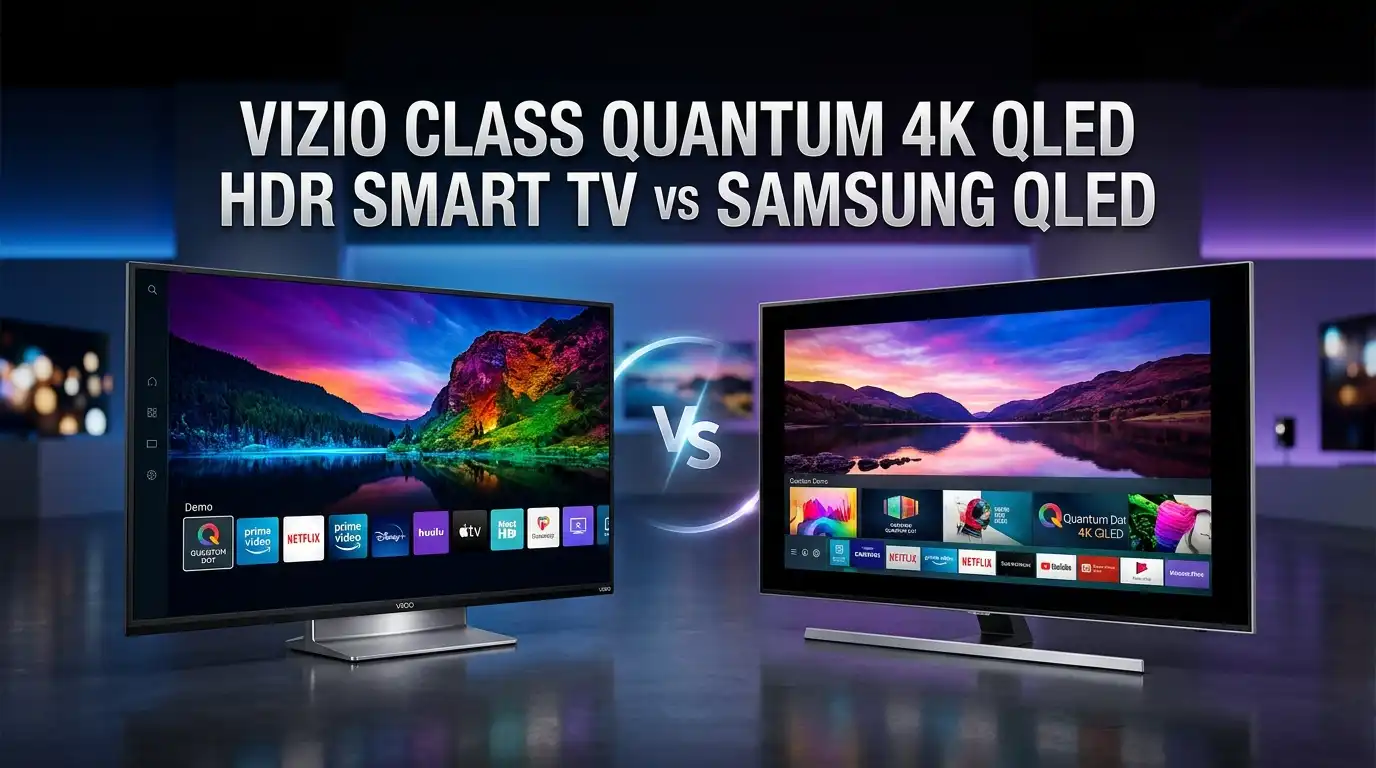
Vizio Class Quantum 4K QLED HDR Smart TV vs Samsung QLED in 2026
When you are shopping for a premium 4K television, the choice between Vizio Class Quantum 4K QLED HDR and Samsung QLED can feel overwhelming. Both brands deliver stunning picture quality and smart features.
However, they use different technologies to achieve their visual results. Understanding the differences between these two television options helps you make the right choice for your home.
This comprehensive guide compares every important aspect of these two television models so you can find the perfect match for your viewing preferences and budget.
Key Takeaways: At a Glance
- Vizio Quantum 4K QLED provides excellent local dimming zones with quantum dot technology for bright and colorful images. Samsung Neo QLED offers quantum mini LED backlighting with AI vision processing for superior brightness control and advanced upscaling features.
- Vizio models typically cost less money than comparable Samsung options, making them ideal for budget-conscious buyers. Samsung’s 2026 lineup includes advanced AI processors that enhance picture quality automatically for all content types.
- Both televisions support HDR standards including Dolby Vision and HDR10 plus, delivering superior contrast and color depth compared to standard displays.
- The gaming features on both models include variable refresh rates and low input lag for smooth performance. Vizio offers better value for everyday viewing while Samsung excels in advanced features and premium performance.
Understanding QLED Technology in Modern TVs
Quantum dot technology is a special type of backlight system that improves color accuracy and brightness on television displays. QLED stands for Quantum Dot LED, which means the television uses small semiconductor particles to enhance the light output. These quantum dots produce specific colors when exposed to light, resulting in a wider color range.
Both Vizio and Samsung use quantum dot technology, but they apply it differently in their television designs. Vizio’s Quantum series uses a traditional LED backlight with quantum dot enhancement. Samsung’s Neo QLED uses mini LED backlighting combined with quantum dots for even more precise control. The key difference lies in the backlighting approach rather than the color technology itself.
Vizio Class Quantum 4K QLED HDR Smart TV Features

The Vizio Class Quantum series delivers impressive picture quality at an accessible price point. These televisions feature multiple local dimming zones that control brightness across different areas of the screen. The quantum dot technology produces vibrant colors with excellent brightness levels. Vizio includes Dolby Vision, HDR10 plus, and standard HDR10 support on all Quantum models.
The television also supports advanced gaming features including 120 frames per second at 1080 pixel resolution for PC and console gaming. WiFi 6 connectivity ensures fast streaming without buffering issues. Voice control through major assistants like Alexa works seamlessly with the Vizio operating system.
Pros & Cons of Vizio Quantum QLED
Advantages: Vizio Quantum QLED televisions offer multiple local dimming zones for improved contrast control. The price is significantly lower than Samsung premium models. Quantum dot color produces bright, lifelike images for movies and shows.
Gaming performance includes 120fps at 1080p and variable refresh rate support. The television accepts voice commands and integrates with smart home systems. Thin bezels provide a modern, attractive appearance. Wide viewing angles allow comfortable seating positions across the room.
Disadvantages: The number of local dimming zones is less than premium Samsung models. Peak brightness is moderate compared to Samsung’s latest offerings. The television lacks quantum mini LED technology which Samsung uses.
Some users report occasional software updates cause temporary issues. The smart platform offers fewer exclusive features than Samsung’s ecosystem. Gaming features do not include 144Hz refresh rate support. The backlight uniformity can show blooming in dark scenes with bright objects.
Samsung QLED Television Technology and Design

Samsung’s 2026 Neo QLED lineup represents the latest evolution in television technology. These models feature quantum mini LED backlighting which provides thousands of independent light zones. The NQ4 AI processor analyzes every frame and adjusts picture quality in real time.
Samsung Vision AI uses neural networks to enhance content to near 4K quality even when watching lower resolution sources. Motion Xcelerator technology achieves 144Hz refresh rates for ultra smooth motion in gaming and sports.
Object tracking sound adjusts audio based on what appears on screen. The television supports all major HDR formats plus Samsung’s proprietary Neo Quantum HDR. The Tizen operating system offers seamless integration with Samsung’s smart home ecosystem.
Pros & Cons of Samsung Neo QLED
Advantages: Quantum mini LED backlighting provides thousands of independent dimming zones for exceptional contrast. AI processors automatically optimize picture quality for any content type. 144Hz refresh rate support makes gaming exceptionally smooth and responsive.
Samsung Vision AI upscales lower resolution content to near 4K quality. Object tracking sound feature enhances immersion during movies and sports. Peak brightness exceeds Vizio models by a significant margin.
The Tizen platform includes voice assistant and streaming app integration. Build quality and design language feel premium throughout the television. The television includes advanced gaming features like AMD FreeSync and HDMI 2.1.
Disadvantages: Samsung Neo QLED models cost significantly more than comparable Vizio options. The learning curve for advanced features takes time for new users. The Tizen interface can feel cluttered with too many menu options.
Some streaming apps perform slower on Samsung’s platform compared to competitors. The television requires more power consumption than Vizio models. Software updates occasionally cause temporary performance issues. The viewing angles are slightly narrower than Vizio’s design. Some users prefer Google TV or Roku interfaces over Tizen.
Picture Quality Comparison Between the Two Models
Picture quality determines how enjoyable your viewing experience becomes. Both Vizio Quantum and Samsung Neo QLED produce excellent images with vibrant colors and strong contrast. Vizio’s quantum dot technology delivers bright colors that pop on screen.
The local dimming zones help create deeper blacks and reduce blooming around bright objects. Samsung’s quantum mini LED system provides even more precise control with thousands of dimming zones instead of hundreds.
The result is superior contrast with blacker blacks and more detailed shadow areas. Samsung’s AI upscaling makes older content look nearly as good as new 4K broadcasts. Vizio provides solid picture quality for the price while Samsung delivers premium visual performance.
HDR and Color Performance Analysis
HDR stands for high dynamic range, which means the television displays a much wider range of brightness and color levels. Both Vizio and Samsung support Dolby Vision, which is the most advanced HDR format available.
HDR10 plus support on Vizio ensures compatibility with all major streaming services. Samsung’s Neo Quantum HDR is a proprietary format that works alongside standard HDR specifications. The color volume, which measures brightness at full saturation, is higher on Samsung models.
This means red, green, and blue colors appear brighter and more saturated on Samsung televisions. Vizio maintains excellent color accuracy with slightly less peak brightness in bright scenes. Both televisions deliver outstanding HDR performance that surpasses older television models by a large margin.
Gaming Performance and Features Comparison
Gaming performance matters if you play video games on console or PC. Both televisions support variable refresh rates through AMD FreeSync technology. Input lag is the delay between your controller input and the action on screen, which should be below 10 milliseconds for competitive gaming.
Vizio achieves 120 frames per second at 1080p resolution, which suits most gaming scenarios. Samsung achieves 144 frames per second, providing ultra smooth performance for fast paced games.
The higher refresh rate on Samsung creates a competitive advantage in first person shooter games. Both models support 4K resolution at 60Hz for standard console gaming. For casual gamers, Vizio performs excellently, while serious gamers benefit from Samsung’s 144Hz capability.
Smart TV Features and Operating System
The operating system controls how you access streaming apps and navigate menus. Vizio uses its own proprietary SmartCast platform which is simple and straightforward. Samsung uses Tizen, which offers more features but requires more learning time.
Both systems include Netflix, Disney Plus, Amazon Prime Video, and other major streaming services. Vizio’s interface loads apps quickly and responds to voice commands instantly. Samsung’s Tizen platform includes gaming streaming apps and offers exclusive partnership features.
The Google Assistant works well on both platforms for smart home control. Alexa integration is available on Vizio through the voice remote. Vizio’s operating system is easier for casual users while Samsung’s offers more advanced features for tech savvy customers.
Sound Quality and Audio Performance
Sound quality affects your viewing experience as much as picture quality does. Vizio includes basic stereo speakers that deliver adequate sound for most shows. Samsung includes object tracking sound which moves audio effects around the screen to match on screen action.
This creates a more immersive experience during action scenes and sports broadcasts. Both televisions support Dolby Atmos, which is a premium surround sound format.
Connecting external soundbars dramatically improves audio on both models. Vizio provides basic sound quality suitable for normal viewing while Samsung delivers more dynamic and immersive audio experiences.
Pricing and Value Proposition
Price is often the deciding factor when choosing between two television options. Vizio Quantum 4K QLED televisions typically cost between 400 and 800 dollars depending on screen size. The 55 inch model costs around 500 dollars while the 75 inch costs around 800 dollars.
Samsung Neo QLED televisions start at around 1200 dollars for 55 inches and go up to 3000 dollars for larger sizes. The price difference reflects Samsung’s advanced quantum mini LED technology and AI processors.
Vizio offers exceptional value for the price with solid picture quality and reliable performance. Samsung justifies the higher price through superior contrast, brightness, and advanced features. For budget conscious buyers, Vizio delivers excellent performance at half the cost of Samsung models.
Connectivity Options and Ports
Connectivity determines what devices you can connect to your television. Both models include multiple HDMI ports for connecting gaming consoles, media players, and other devices. Samsung includes HDMI 2.1 ports which support higher bandwidth and faster data transfer.
Vizio includes HDMI 2.0 ports which are sufficient for most users but slightly slower. Both televisions have built in WiFi 6 for fast streaming without wired connections. Optical audio outputs allow connection to soundbars and home theater systems.
USB ports enable connection of external storage devices and media players. Ethernet ports provide wired internet connection for more stable streaming. Samsung’s HDMI 2.1 ports are beneficial for next generation gaming consoles and high resolution gaming PCs.
Build Quality and Design Aesthetics
Build quality determines how long your television lasts and how good it looks in your room. Vizio uses a combination of plastic and metal components in its design. The overall build feels solid and reliable without feeling premium.
The stand is sturdy and supports the television weight securely. Samsung uses higher quality materials with more aluminum components throughout. The design language feels more premium with thinner bezels and sleeker profiles.
Both televisions have minimal bezels on three sides, which looks modern and elegant. Wall mounting is straightforward on both models with standard VESA compatible mounting brackets. Vizio feels like a solid value television while Samsung feels more premium and refined in design.
Warranty and Customer Support Services
Warranty coverage protects your investment if something goes wrong with the television. Vizio provides a standard one year limited warranty on most models. Extended warranty options are available for additional cost.
Customer support through Vizio is responsive and knowledgeable about their products. Samsung provides a standard one year limited warranty as well. Extended warranties up to three years are available from Samsung.
Samsung customer support is widely available through phone, email, and online chat. Both companies honor their warranties without excessive hassle or delays. Both television brands offer comparable warranty protection and support services.
Making Your Final Decision
Choosing between Vizio and Samsung depends on your specific needs and budget. If you want excellent picture quality at the best price, Vizio Quantum QLED is the smart choice.
If you demand the absolute best performance and features, Samsung Neo QLED is worth the premium price. Consider your main use case, whether that is watching movies, playing games, or streaming shows.
Think about how long you plan to keep the television, as Samsung may last longer with premium components. Evaluate your room lighting situation, as Samsung’s higher brightness helps in bright rooms. Make your decision based on how much you watch television and what picture quality matters most to you.
Frequently Asked Questions
What is the main difference between QLED and Mini LED backlighting?
QLED televisions use quantum dots with traditional LED backlighting. Mini LED televisions use thousands of tiny LED lights as the backlight. Mini LED provides more precise brightness control with independent dimming zones. QLED provides good performance at a lower price point. Both technologies produce excellent picture quality for different budgets.
Can I use a soundbar with either television model?
Yes, both Vizio and Samsung televisions work perfectly with external soundbars. They include optical audio outputs for connecting soundbars. You can also use wireless Bluetooth connections on many soundbar models. The television will output audio to the soundbar while muting its internal speakers.
Is 144Hz refresh rate really necessary for gaming?
A 144Hz refresh rate improves gaming smoothness in fast paced games. For casual gaming and most console games, 120Hz is completely sufficient. Serious gamers who play competitive first person shooters benefit from 144Hz. Most players cannot perceive the difference between 120Hz and 144Hz. Your gaming experience depends more on your internet connection than refresh rate.
Which television is better for sports viewing?
Both televisions provide excellent sports viewing experiences. Samsung’s object tracking sound creates more immersion during sports broadcasts. The 144Hz refresh rate on Samsung makes fast motion like soccer appear smoother. Vizio provides solid sports performance with good motion handling. Your cable or streaming service quality matters more than the television for sports.
Do both televisions include apps for all major streaming services?
Yes, both Vizio and Samsung include Netflix, Disney Plus, and Amazon Prime Video. Most other major streaming services are also available on both platforms. You can download additional apps from each platform’s app store. Some exclusive apps may only be available on one platform or the other.
What is the lifespan of these televisions?
Both Vizio and Samsung televisions typically last between five and ten years. Proper care and maintenance extend the lifespan significantly. Keeping the television in a cool environment prevents overheating. Avoiding extreme brightness settings reduces component wear over time. Most televisions become outdated before they stop working.