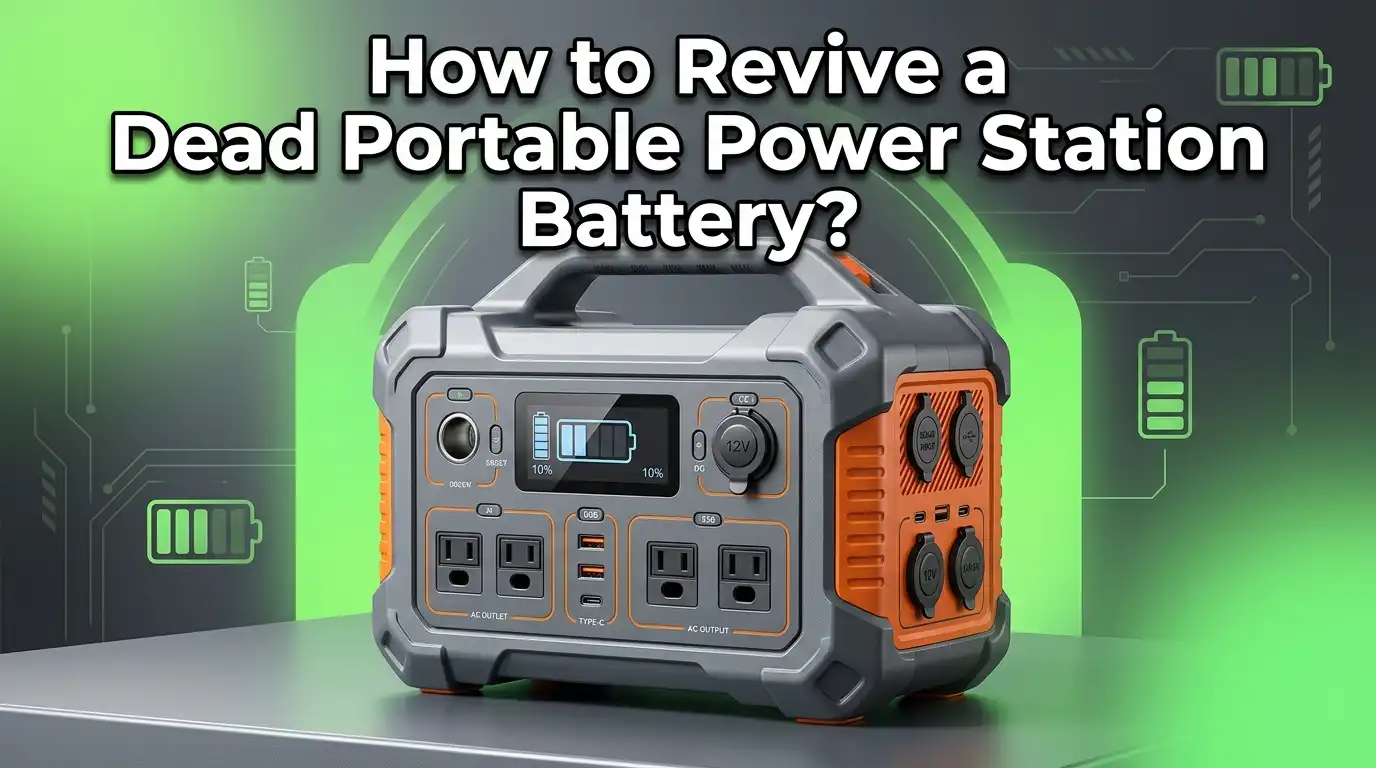
How to Revive a Dead Portable Power Station Battery?
Your portable power station sat unused in the garage for months. Now you press the power button and nothing happens. The screen stays dark.
The charger light blinks oddly or refuses to come on at all. Before you toss it in the recycling bin, take a deep breath. A “dead” power station is often just a sleeping one.
Many lithium battery packs slip into a protective lockout state after deep discharge. The cells inside may still hold real value.
In a Nutshell:
- Most “dead” power stations are not truly dead. The Battery Management System, also called the BMS, has shut the pack off to protect the cells from damage. A simple reset often brings it back.
- Deep discharge is the top cause of failure. Lithium cells drop below their safe voltage floor when stored too long without charging. The BMS then refuses to accept current.
- Slow trickle charging works better than fast charging. Pushing high current into a deeply drained pack can cause heat, swelling, or even fire. Low and slow is the safer path.
- Safety always comes first. Never charge a swollen, leaking, or hot battery. Work in a ventilated area on a fireproof surface, and keep a Class D extinguisher nearby.
- Some batteries cannot be saved. If cells have been at zero volts for many months, copper shunts can form inside. Recharging these is dangerous and not worth the risk.
- Prevention beats recovery. Storing your unit at around fifty to sixty percent charge and topping it up every three months stops most failures before they start.
Understand Why Your Power Station Stopped Working
Before you try any fix, you need to know what failed. Portable power stations use either lithium ion or LiFePO4 cells. Both types have a BMS that watches voltage, current, and temperature. When any reading goes outside safe limits, the BMS cuts power.
The most common reason is over discharge. You ran the unit flat, then left it for weeks. Self discharge then pulled the voltage even lower. The BMS locked the output to protect the cells. Other causes include a failed charger brick, a blown internal fuse, a stuck relay, or firmware that froze during an update.
Knowing the cause changes the fix. A locked BMS needs a reset or a careful jump charge. A bad charger needs replacement. A swollen pack needs disposal, not repair. Look at your unit, listen for clicks, and check the screen for error codes before you do anything else.
Inspect the Unit for Physical Damage First
Safety checks come before any repair attempt. Place the power station on a hard, non flammable surface like concrete or a metal workbench. Look closely at the case. Check for cracks, bulges, melted plastic, or strange smells. A sweet chemical odor often means electrolyte leakage.
Press gently on the side panels. The case should feel firm. If it feels soft, spongy, or puffed out, stop immediately. A swollen battery is a fire risk and cannot be safely revived. Bag it and take it to a hazardous waste center.
Also feel the unit for warmth. A dead pack should sit at room temperature. If it feels warm without being plugged in, internal cells may be shorting. Do not charge a warm battery. Move it outdoors, away from anything flammable, and let it cool for at least an hour before further inspection.
Try the Simple Power Reset Method
Many power stations have a built in reset that fixes minor BMS lockouts. This is the easiest fix, and you should always try it first. No tools required.
Start by unplugging every cable. Remove the wall charger, the solar input, and every device drawing power. Press and hold the main power button for thirty seconds. Some brands need a full sixty seconds. This drains residual capacitor charge and clears the controller memory.
Next, look for a small reset pinhole on the side or back of the unit. Use a paperclip to press it for ten seconds. Plug the wall charger back in and watch the screen.
Pros: Free, fast, and risk free. Works on roughly half of all locked units.
Cons: Will not help if the cells are deeply discharged. Will not fix hardware faults.
If the screen lights up and shows a charging icon, you are done. Let it charge fully before testing loads.
Use a Different Charger and Outlet
A surprising number of “dead” power stations are actually victims of a failed charger brick or a bad wall outlet. Charger bricks contain capacitors and transformers that wear out. They can fail silently, with no visible damage.
Try a known good outlet first. Plug a lamp into the same socket to confirm it has power. Then try a different charger if you have one rated for your unit. Match the voltage and amperage exactly. The wrong charger can damage the BMS or the cells.
Some power stations accept solar input as a backup charging source. A small panel in direct sunlight can sometimes wake a unit when the wall charger fails. Use a multimeter to check the charger’s output voltage. It should match the rating printed on the label, within five percent.
Pros: Quick to test, and rules out the cheapest failure point.
Cons: Replacement chargers can be hard to find for older models, and using the wrong one risks more damage.
Recover from Deep Discharge with a Slow Trickle Charge
This is the most effective method for waking truly drained batteries, but it carries some risk. Only attempt this if you are comfortable with basic electrical work. Read every step before starting.
Many BMS units refuse to accept charge when cell voltage drops below a safety threshold, often around 2.5 volts per cell for lithium ion or 2.0 volts for LiFePO4. A trickle charger pushes a tiny current into the pack, slowly lifting the voltage above the BMS cutoff. Once the cells cross that line, the BMS unlocks and normal charging works again.
You need a benchtop power supply with adjustable voltage and current limits. Set the voltage to match the pack’s nominal level. Set the current limit to one or two percent of the pack’s amp hour rating. Connect to the charging port, not directly to cells. Watch for thirty to sixty minutes.
Pros: Recovers many packs that seem completely dead.
Cons: Requires equipment most people do not own. Mistakes can cause fires.
Reset the Battery Management System Properly
The BMS is the brain of your power station. When it enters protection mode, you must wake it correctly. Each brand uses a slightly different method, so check your manual first.
For most units, the basic process works like this. Disconnect every load and every charger. Wait ten minutes for internal capacitors to discharge. Plug the wall charger in before pressing the power button. This order matters because the BMS often needs to see incoming voltage to unlock its output.
If the screen flashes briefly then dies, that is a good sign. The BMS is responding but cannot find enough cell voltage. Leave the charger connected for two to four hours without touching anything. Many units perform a slow precharge silently during this time.
Pros: Uses only the original charger and follows manufacturer logic.
Cons: Can take hours with no visible feedback, and patience is required.
Try the Cold Storage Trick with Caution
You may have read online that placing a dead battery in the freezer can revive it. This is mostly a myth, and it can be dangerous. The trick comes from old NiCad battery lore and does not transfer well to lithium chemistry.
Cold temperatures slow chemical reactions inside cells. In rare cases, this can briefly raise the apparent voltage of a marginal cell long enough to trick the charger into starting. However, lithium cells should never be charged while cold. Charging below freezing causes lithium plating, which permanently damages the cell and creates fire risk.
If you want to try it, seal the unit in a zip top bag to keep moisture out, freeze for no more than four hours, then let it warm to room temperature for at least six hours before any charging attempt. Honestly, the trickle method works better and is safer.
Pros: Costs nothing, and occasionally surprises you.
Cons: Often does nothing, and risks moisture damage and lithium plating.
Open the Unit Only as a Last Resort
If nothing else works, opening the case lets you check internal fuses, balance leads, and individual cell voltages. This step voids your warranty and carries real shock risk. Many power stations store hundreds of watt hours, enough to cause serious burns.
Before you open anything, search for your model’s teardown video. Knowing what is inside makes the job much safer. Wear insulated gloves and use tools with rubber handles. Discharge any large capacitors with a resistor before touching exposed terminals.
Look for a small inline fuse near the main positive cable. A blown fuse is a five dollar fix. Check each cell group with a multimeter. Healthy lithium ion groups read about 3.7 volts. LiFePO4 groups read about 3.2 volts. A group reading below 2.0 volts is likely damaged and unsafe to revive.
Pros: Fixes problems no external method can reach.
Cons: Voids warranty, risks injury, and may make the unit beyond saving.
Know When to Replace Instead of Revive
Some batteries simply cannot be saved. Trying to force a damaged pack back to life puts you and your home in danger. Learn to recognize the warning signs and walk away when needed.
Stop all recovery attempts if you see swelling, smell anything sweet or chemical, feel heat coming from a disconnected unit, or measure cell voltages below 1.5 volts. These symptoms point to internal damage that cannot be reversed safely. Copper shunts may have formed across the separator, ready to short the cell when current flows.
Replacement is also smarter when the unit is more than five years old. Lithium cells lose capacity over time even with perfect care. A revived old pack may run for ten minutes before dying again. Compare the cost of a replacement battery, often available from the manufacturer, against a new unit. Sometimes a fresh power station gives you better value and full warranty coverage.
Prevent Future Battery Death with Smart Storage
The best fix is the one you never need. Most dead power stations are killed by poor storage habits, not manufacturing defects. A few simple rules keep your unit healthy for years.
Store the battery at fifty to sixty percent charge, never full and never empty. A full pack stresses the cells and accelerates aging. An empty pack invites deep discharge lockout. Top up the charge every three months if you are not using the unit. Set a calendar reminder so you do not forget.
Keep storage temperatures between 50 and 77 degrees Fahrenheit, or 10 and 25 degrees Celsius. Garages and car trunks see wild swings that shorten cell life. A closet inside your home is ideal. Avoid leaving devices plugged in to drain the unit while in storage. Even small parasitic loads add up over weeks.
Maintain the Battery for Long Term Performance
Beyond storage, regular use habits affect how long your power station lasts. Treat it well, and it can serve you for a decade or more.
Avoid running the unit completely flat during normal use. Stopping at ten or twenty percent remaining puts far less stress on the cells. Charge in moderate temperatures, not in direct sun or freezing weather. Many units charge faster in summer but degrade more quickly when warm during the process.
Update the firmware when the manufacturer releases new versions. Updates often improve BMS behavior, charge curves, and safety thresholds. Run a full charge and discharge cycle every two to three months to keep the BMS calibration accurate. This stops the fuel gauge from drifting and reading wrong percentages over time.
Frequently Asked Questions
How long does it take to revive a deeply discharged power station?
Recovery time depends on how low the cells dropped. A simple BMS reset works in minutes. A trickle charge from very low voltage can take four to twelve hours of slow current before normal charging resumes. Plan to leave the unit alone overnight in a safe spot.
Is it safe to charge a power station that has been dead for a year?
Maybe, but check it carefully first. Inspect for swelling, leaks, or odors before plugging anything in. If the case looks normal and the unit feels cool, try a normal charger first. Stop immediately if it gets warm or makes hissing sounds.
Can I use a car battery to jump start my power station?
No. Car batteries deliver far too much current and the wrong voltage profile. This can destroy the BMS, melt internal wiring, or start a fire. Only use a regulated bench power supply or the original charger for any recovery attempt.
Why does my power station turn on but shut off right away?
This usually means the BMS sees critically low cell voltage and protects itself. Leave the wall charger connected without pressing any buttons for two to four hours. The BMS may slowly precharge the pack until normal operation resumes.
How often should I cycle my power station to keep it healthy?
A full charge and discharge cycle every two to three months keeps the fuel gauge accurate and the cells balanced. Between cycles, partial use is fine. Avoid running the pack to zero, and avoid leaving it at one hundred percent for long periods.
Can swollen lithium batteries be safely revived?
No. Swelling means gas has built up inside cells, indicating damaged separators or electrolyte breakdown. These cells can ignite without warning. Bag the unit, take it to a hazardous waste facility, and replace it with a new power station.