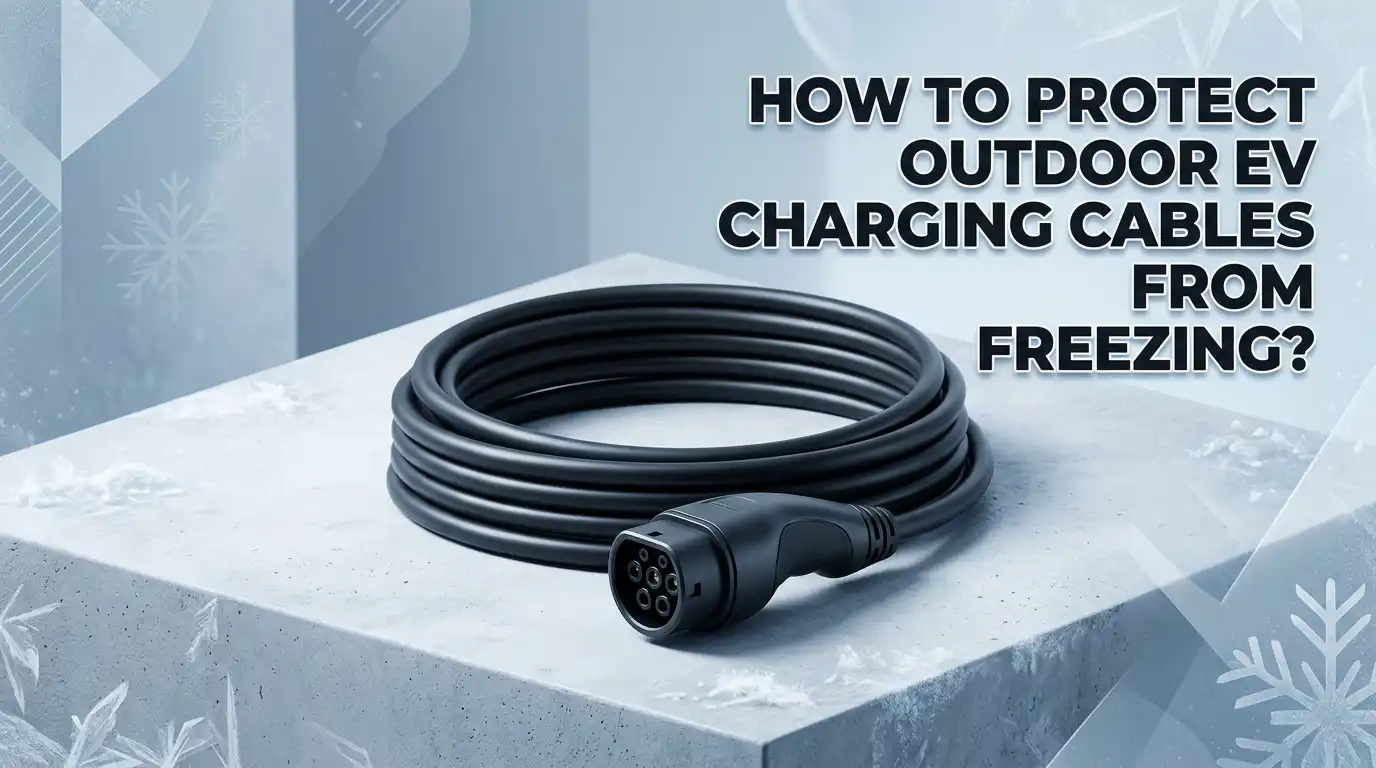
How to Protect Outdoor EV Charging Cables From Freezing?
Winter brings a tricky problem for electric vehicle owners. Your charging cable sits outside, exposed to snow, sleet, and bitter cold. The rubber stiffens.
The connector latch freezes shut. Sometimes the plug refuses to release from the port. These small headaches can ruin your morning commute and even damage expensive equipment.
The good news is that protecting your outdoor EV charging cable from freezing is simple once you know the right steps. You do not need fancy gear or a heated garage.
Key Takeaways
- Keep the connector dry at all times. Moisture is the real enemy. When water gets inside the plug or port and freezes, the latch sticks and the pins may corrode. A simple waterproof cover prevents most freezing problems.
- Store the cable off the ground. Coiled cables on snowy concrete absorb moisture and stiffen quickly. Wall mounted holsters or hooks keep the cable dry and easy to handle.
- Use dielectric grease or silicone spray on contact points. A thin layer repels water, prevents ice buildup, and keeps moving parts smooth. Never use conductive lubricants.
- Pre condition your battery before charging. Warming the battery pack reduces strain on the cable and shortens charging time in the cold.
- Have a thaw kit ready. A warm cloth, a hair dryer, or a bag of warm water can free a frozen latch in minutes without damage.
- Inspect cables often during winter. Cold makes rubber brittle, so check for cracks, splits, and worn insulation before plugging in.
Why Outdoor EV Charging Cables Freeze in the First Place
Cables freeze for two main reasons. First, the rubber and plastic outer jacket stiffens when temperatures drop below freezing. This makes the cable feel like a garden hose left out in January. Second, water seeps into tiny gaps around the connector and latch, then freezes solid.
The latch on a J1772 or CCS plug is especially vulnerable. It sits in a small opening that collects rain, snow, and even condensation. When that water turns to ice, the latch will not lift, and the plug locks in place.
Cold also affects the battery itself, which slows charging. The cable then carries current for longer, and any weak spot in the insulation gets stressed more than usual. Understanding these two failure points helps you target your protection efforts where they matter most.
Choose a Sheltered Charging Location
The first line of defense costs nothing. Park your EV in a spot that blocks wind, snow, and freezing rain. A carport, an overhang, or even the leeward side of your house can make a huge difference.
If you have a garage but charge outside, consider moving the charger closer to a wall or under the eaves. Direct exposure to weather is the single biggest cause of cable freezing. A small roof or awning over your wall mounted charger pays for itself in saved frustration.
Pros: Free or low cost, blocks most precipitation, extends the life of the entire charger unit.
Cons: Not always possible for renters or apartment dwellers, may require a contractor to install an awning, does not stop wind driven snow on its own.
If you cannot move the charger, focus on the next steps to compensate.
Install a Waterproof Charger and Connector Cover
A dedicated cover keeps water out of the connector when it is plugged into the car or hanging in the holster. Many EV owners use a magnetic flap, a silicone sleeve, or a small plastic shield that wraps around the plug.
You can also buy a full charger enclosure that surrounds the wall unit. These look like small mailboxes with a hinged door. They block snow, rain, and direct sun.
Always make sure the cover is rated for outdoor use and fits your specific connector type. A loose cover traps moisture rather than blocking it.
Pros: Strong protection against snow and freezing rain, easy to install, reusable for years.
Cons: Adds an extra step every time you charge, magnetic covers can fall off in heavy wind, full enclosures cost more and need wall space.
A cover plus a sheltered location handles about 90 percent of winter problems.
Apply Dielectric Grease to the Connector Pins
Dielectric grease is a non conductive silicone based lubricant. It seals out moisture without interfering with the electrical contact. A pea sized dab on the connector pins and the rubber gasket creates a waterproof barrier.
To apply it, unplug the cable, wipe the connector clean with a dry cloth, and spread a very thin layer with a cotton swab. Do not pack grease into the pin holes. A light film is all you need.
Reapply every few weeks during winter or after heavy use. Many EV owners also use silicone spray on the plastic latch mechanism to keep it moving freely.
Pros: Cheap, lasts a long time, prevents both freezing and corrosion, safe for electronics.
Cons: Can attract dust if applied too thickly, must be reapplied periodically, never use regular grease or WD40 because they can damage rubber seals over time.
Keep the Cable Off the Ground
A cable lying on snow, ice, or wet pavement absorbs water through every tiny crack in the jacket. Once the temperature drops, that water freezes and turns the cable into a stiff, awkward rope.
Mount a cable holster or simple hook on the wall near your charger. Coil the cable loosely when not in use. Avoid tight bends, especially in cold weather, because they crack the insulation.
Some people use overhead retractable systems that pull the cable up out of the way. These work well in garages but also exist for outdoor setups under a covered porch.
Pros: Keeps the cable dry, prevents tripping hazards, extends cable life by years.
Cons: Wall hooks need proper mounting, retractable systems are pricey, coiling a frozen cable is still difficult so do it before it freezes.
A cable that never touches the ground rarely has freezing issues.
Use a Cable Sleeve or Insulating Wrap
A flexible neoprene or foam sleeve slides over the cable and adds a layer of insulation. This slows heat loss and keeps the rubber jacket warmer than the surrounding air.
You can buy purpose made sleeves or use simple pipe insulation from a hardware store. Cut it to length, wrap it around the cable, and secure it with cable ties or velcro straps. Leave the connector ends exposed so you can still plug in normally.
This method works best in regions with steady cold rather than wet, slushy winters. In wet climates, the sleeve can hold moisture against the cable, so use a waterproof outer wrap as well.
Pros: Keeps the cable flexible, easy to install, reusable each season.
Cons: Adds bulk, can trap water if not waterproof, may need to be removed for storage in summer.
Pre Condition Your Battery Before Charging
Most modern EVs let you warm the battery before you plug in. This is called pre conditioning. A warm battery accepts a charge faster, which means the cable carries current for less time and stays warmer through use.
You can schedule pre conditioning through your car app or the in dash menu. Set it to start about 30 minutes before your normal charging time. The cable itself also warms up slightly during charging, which helps prevent ice buildup near the connector.
This trick is especially useful at public DC fast chargers, where waiting in the cold is no fun.
Pros: Faster charging, less stress on the cable, improves driving range too.
Cons: Uses some battery power to heat the pack, requires a connected app or scheduled charging feature, only works on newer EVs.
Keep a De Icing Kit in Your Car
Even with the best prevention, a connector can still freeze shut once in a while. Keep a small winter kit in your trunk or near your charger. Include a microfiber cloth, a small bottle of isopropyl alcohol, and a portable hair dryer if you have an outlet nearby.
For public charging stations, a zip lock bag filled with warm water works wonders. Hold it against the frozen latch for a minute or two until the ice melts. Never pour hot water directly on the connector because thermal shock can crack the plastic.
A can of de icer spray rated for car locks is also safe for charging connectors in most cases. Check the label first.
Pros: Quick fix for emergencies, low cost, works on both home and public chargers.
Cons: Reactive rather than preventive, hair dryer needs a power source, alcohol must be used sparingly so it does not damage rubber seals.
Inspect Cables Regularly During Cold Months
Cold weather makes rubber and plastic brittle. A cable that flexes fine in summer may develop hairline cracks in winter. Water then enters those cracks and freezes, which makes the damage worse.
Check your cable once a week during the coldest months. Run your hand along the full length and look for splits, exposed wire strands, or stiff spots that do not flex. Pay extra attention to the area near the connector, where stress is highest.
If you find damage, stop using the cable until it is repaired or replaced. A damaged cable in wet, freezing conditions is a real safety risk.
Pros: Catches problems early, costs nothing, builds good charging habits.
Cons: Takes a few minutes each week, requires you to know what damage looks like, replacement cables can be expensive.
Build a Simple DIY Charger Shelter
If buying a commercial enclosure feels like too much, you can build a basic shelter from plywood, weather treated lumber, or even a plastic storage bin with the bottom cut out.
Mount the shelter so it covers the charger and the hanging cable. Leave the bottom open for ventilation so condensation does not build up inside. A slanted top sheds snow easily.
Some owners use an old mailbox or a small outdoor cabinet for the same purpose. Just make sure nothing metallic touches the connector pins.
Pros: Customizable, inexpensive, fits your exact space, fun weekend project.
Cons: Requires basic tools, may not look as clean as a store bought option, needs to be built sturdy enough for wind and snow load.
Charge More Often With Shorter Sessions
In very cold weather, long charging sessions stress the cable and the connector seals. Charging more often for shorter periods reduces that stress. It also keeps your battery in a happier state of charge for cold weather driving.
Try plugging in every evening rather than letting the battery drop to 20 percent before charging. This habit also means the cable spends more time connected, which keeps the latch warm from the small amount of current flowing during top up charging.
If you have time of use electricity rates, schedule shorter sessions during off peak hours.
Pros: Extends battery life, reduces cable stress, keeps the connector warmer overall.
Cons: Requires plugging in more often, may not match your daily routine, needs a smart charger or app to schedule properly.
Consider Upgrading to a Cold Weather Rated Charger
Not all EV chargers handle extreme cold equally. Some are rated only down to minus 22 degrees Fahrenheit, while others work reliably to minus 40. Check the operating temperature range in the charger manual.
If you live in a very cold region and your current charger struggles, an upgrade may save you money in the long run. Look for chargers with sealed enclosures, IP55 or higher ratings, and cables specifically marked as flexible in cold temperatures.
Some premium cables use thermoplastic elastomer jackets that stay supple far below freezing. These cost more but feel like a normal cable even in deep winter.
Pros: Long term reliability, less daily hassle, often comes with better warranty.
Cons: Upfront cost, may need professional installation, not always necessary in milder climates.
Frequently Asked Questions
Can I pour hot water on a frozen EV charging cable?
No. Hot water can crack the plastic connector and damage the rubber seals. Use warm water in a sealed bag held against the frozen part, or use a hair dryer on a low setting. Patience works better than heat.
Is it safe to charge my EV in heavy snow or rain?
Yes. EV chargers and cables are designed to be weatherproof when used correctly. Just make sure the connector is dry before you plug in and that the charger has a proper outdoor rating. Avoid charging during severe storms with high winds.
How cold is too cold for an EV charging cable?
Most quality cables work down to minus 22 degrees Fahrenheit. Below that, the rubber may stiffen enough to crack if bent sharply. Check your specific cable rating and avoid coiling or moving it harshly in extreme cold.
Will dielectric grease damage my EV charger?
No, when used correctly. Dielectric grease is non conductive and made for electrical connectors. Apply only a thin film and avoid filling the pin holes. Skip standard automotive grease or WD40, which can break down rubber seals.
Why does my charge port latch freeze but the cable does not?
The latch sits in a small recess that collects water from rain and snow. That water freezes faster than the larger cable jacket. A connector cover or a dab of dielectric grease around the latch fixes this problem in most cases.
Can I use a space heater near my outdoor charger?
Only if it is rated for outdoor use and kept at a safe distance. Never place a heater directly against the cable or charger. A better solution is a sheltered enclosure that blocks wind and traps a little ambient warmth without active heating.