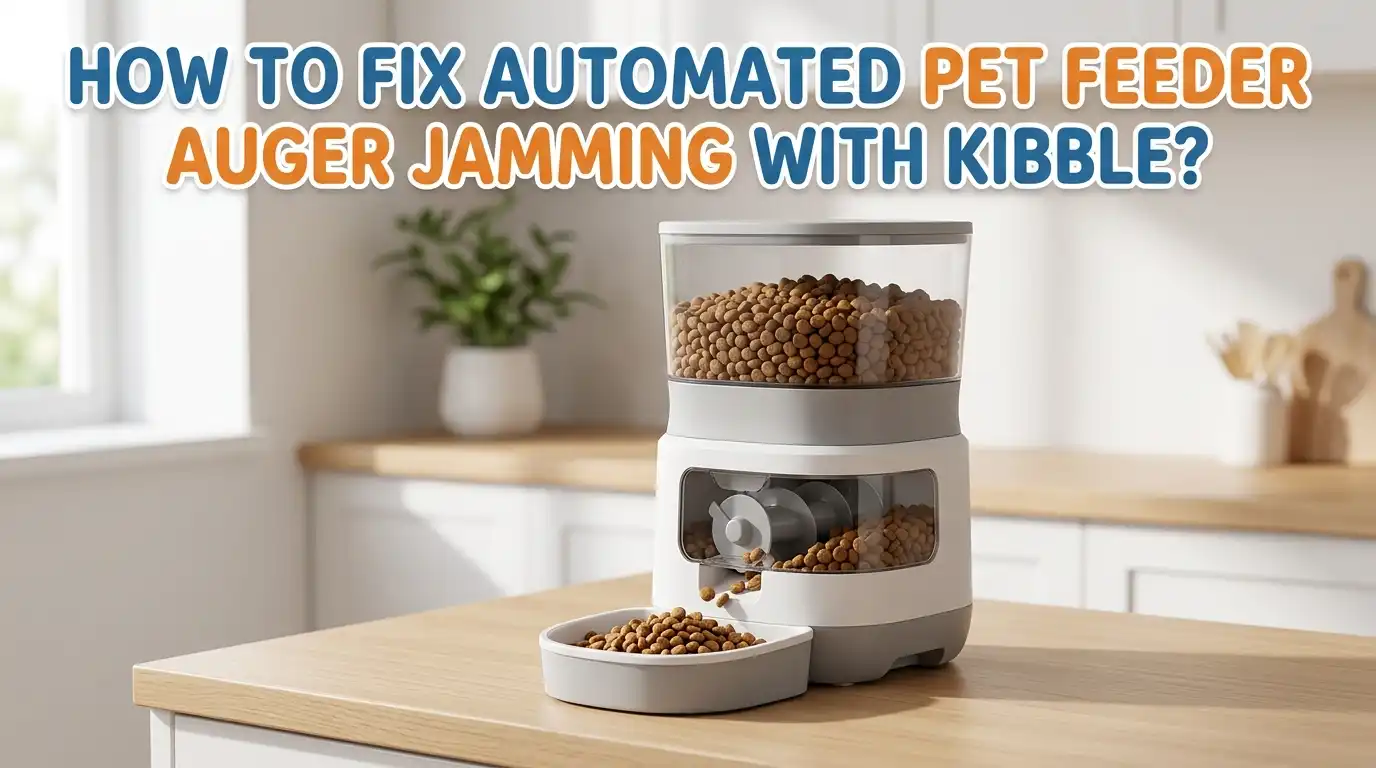
How to Fix Automated Pet Feeder Auger Jamming With Kibble?
You wake up, walk to the kitchen, and expect to see a full bowl of food waiting for your pet. Instead, you find the bowl empty. A quick glance at the feeder shows a blinking error light. Your heart sinks. The auger is jammed again.
You are not alone in this frustration. Many pet parents face this exact problem every single day. A clogged automatic feeder can turn your convenient device into a source of daily stress.
This guide will walk you through every possible reason your feeder auger gets stuck with kibble. You will learn exactly how to clear the jam, clean the mechanism, and prevent future blockages.
Key Takeaways
- Kibble size incompatibility is the number one reason feeders jam. Most automatic feeders work best with kibble pieces between 2mm and 15mm in diameter. Oversized or oddly shaped kibble wedges between the auger and the housing wall, stalling the motor.
- Moisture and humidity turn kibble dust into sticky paste. This paste coats the auger, increases friction, and eventually hardens into a cement-like layer that can seize the entire mechanism. Using fresh desiccant packs changes everything.
- A proper power cycle clears the firmware error state. Simply unplugging the feeder rarely resets the lockout. You must remove both the wall plug and backup batteries for at least 60 seconds, then follow the manufacturer reset sequence.
- Monthly deep cleaning prevents most recurring jams. Removing kibble dust, degreasing the impeller, and wiping the infrared sensors keeps the mechanism running smoothly for months at a time.
- Switching to a compatible kibble shape eliminates the root cause. Round or disc-shaped kibble flows through auger systems far more reliably than star-shaped, triangular, or large irregular pieces. This single change solves the problem for most users.
Why Your Automated Pet Feeder Auger Gets Jammed in the First Place
The auger inside your automatic feeder is a spiral shaped screw that rotates to push kibble from the hopper toward the dispensing chute. The design is simple but effective. When a piece of kibble gets wedged between the auger blade and the housing wall, the motor cannot complete its rotation.
The onboard controller detects a sudden spike in electrical current and immediately cuts power to protect the motor from burning out.
This is a built-in safety feature. Without it, a stalled motor would overheat and permanently damage the drive assembly. Understanding this logic helps you see that the jam is not a defect. It is the machine protecting itself from a mechanical obstruction.
Kibble bridging is another common culprit. Imagine an hourglass where sand forms an arch over the narrow opening and stops flowing. The same thing happens inside your feeder hopper. Irregularly shaped kibble pieces lock together over the auger inlet.
Even though the motor spins freely, no food drops through the gap. The weight of the food above presses down and keeps the bridge firmly in place. This problem gets worse with steep hopper walls and narrow exit openings.
How to Identify Whether the Auger Is Actually Jammed or the Sensor Is Dirty
Before you take anything apart, you need to confirm the real problem. Many smart feeders display error messages like “Rotor Stuck,” “Food Jam,” or “Blocked Outlet.” These alerts can trigger for two very different reasons.
The first reason is a genuine mechanical jam where kibble physically blocks the auger from turning. The second reason is a dirty infrared sensor that sends a false blockage signal to the control board. Knowing which one you are dealing with saves time and effort.
Start by listening to the feeder during a dispense cycle. If you hear the motor whining or humming without any clicking or grinding, the auger is likely spinning freely but the sensor thinks something is wrong.
If you hear a clicking sound followed by silence, the motor is physically stalling against an obstruction. Next, open the hopper lid and look inside. Shine a flashlight down toward the auger opening.
Can you see a piece of kibble wedged sideways between the spiral blade and the housing wall? If yes, you have a mechanical jam. If no visible kibble is stuck but the error persists, clean the sensors.
How to Safely Disassemble and Clear a Physical Auger Jam
Clearing a physical jam takes patience and the right approach. Rushing the process or using sharp metal tools can scratch the auger, damage the sensor windows, or crack the plastic housing. Follow these steps in order for the safest result.
First, cut all power to the unit. Unplug the AC adapter from the wall socket. Remove every backup battery from the compartment. Many smart feeders have a small logic board that stays powered even when unplugged if the batteries remain inside. You want the entire device completely dead before you touch anything.
Second, empty the hopper completely. Pour all remaining kibble into a clean container. A full hopper adds downward pressure on the auger and can make the jam tighter. Removing the weight often loosens the obstruction slightly and makes it easier to free.
Third, follow your model’s disassembly instructions to remove the hopper and access the auger or impeller mechanism. Most modern feeders use tool-free clips and tabs for this exact purpose. If your model requires a screwdriver, use only the exact size to avoid stripping the screw heads.
Fourth, remove the jammed kibble using a soft bristle brush, a folded piece of cardstock, or a wooden chopstick. Never use a metal knife or screwdriver tip. Metal tools scratch the plastic surfaces and create rough spots where future jams will catch even more easily.
How to Reset the Firmware and Clear the Error Lockout State
Removing the physical jam is only half the battle. The feeder’s logic board stores the error state in its volatile memory. Until you clear that stored error flag, the device will remain locked out and refuse to dispense food even though the auger is now free. This is the step most users skip. They remove the blockage, plug the feeder back in, and feel confused when the error light keeps blinking.
Execute a proper hard power cycle. Leave the feeder completely unplugged from the wall and with all batteries removed for at least 60 full seconds. This waiting period allows the capacitors on the logic board to fully discharge. When the capacitors drain, the volatile memory that holds the error flag gets wiped clean.
After the 60 seconds pass, plug the power adapter back in first, then reinsert the batteries. Now perform the manufacturer specific reset sequence. Most brands use a long press on the feed button combined with the power button, or a small recessed reset pinhole on the back or bottom of the unit. Check your user manual for the exact combination. If you lost the manual, search the brand name plus “factory reset” online.
The Best Kibble Types and Sizes That Prevent Auger Jamming
Kibble size incompatibility causes roughly 40 percent of all automatic feeder malfunctions. Most standard feeders are designed for kibble pieces between 2mm and 15mm in diameter, with the ideal range sitting between 5mm and 12mm.
Anything larger than the width of a dime creates a serious risk of jamming. Always check your feeder’s user manual for the exact maximum kibble size specification before buying a new bag of food.
Kibble shape matters just as much as size. Round or disc shaped kibble rolls smoothly through auger mechanisms and rarely catches on edges. Star shaped, triangular, and X-shaped kibble pieces look appealing on the pet food bag but they are notorious for bridging across auger inlets.
The irregular edges interlock with each other and form arches that block food flow. Premium brands often use these unique shapes to stand out on store shelves without considering feeder compatibility.
Large breed dog food formulas present a special challenge. The kibble pieces in these formulas regularly exceed 18mm in diameter. Most cat feeders and small dog feeders cannot handle these sizes at all.
How to Clean the Auger and Dispensing Path for Long Term Jam Prevention
A monthly deep cleaning routine prevents the slow buildup of kibble dust and oily residue that eventually causes jams. Think of it like changing the oil in your car. Skip it long enough and the engine seizes. The same principle applies to your automatic feeder. Every time you finish a bag of food, set aside 15 minutes to clean the mechanism.
Remove the hopper, the auger or impeller assembly, and the dispensing chute according to your model’s instructions. Wash all removable plastic parts in warm water with a few drops of mild dish soap. Use a soft sponge or cloth. Do not use abrasive scrubbers that leave micro scratches on the plastic. Kibble dust will collect in those scratches and accelerate future residue buildup.
Pay special attention to the auger blades. Use a small brush like a clean toothbrush to scrub the crevices where kibble dust packs down. Rinse all parts thoroughly with clean water. The tiniest bit of soap residue left behind can attract dust and create a sticky film.
Using Desiccant Packs and Moisture Control to Stop Sticky Residue Buildup
Moisture is the hidden enemy of every automatic pet feeder. Kibble naturally releases tiny amounts of oil and absorbs humidity from the surrounding air. In humid climates or during summer months, this process accelerates dramatically.
The combination of kibble dust and moisture creates a paste that coats the auger and hardens over time. Once hardened, this residue becomes a rough surface that grabs every piece of food trying to pass through.
Desiccant packs are your first and best defense against this problem. Most modern feeders include a dedicated slot or compartment for a desiccant bag inside the hopper lid.
These packs contain silica gel beads that actively absorb moisture from the air inside the sealed hopper. Replace the desiccant pack every 30 days under normal conditions. If you live in a high humidity area, check it every two weeks and replace it if the indicator changes color.
Store your kibble bag properly outside the feeder. Keep the original bag sealed tightly with a clip or transfer the food into an airtight plastic or metal container. Avoid storing the food bag in a garage, basement, or laundry room where humidity levels run high. Cool dry pantries work best.
How to Apply Food Grade Lubrication to Smooth the Auger Operation
Some feeder augers benefit from a very light application of food grade lubricant on the contact surfaces. This is a less common solution but it works well for units that develop recurring friction jams even with clean components and compatible kibble. The key is using the right product and applying it correctly.
Choose a food grade silicone spray that is labeled safe for incidental food contact. These sprays are odorless, colorless, and tasteless.
They dry to a thin film that reduces surface friction without attracting dust. Never use WD-40, cooking oil, petroleum jelly, or general purpose lubricants. These products can break down plastic over time and leave residues that are unsafe for your pet to ingest.
Apply the lubricant sparingly. Spray a tiny amount onto a clean cloth first, not directly onto the auger. Wipe the cloth along the auger blades and the inner housing wall where the blades make contact.
The goal is a whisper thin layer, not a wet coating. Let the lubricant dry completely for at least 10 minutes before reassembling the feeder. Any excess lubricant will catch dust and create the very problem you are trying to solve.
Adjusting Kibble Portion Sizes to Reduce Motor Strain and Jamming
The amount of food you dispense per meal affects how hard the auger motor has to work. Large portion sizes push more kibble through the mechanism in a single cycle.
This creates higher resistance and increases the chance of a piece getting wedged under pressure. Reducing the portion size per dispense cycle can lower the strain on the motor and prevent jams from occurring in the first place.
If your pet needs a certain total amount of food per meal, split it into two or three smaller dispenses scheduled a few minutes apart. For example, instead of one 3-serving dispense at 7am, schedule a 1-serving dispense at 7am, another at 7:02am, and a third at 7:04am.
Most smart feeder apps allow this level of scheduling flexibility. The motor runs cooler between cycles and the kibble flows more freely when the auger is not trying to push a dense mass all at once.
Inspecting and Replacing Worn Auger Components and Gears
Auger blades and drive gears are made of plastic in most consumer pet feeders. Plastic wears down over time, especially under repeated stress from jams.
A worn auger blade loses its sharp edge and can no longer grip kibble effectively. A worn drive gear develops flat spots that cause the motor to skip or grind. Both problems mimic the symptoms of a jam but require different fixes.
Inspect the auger blades under bright light. Look for rounded edges, chips, or cracks. Run your finger gently along the blade edges. They should feel crisp and defined, not smooth and worn. Check the drive gear on the motor shaft and the matching gear on the auger assembly. Look for missing teeth, flattened areas, or white stress marks in the plastic.
If you find worn components, contact the manufacturer for replacement parts. Many brands sell auger assemblies and gear kits as standalone spare parts. Replacing a worn gear costs far less than buying a whole new feeder. Keep your model number handy when you reach out to support.
Environmental Factors That Cause Feeder Jams and How to Fix Them
The room where you place your feeder affects its performance more than you might think. Kitchens and laundry rooms tend to have high humidity from cooking, dishwashers, and washing machines.
This moisture enters the hopper every time you open the lid to refill food. Bathrooms are even worse. Direct sunlight through a window heats the hopper and causes condensation inside the sealed container.
Move your feeder to a cool dry room with good air circulation. A living room corner, a hallway, or a home office works much better than a kitchen counter next to the stove.
If you must keep the feeder in the kitchen, place it as far from the sink and stove as possible. Avoid spots directly under air conditioning vents where cold air hitting a warm hopper creates internal condensation.
Floor placement matters for dog feeders. Placing the unit on carpet or an uneven surface can tilt the hopper slightly. This tilt changes how kibble settles against the auger inlet. An uneven hopper creates dead zones where food piles up on one side and starves the auger on the other. Place the feeder on a hard level surface. Use a small board or mat if your floor is uneven.
When to Contact the Manufacturer or Consider a Replacement Unit
Sometimes the problem runs deeper than a simple jam or dirty sensor. If you have tried every fix in this guide and the feeder still jams every day, the unit may have a design flaw or a hardware defect. Persistent jamming often points to a motor that has lost torque, a warped auger housing from heat exposure, or a logic board that is misreading sensor data.
Contact the manufacturer’s support team before giving up. Describe exactly what you have already tried. Mention that you have cleaned the unit, changed kibble sizes, replaced the desiccant, and performed a full reset. This information helps the support agent skip the basic troubleshooting script and move directly to warranty assessment.
Most smart feeders come with a one year warranty. Some brands extend this to two years. If your unit is still under warranty, the manufacturer will typically send a replacement unit or replacement parts at no cost. Keep your purchase receipt and the original packaging if you still have it.
If your warranty has expired and the feeder remains unreliable, it may be time to upgrade. Look for a feeder with a silicone impeller instead of a hard plastic auger.
Creating a Backup Feeding Plan for When Your Feeder Fails
No automatic feeder is completely immune to jams. Even the best maintained unit can fail at the worst possible time. A smart backup plan ensures your pet never misses a meal. This is especially important if you travel frequently or work long shifts away from home.
Keep a simple gravity fed bowl or a manual slow feeder stored in a cabinet. These require no power and no moving parts. You can fill them and leave them out if your automatic unit fails overnight. For multi-pet homes, keep a spare microchip feeder or separate bowls so each pet can still access their own food.
Ask a neighbor, friend, or family member to be your backup pet checker. Give them a spare key or door code. Show them where the backup bowls and food are stored. Program their phone number into your feeder’s app if the app supports sharing access with secondary users. A quick text from you can activate your backup plan within minutes.
Frequently Asked Questions
Why does my feeder say it is empty when the hopper is full?
This is almost always a kibble bridge. The food has formed an arch over the auger inlet and the level sensor reads the empty space below the bridge as no food remaining. Open the hopper lid and give the unit a gentle shake to collapse the bridge. Adding a fresh desiccant pack also helps by reducing the stickiness that allows kibble pieces to lock together.
Can I mix wet food or freeze dried toppers with kibble in my automatic feeder?
You should never put wet food in an automatic feeder. It spoils quickly at room temperature and will clog the mechanism instantly. Freeze dried toppers can work only if your feeder has a separate dual hopper system. Mixing them with dry kibble in a single hopper is the fastest way to cause a jam because freeze dried pieces crumble, create dust, and absorb moisture at a much higher rate than kibble.
How often should I fully disassemble and clean my automatic pet feeder?
Clean the removable components every time you finish a bag of food, which is roughly once a month for most households. If you use high fat kibble or live in a humid climate, clean every two to three weeks. The sensors and the auger crevices collect dust quickly and need regular attention to stay reliable.
Will using a food grade lubricant void my feeder’s warranty?
It depends on the manufacturer. Some brands explicitly state in their manual that no lubrication is needed and that using any lubricant will void the warranty. Others are silent on the topic. Check your warranty terms before applying anything. When in doubt, skip the lubricant and focus on keeping the mechanism clean and dry instead.
My feeder was working fine for months and suddenly started jamming. What changed?
Seasonal humidity is the most common culprit. If summer arrived or you started running your heater more often, the change in indoor moisture levels can tip the balance. Also check if you recently switched to a new bag of food, even the same brand. Kibble size and shape can vary slightly between production batches. A new bag might have slightly larger or more irregular pieces than the last one.
Can I use a dog feeder designed for large breeds to feed my cat?
Yes, you can. Dog feeders designed for large breeds have wider auger channels and stronger motors that handle bigger kibble easily. They work just fine for cats eating standard small kibble. The main downside is that the portion sizes may be too large for a cat’s needs. Look for a large breed dog feeder that allows very small portion adjustments if you plan to use it for a cat.