Whoop Fitness Tracker vs Fitbit in 2026: Which to Buy?
Are you stuck between the Whoop fitness tracker and Fitbit in 2026? You are not alone. Thousands of fitness fans face this same choice every single day. Both brands promise to track your health, improve your sleep, and push your workouts to the next level.
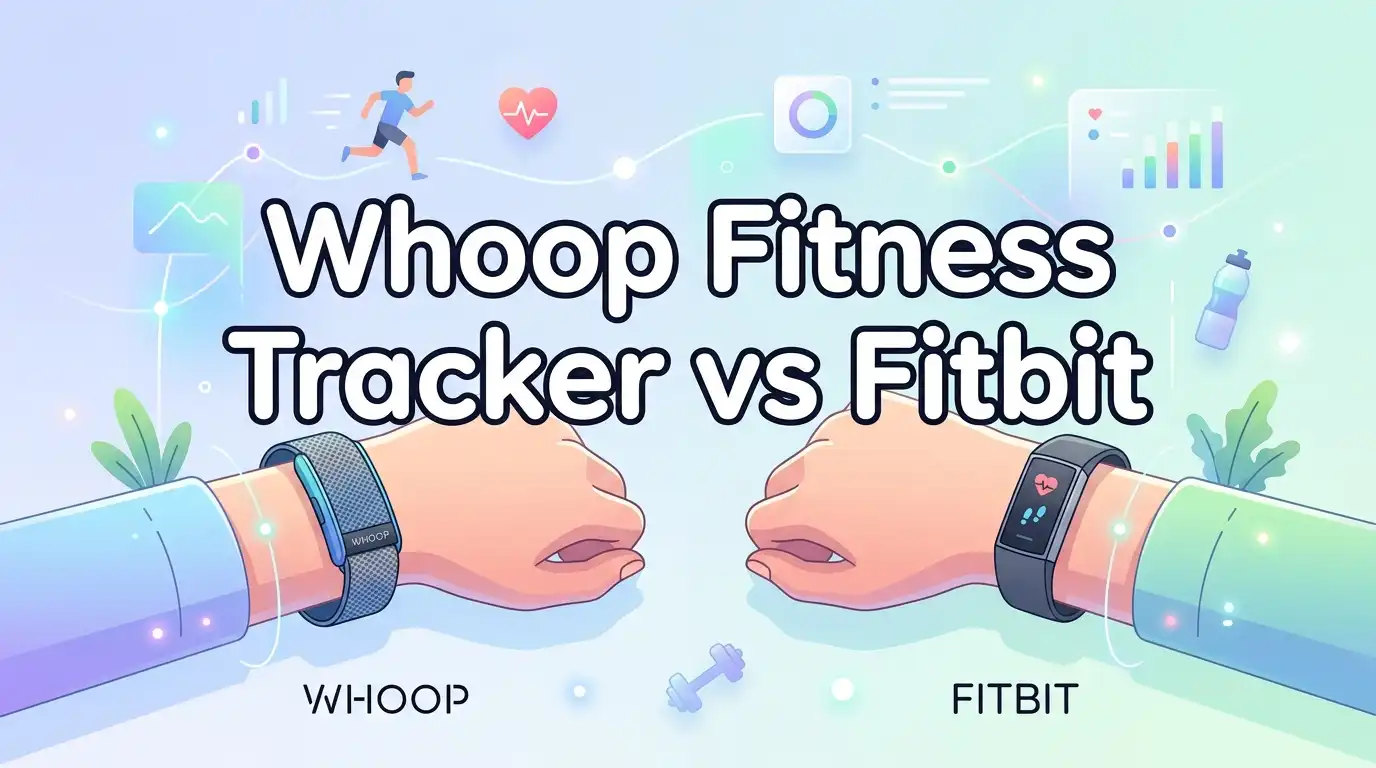
But they do it in very different ways. Whoop focuses on recovery, strain, and performance data with no screen at all. Fitbit gives you a screen, step counting, GPS, and a full smartwatch experience. So which one is actually worth your money this year?
This post breaks down every important detail. You will learn about design, health tracking, sleep data, battery life, pricing, and much more. By the end, you will know exactly which tracker fits your goals and lifestyle. Let us dive right in.
Key Takeaways
- Whoop 5.0 is a screenless performance tracker that uses a subscription model. It costs around $239 per year for the One plan and focuses on strain, recovery, and HRV data. It works best for athletes and serious fitness users who care about deep recovery insights.
- Fitbit offers a range of products from the affordable Inspire 3 to the advanced Charge 6 and Sense 2. These devices have screens, built in GPS (on select models), step counting, and Google app integration. They work well for casual users and fitness beginners.
- Heart rate accuracy differs between the two brands. Whoop samples heart rate data more frequently than most Fitbit models. This gives Whoop an edge in real time workout tracking and HRV measurement. Fitbit still delivers solid accuracy for most daily activities.
- Sleep tracking is a strength for both brands. Whoop provides a detailed sleep coach with sleep stages, sleep debt, and optimal sleep time. Fitbit gives you a nightly sleep score, sleep stages, and a smart wake alarm. Both are reliable, but Whoop goes deeper with recovery based sleep analysis.
- Pricing models are completely different. Whoop requires a membership with no upfront hardware cost on some plans. Fitbit devices require a one time purchase, and the optional Fitbit Premium subscription adds extra features for a monthly fee. Budget conscious buyers often prefer Fitbit for this reason.
- Battery life favors Whoop in 2026. The Whoop 5.0 lasts up to 14 days on a single charge. The Fitbit Charge 6 lasts about 7 days. Both are strong, but Whoop’s longer battery means less time on the charger.
Whoop 5.0 Overview and Features

The Whoop 5.0 launched as the latest upgrade in the Whoop lineup. It packs a redesigned processor that delivers 10x more power efficiency than its predecessor. The device tracks heart rate, HRV, blood oxygen, skin temperature, and even VO2 max around the clock.
One standout feature is the new Healthspan tool with Whoop Age. This gives you a biological age estimate based on your daily habits and recovery trends. The Whoop 5.0 also includes a medical grade ECG sensor that can detect irregular heart rhythms like AFib.
There is no screen on the Whoop 5.0. All your data lives inside the Whoop app on your phone. This keeps the device small, light, and comfortable for 24/7 wear.
Pros:
- 14 day battery life with efficient new processor
- Medical grade ECG and AFib detection
- Deep recovery, strain, and sleep analysis
- Screenless design is lightweight and comfortable
- Tracks VO2 max, blood oxygen, and skin temperature
Cons:
- Requires an annual subscription ($239 per year for One plan)
- No screen means you must check your phone for data
- Higher long term cost compared to one time purchase devices
- Limited smartwatch features like notifications
Fitbit Charge 6 Overview and Features


The Fitbit Charge 6 remains one of the best selling fitness trackers in 2026. It has a bright 1.1 inch AMOLED touchscreen, built in GPS, and over 40 exercise modes. Google now powers many of its apps, including Google Maps and Google Wallet right on your wrist.
The Charge 6 tracks heart rate 24/7, measures blood oxygen, and provides a Daily Readiness Score. It also connects to gym equipment through Bluetooth so you can see your heart rate on compatible machines. Battery life sits at around 7 days with normal use.
Fitbit Premium is optional but adds deeper health reports, mindfulness sessions, and advanced sleep tools. The base tracker works great on its own for daily activity and workout tracking.
Pros:
- Affordable one time purchase price
- Built in GPS and 40 plus exercise modes
- AMOLED touchscreen with bright display
- Google apps integration including Maps and Wallet
- 7 day battery life
Cons:
- Fitbit Premium costs extra for advanced features
- Heart rate sampling rate is lower than Whoop
- Less detailed recovery and strain analysis
- Smaller ecosystem for serious athletes
Design and Build Quality
Whoop and Fitbit take very different design approaches. The Whoop 5.0 is a slim, screenless band. It sits flat against your wrist and almost disappears under a sleeve. You can also wear it on your bicep, chest, or other body locations with accessory straps. The SuperKnit and CoreKnit bands feel soft and breathable.
The Fitbit Charge 6 looks more like a traditional fitness band. Its AMOLED screen shows the time, notifications, and workout stats at a glance. The aluminum case gives it a premium feel. It is also water resistant to 50 meters, just like the Whoop 5.0.
Your choice here depends on preference. If you want a discreet, always on tracker, Whoop wins. If you want to see your data instantly on your wrist, Fitbit is the better pick.
Heart Rate and Health Tracking Accuracy
Heart rate accuracy is a major deciding factor. The Whoop 5.0 samples heart rate data every second. This high frequency gives it an edge during fast paced workouts, interval training, and recovery analysis. Multiple third party tests have confirmed that Whoop’s optical sensor performs close to a chest strap in many conditions.
The Fitbit Charge 6 uses a reliable optical heart rate sensor with ECG support. It performs well for steady state cardio, walking, and daily monitoring. However, its lower sampling rate means it may miss brief heart rate spikes during intense intervals.
Both devices track blood oxygen (SpO2) and offer heart rate alerts. The Whoop 5.0 adds AFib detection through its ECG, which is a significant health feature for users who want cardiac screening.
Sleep Tracking Comparison
Both Whoop and Fitbit deliver strong sleep tracking, but they present the data differently. The Whoop 5.0 gives you a detailed Sleep Performance percentage. It tracks sleep stages, time in bed, disturbances, respiratory rate, and sleep debt over time. The Sleep Coach tells you exactly when to go to bed and how much sleep you need.
The Fitbit Charge 6 provides a nightly Sleep Score out of 100. It breaks down sleep into light, deep, and REM stages. You also get a Smart Wake alarm that wakes you during a light sleep phase so you feel more refreshed.
Whoop’s sleep analysis goes deeper with its recovery integration. Your sleep data directly affects your daily recovery score, which then guides your workout intensity. Fitbit keeps things simpler and easier to understand for casual users.
Recovery and Strain Tracking
This is where Whoop truly separates itself from Fitbit. The Whoop 5.0 calculates a daily Recovery Score from 0 to 100 percent. This score combines HRV, resting heart rate, sleep quality, and respiratory rate. It tells you whether your body is ready to push hard or needs rest.
The Strain Score tracks how much stress your body handles throughout the day. It measures both workout strain and non exercise activity strain. Serious athletes and coaches use these scores to plan training cycles and avoid overtraining.
Fitbit offers a Daily Readiness Score, but it is much simpler. It tells you if you are ready for a workout but does not give the same depth of analysis. For athletes who want data driven training, Whoop is the clear winner here.
Fitbit Inspire 3 as a Budget Alternative

Not everyone needs the most advanced tracker. The Fitbit Inspire 3 is a great budget option that still covers the basics. It tracks heart rate, sleep, steps, active zone minutes, and stress management. The color AMOLED display is slim and lightweight on the wrist.
Battery life stretches up to 10 days, which beats both the Charge 6 and many competitors. It is also swim proof to 50 meters. The Inspire 3 works well for beginners, light exercisers, and anyone who wants basic health tracking without a big investment.
Pros:
- Very affordable price point
- Up to 10 day battery life
- Slim, lightweight, and swim proof
- Tracks heart rate, sleep, and stress
- Color AMOLED touchscreen
Cons:
- No built in GPS
- Limited workout modes compared to Charge 6
- No ECG sensor
- Basic recovery insights only
Fitbit Sense 2 for Advanced Health Monitoring

The Fitbit Sense 2 sits at the top of Fitbit’s health tracking lineup. It includes an ECG app, continuous EDA sensor for stress tracking, SpO2 monitoring, and skin temperature sensing. This is the closest Fitbit gets to matching Whoop’s health depth.
The Sense 2 also has built in GPS, Google Assistant, and Google Wallet. Its design is more of a full smartwatch with a square AMOLED display. Battery life lasts around 6 days with typical use.
If you want Fitbit’s ecosystem but need more health features, the Sense 2 fills that gap nicely. It still does not match Whoop’s recovery and strain analysis, but it gives you ECG readings and all day stress monitoring in one package.
Pros:
- ECG app and continuous stress tracking with EDA sensor
- Built in GPS and Google apps
- Skin temperature and SpO2 monitoring
- Full smartwatch features with notifications
- Comfortable square AMOLED display
Cons:
- Higher price than Charge 6 and Inspire 3
- Battery life is shorter at around 6 days
- Recovery insights are still basic compared to Whoop
- Some advanced features require Fitbit Premium
Battery Life Face Off
Battery life matters a lot for daily wearers. The Whoop 5.0 leads with up to 14 days on a single charge. Its screenless design and efficient processor make this possible. The sliding battery pack also lets you charge without removing the band from your wrist.
The Fitbit Charge 6 lasts about 7 days with regular use. GPS use drains the battery faster, bringing it closer to 5 days with frequent outdoor workouts. The Fitbit Inspire 3 stretches to 10 days thanks to its simpler feature set.
For users who hate charging their devices, Whoop offers the best experience. Fitbit’s battery life is still solid, but you will need to charge it about twice as often as the Whoop 5.0.
Pricing and Subscription Models
Pricing is one of the biggest differences between these two brands. Whoop uses a subscription model. The Whoop 5.0 One plan costs around $239 per year and includes the device. The Peak plan runs about $359 per year with extra features. There is no way to use Whoop without an active membership.
Fitbit devices use a one time purchase model. The Charge 6 costs around $99 to $159 depending on the retailer. The Inspire 3 is even cheaper. Fitbit Premium is optional at roughly $9.99 per month or $79.99 per year, but the tracker works fine without it.
Over a two year period, Whoop costs significantly more. But you get continuous hardware upgrades and deep analytics included. Fitbit gives you a lower entry cost and the freedom to skip the subscription entirely.
Who Should Choose Whoop?
The Whoop 5.0 is built for performance focused users. If you are a runner, CrossFit athlete, cyclist, or competitive sports player, Whoop gives you the recovery and strain data you need. The screenless design stays out of your way during training.
Whoop also works well for people who want to optimize their sleep and recovery habits over time. The app provides journal features, trend analysis, and coaching insights that help you make better daily decisions. If you care more about how your body recovers than counting steps, Whoop is your match.
The subscription cost is worth it if you actually use the data to adjust your training and lifestyle. Casual users may find it overkill.
Who Should Choose Fitbit?
Fitbit works best for everyday health and fitness tracking. If you want a device that shows the time, counts your steps, tracks workouts with GPS, and sends phone notifications, Fitbit delivers all of that. The Charge 6 is the sweet spot for most people.
Fitbit is also the better choice if you are on a budget. The one time purchase model keeps costs low. You do not need a subscription to get solid health data. The Google app integration adds extra value for Android users especially.
Beginners, casual walkers, gym goers, and anyone who wants a simple, screen based tracker will feel right at home with Fitbit. It does not overwhelm you with performance data, and the app is easy to understand from day one.
Final Verdict: Whoop vs Fitbit in 2026
Choosing between Whoop and Fitbit comes down to your goals and budget. The Whoop 5.0 is a premium, data rich tracker for athletes who want deep recovery and strain insights. It costs more over time but delivers unmatched performance analytics.
The Fitbit Charge 6 offers the best balance of features, price, and usability for most people. It tracks workouts, sleep, and health with a clear screen and Google integration. For budget shoppers, the Fitbit Inspire 3 covers the basics at a very low price.
If you train hard and want to recover smarter, go with Whoop. If you want a reliable daily tracker that does a bit of everything, Fitbit is the smarter buy for your wallet and your wrist.
Frequently Asked Questions
Is Whoop more accurate than Fitbit for heart rate?
Whoop samples heart rate data more frequently than most Fitbit models. This gives it better accuracy during high intensity workouts and interval training. For daily monitoring and steady cardio, Fitbit’s accuracy is still very reliable.
Can I use Whoop without a subscription?
No. Whoop requires an active membership to access your data and use the device. The subscription starts at $239 per year for the One plan. The hardware is included with the membership.
Does Fitbit Charge 6 have GPS?
Yes. The Fitbit Charge 6 has built in GPS for outdoor workout tracking. You do not need to carry your phone to track running, walking, or cycling routes.
Which tracker is better for sleep tracking?
Both are excellent for sleep tracking. Whoop provides deeper sleep analysis with recovery integration, sleep debt tracking, and a sleep coach. Fitbit gives you a simple sleep score, sleep stages, and a smart wake alarm. Athletes may prefer Whoop, while casual users may prefer Fitbit.
Is Fitbit Premium worth the cost?
Fitbit Premium adds detailed health reports, guided workouts, mindfulness content, and advanced sleep analysis. If you use these features regularly, the $9.99 per month fee can be worth it. The free version of the Fitbit app still provides solid basic tracking.
How long does the Whoop 5.0 battery last?
The Whoop 5.0 battery lasts up to 14 days on a single charge. The sliding battery pack allows you to charge the device while wearing it, so you never miss any tracking data.