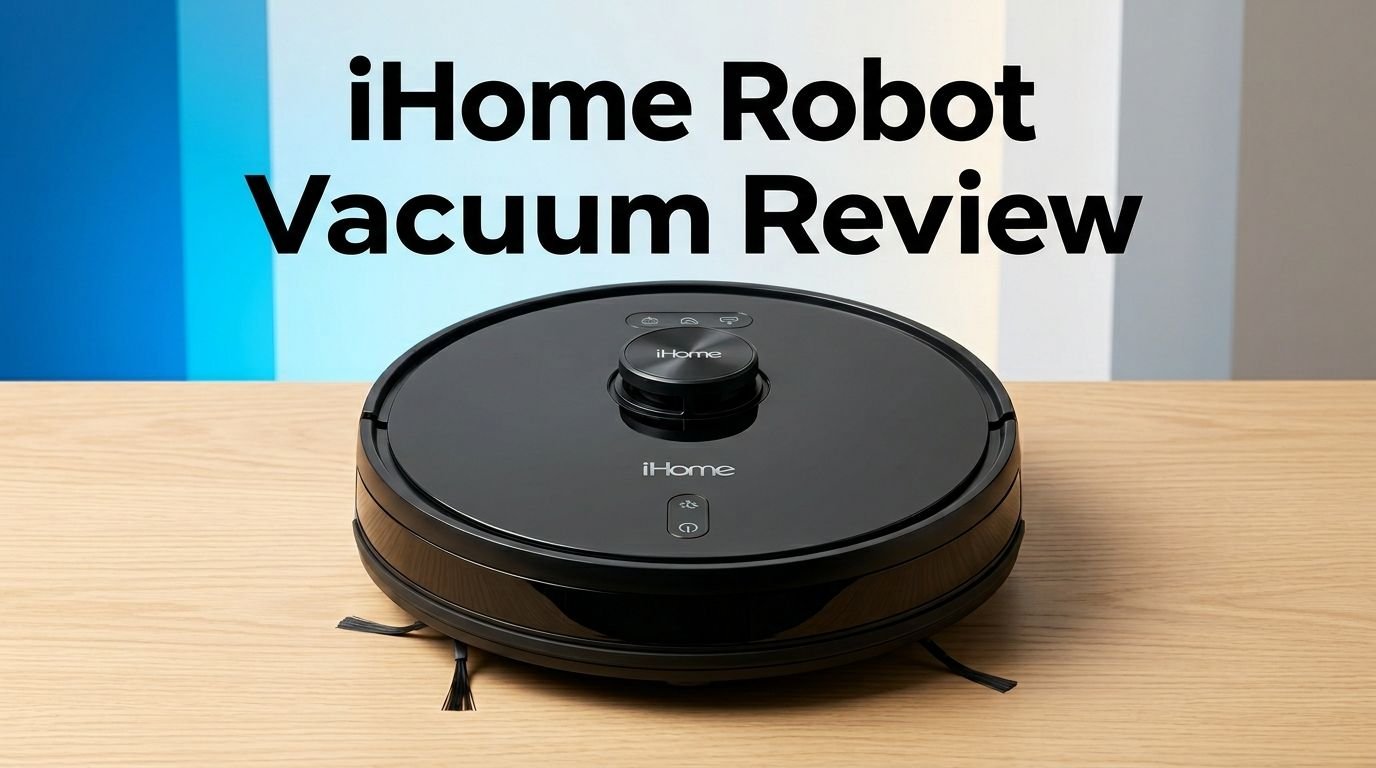
iHome Robot Vacuum Review 2026: Is It Worth Your Money?
Are you tired of spending your weekends pushing a heavy vacuum across every room? The iHome robot vacuum lineup promises to take that chore off your plate.
iHome, a brand most people know for speakers and alarm clocks, has quietly built a solid range of affordable robot vacuums that clean hard floors and carpets with little effort from you.
But do these budget machines actually deliver? In this iHome robot vacuum review for 2026, we break down every detail. We cover suction power, battery life, smart features, cleaning performance, and real user feedback.
Key Takeaways
- iHome robot vacuums sit in the budget category, with most models priced between $85 and $200. They offer strong value for first time robot vacuum buyers or anyone with a smaller home.
- The iHome AutoVac Eclipse is one of the most popular models. It features 2,200 Pa suction, 120 minutes of runtime, and Alexa compatibility. It works well on hard floors and low pile carpet.
- Smart mapping and app control come standard on most iHome models. You can schedule cleanings, set virtual boundaries, and monitor progress from your phone through the iHome Clean App.
- The iHome AutoVac Luna adds a vibrating mop function and front laser navigation. It gives you a 2 in 1 vacuum and mop experience at a fraction of what premium brands charge.
- Battery life ranges from 100 to 150 minutes across the lineup. Every model returns to its charging base automatically and can resume cleaning after recharging.
- Pet owners appreciate iHome vacuums for daily maintenance cleaning. They pick up hair, crumbs, and light debris effectively. However, they may struggle with deep carpet cleaning compared to higher end competitors.

iHome AutoVac Eclipse Robot Vacuum
The iHome AutoVac Eclipse is the entry point into the iHome robot vacuum family. It delivers 2,200 Pa of suction power and runs for up to 120 minutes on a single charge. That is enough to cover most small to medium sized homes in one session.
This model uses HomeMap navigation technology. It scans your floor plan and creates an efficient cleaning path. You will not see it bouncing randomly off walls like older budget robots. It moves in organized rows, which saves time and battery.
The Eclipse connects to Wi-Fi and works with the iHome Clean App. From the app, you can start and stop cleaning, set schedules, and switch between three suction modes: quiet, normal, and high. Voice control through Alexa and Google Assistant is also built in.
At around $85 on Amazon, the Eclipse is one of the most affordable robot vacuums with smart mapping. It also includes HEPA filtration, which captures fine dust particles. If you want a simple, reliable robot vacuum without spending hundreds of dollars, the Eclipse is a smart pick.
iHome AutoVac Luna Robot Vacuum and Mop

The iHome AutoVac Luna steps things up with a 2 in 1 vacuum and vibrating mop combo. It uses front laser navigation called HomeMap 2.0, which scans your floor plan with greater accuracy than the Eclipse.
The vibrating mop agitates the floor surface to remove sticky spots and light stains. You can set virtual boundaries in the app to keep the mop away from carpeted areas. This feature gives you a full floor care solution in one machine.
Luna delivers strong suction and offers customized room by room cleaning. You select specific rooms on the map in the app, and the Luna goes directly to those areas. It also has a recharge and resume function, so it returns to the dock, powers up, and finishes the job if the battery runs low mid clean.
The Luna is priced higher than the Eclipse but still stays in the budget friendly zone. It is a great choice for homes with a mix of hard floors and tile where both vacuuming and mopping are needed regularly.
iHome AutoVac Nova S2 Robot Vacuum and Mop
The iHome AutoVac Nova S2 is one of iHome’s more advanced models. It features 360 degree LIDAR navigation, 2,700 Pa suction, and a 150 minute runtime. LIDAR mapping is the same technology used by many premium robot vacuums from brands like Roborock and Dreame.
The Nova S2 includes a mop function alongside vacuuming. It handles both tasks in a single pass. The cleaning path is 10 inches wide, and the bot follows efficient, straight line patterns thanks to its precise LIDAR sensor.
This model supports Alexa and Google Assistant voice control and connects through the iHome Clean App. You get room by room control, scheduling, and the ability to set no go zones. Recharge and resume keeps the cleaning consistent across large spaces.
The Nova S2 targets buyers who want near premium performance at a much lower cost. If you have a larger home and need thorough floor coverage with both vacuum and mop, this model delivers excellent bang for the buck.
Top 3 Alternatives for iHome Robot Vacuum
1. eufy Robot Vacuum 11S MAX

2. iRobot Roomba Vac Robot Vacuum (Q011)

3. Roborock Q7 L5 Robot Vacuum and Mop Combo

Suction Power and Cleaning Performance
Suction power is one of the most important factors in any robot vacuum. The iHome lineup ranges from 2,000 Pa on the Juno up to 2,700 Pa on the Nova S2. The Eclipse sits in the middle at 2,200 Pa.
On hard floors, iHome vacuums perform very well. They pick up dust, crumbs, pet hair, and small debris with ease. Users report clean results after a single pass on tile, hardwood, and laminate.
Carpet performance is decent but not exceptional. The lower suction numbers mean deep pile carpets can retain some embedded dirt. For low to medium pile carpets, iHome bots handle the job fine. If you have thick shag carpet throughout your home, a higher suction model from another brand may serve you better.
The dual side brushes and main roller brush combination sweeps debris toward the suction inlet effectively. HEPA filters trap fine particles and allergens, which is a nice addition at this price point. Overall, iHome delivers cleaning performance that matches or exceeds expectations for the price.
Battery Life and Runtime
Battery life varies across the iHome robot vacuum lineup. The Juno offers about 100 minutes, the Eclipse gives 120 minutes, and the Nova S2 stretches to 150 minutes. These numbers represent cleaning on normal suction mode.
If you switch to high suction mode, expect about 20 to 30 percent less runtime. Quiet mode can extend runtime slightly beyond the standard numbers. For most apartments and small homes, 100 to 120 minutes covers the full floor area in one session.
Every iHome robot vacuum includes auto recharge. The bot returns to its charging dock when the battery gets low. Models with recharge and resume capability will pick up exactly where they left off once the battery is full again.
Charging takes about 4 to 5 hours from empty. If you schedule daily cleanings, the vacuum will typically stay topped up between sessions. The battery capacity is suitable for daily light cleaning across small to medium homes.
Smart Features and App Control
The iHome Clean App is the control hub for every iHome robot vacuum. It is available for both iOS and Android devices. Setup is straightforward. You connect the vacuum to your home Wi-Fi network, and the app guides you through the process.
Inside the app, you can view your floor map, set virtual boundaries, schedule cleanings, and choose suction levels. Room by room cleaning is available on models with LIDAR or laser navigation. You tap the room on the map, and the vacuum goes directly there.
Alexa and Google Assistant integration lets you start and stop cleaning with voice commands. You can say “Alexa, start the vacuum” and the bot begins its job. This hands free control is handy during busy mornings or when your phone is not nearby.
The app also provides cleaning history and maintenance reminders. It tells you when to clean or replace filters, brushes, and other parts. This keeps the vacuum running at peak performance over time.
Navigation and Mapping Technology
iHome uses different navigation systems depending on the model. The Eclipse uses gyroscope based HomeMap navigation. It creates a basic map and follows organized cleaning rows. This works well in smaller spaces but can lose accuracy in larger, complex layouts.
The Luna uses HomeMap 2.0 with front laser technology. This scans the room more precisely and builds a more detailed floor plan. It handles furniture, obstacles, and room transitions better than the standard HomeMap system.
The Nova S2 features full 360 degree LIDAR mapping. This is the same technology found in robot vacuums costing two or three times more. LIDAR creates highly accurate maps and allows precise room by room cleaning with virtual boundaries.
All three navigation systems support virtual no go zones through the app. You can block off areas with fragile items, pet bowls, or cables. The vacuum will avoid those zones during every cleaning session. For the price, iHome’s navigation technology is impressive across the board.
Design and Build Quality
iHome robot vacuums feature a slim, circular design that fits under most furniture. The Eclipse stands about 3 inches tall, allowing it to reach under couches, beds, and low cabinets. This is a practical advantage over taller robot vacuums.
The build quality is solid plastic with a matte finish. It feels durable for a budget robot vacuum. The bumper sensor around the front absorbs gentle contact with walls and furniture legs without causing damage.
The dustbin capacity is around 600 ml on most models. This is adequate for daily cleaning but will need emptying after each session in homes with pets or heavy foot traffic. The Nova series offers self emptying dock options that extend the time between manual dustbin changes.
Each model comes with replacement brushes and filters in the box. The overall package feels complete. iHome clearly designed these vacuums with everyday usability in mind. They are lightweight, easy to carry, and simple to maintain.
Noise Levels
Noise is a real concern with any robot vacuum, especially if you run it during work hours or while watching TV. The iHome Eclipse operates at around 68 dB on normal mode. That is roughly the volume of a normal conversation.
Quiet mode drops the noise further, making it comfortable to run in the same room without major distraction. High suction mode does get louder, but it is still quieter than a traditional upright vacuum cleaner.
The Luna and Nova S2 produce similar noise levels. Users report that these vacuums are among the quieter budget options available. You can comfortably schedule nighttime cleanings if you sleep in a different room or on a different floor.
Overall, iHome has done a good job keeping noise at manageable levels across the entire lineup. If quiet operation matters to you, stick with normal or quiet mode for daily cleaning and save high mode for occasional deep sessions.
Pet Hair Performance
Pet owners make up a huge portion of robot vacuum buyers. iHome vacuums handle pet hair on hard floors exceptionally well. The dual side brushes sweep hair toward the center, and the main roller brush picks it up with solid suction.
On carpets, iHome vacuums manage loose pet hair sitting on the surface. The roller brush does a reasonable job pulling hair off low pile carpet. However, deeply embedded pet hair in medium to high pile carpet may require multiple passes.
The HEPA filter helps trap pet dander and fine allergens. This is a welcome feature for allergy sufferers. You will want to clean the filter regularly if you have multiple pets, as it can clog faster in heavy shedding environments.
For daily maintenance cleaning, iHome vacuums keep pet hair under control. Running the bot once a day prevents hair from building up on floors and furniture edges. It will not replace a deep clean from a full size vacuum, but it drastically reduces the amount of manual vacuuming you need to do.
iHome Robot Vacuum vs Roomba and Other Competitors
Comparing iHome to brands like iRobot Roomba, eufy, and Roborock puts its value into perspective. The Eclipse costs around $85, while a basic Roomba starts at $175 or more. You get smart mapping and app control with iHome at half the price.
Roomba vacuums offer stronger brand recognition and a wider accessory ecosystem. Their suction power and carpet cleaning tend to edge out iHome, especially on higher end models. But for hard floor cleaning and basic carpet maintenance, iHome holds its own.
Eufy robot vacuums compete closely with iHome on price. The eufy 11S MAX is a popular alternative with strong suction and a slim profile. However, it lacks smart mapping. iHome wins on navigation features at the same price point.
Roborock sits in a higher tier with superior suction and mopping. The Roborock Q7 L5 offers 8,000 Pa and advanced LIDAR. It costs more, but the performance gap is noticeable. If budget is your primary concern, iHome delivers the best feature set per dollar. If performance is your priority, consider stepping up to Roborock.
Pros and Cons of iHome Robot Vacuums
Every product has strengths and weaknesses. Here is an honest look at what iHome gets right and where it falls short.
On the positive side, iHome vacuums deliver excellent value. You get smart mapping, app control, voice assistant support, and HEPA filtration at prices that start under $100. The battery life is competitive, and the slim design reaches places other robots cannot.
The mopping feature on the Luna and Nova S2 adds real versatility. Few competitors offer a 2 in 1 vacuum and mop at this price. The vibrating mop on the Luna does a better job than simple drag mops found on other budget bots.
On the downside, suction power tops out at 2,700 Pa. Premium competitors offer 5,000 Pa or more. This limits deep carpet cleaning performance. The dustbin on non self emptying models fills up quickly in homes with pets.
The app can be glitchy according to some user reviews. Connection drops and delayed responses happen occasionally. iHome has improved the app over time, but it still lags behind the smooth experience offered by Roborock or iRobot apps.
Who Should Buy an iHome Robot Vacuum?
The iHome robot vacuum lineup fits a specific type of buyer. If you live in a small to medium sized home with mostly hard floors, iHome is an excellent choice. It handles daily dust, crumbs, and light debris with ease.
First time robot vacuum buyers will appreciate the low price and simple setup. You do not need to invest $500 or more to experience the convenience of automated floor cleaning. iHome removes that financial barrier.
Renters and apartment dwellers benefit from the compact size and quiet operation. The slim design fits under furniture in tight spaces. You can run it during the day without disturbing neighbors.
Pet owners with mild shedding will find iHome sufficient for daily upkeep. If you have large, heavily shedding dogs, you may want a higher suction model. But for cats and smaller dogs, iHome keeps floors clean between manual vacuuming sessions.
If you have a large home with thick carpets and want the absolute best performance, iHome may not be your first choice. But for everyday convenience at a budget friendly price, it is hard to beat.
Where to Buy iHome Robot Vacuums
You can find iHome robot vacuums at several major retailers. Amazon carries the Eclipse, Luna, and accessories. Walmart stocks exclusive models like the Nova S1 Pro and Juno. Best Buy also carries select iHome vacuum models.
Amazon often offers the best pricing on the Eclipse model, with frequent discounts and coupon codes. Prime members may get additional savings during sales events. The Luna is also available on Amazon with free shipping.
Walmart is the primary retailer for the Nova series and Juno models. Some of these are Walmart exclusives, so you will not find them on Amazon. Check both retailers to compare pricing and availability.
The iHome official website at ihomeclean.com sells refurbished units at lower prices. These come with a warranty and can save you extra money if you don’t mind a renewed product. Replacement parts like filters, brushes, and mop pads are easy to find on all three platforms.
Final Verdict on iHome Robot Vacuum
The iHome robot vacuum lineup earns a strong recommendation for budget conscious buyers. The Eclipse, Luna, and Nova S2 each serve a different need, but they all share the same core strengths: affordability, smart features, and reliable hard floor cleaning.
The Eclipse is best for basic vacuuming in small homes. The Luna suits buyers who want vacuum and mop in one device. The Nova S2 is the right pick for larger homes that need LIDAR navigation and longer battery life.
iHome will not outperform a $1,000 Roborock or Dreame on carpet deep cleaning. But it delivers 80 percent of the experience at 20 percent of the cost. For daily maintenance and keeping your floors presentable, these vacuums do their job well.
If you want a reliable, affordable, and smart robot vacuum in 2026, iHome deserves a spot on your shortlist. It proves that you do not need to break the bank for a clean home.
Frequently Asked Questions
Is the iHome robot vacuum good for pet hair?
Yes, iHome robot vacuums handle pet hair well on hard floors and low pile carpets. The dual side brushes and main roller pull hair into the dustbin efficiently. For homes with heavy shedding pets, you may need to empty the dustbin more often and run the vacuum daily. The HEPA filter also captures pet dander, making it a decent choice for allergy prone households.
Does the iHome robot vacuum work with Alexa?
All current iHome robot vacuum models support Amazon Alexa and Google Assistant. You can start, stop, and dock the vacuum using voice commands. You need to connect the vacuum to your Wi-Fi network through the iHome Clean App first. After setup, voice control works reliably for basic commands.
How long does the iHome robot vacuum battery last?
Battery life depends on the model. The Juno lasts about 100 minutes. The Eclipse runs for up to 120 minutes. The Nova S2 offers up to 150 minutes. These times reflect normal suction mode. High suction mode reduces runtime by roughly 20 to 30 percent. All models return to the dock automatically when the battery gets low.
Can the iHome robot vacuum mop floors?
Select models like the Luna and Nova S2 include a mop function. The Luna features a vibrating mop that agitates the surface for better cleaning. The Nova S2 mops in a single pass alongside vacuuming. You can set no mop zones in the app to protect carpets and rugs from getting wet.
Is the iHome robot vacuum worth buying in 2026?
For the price, iHome robot vacuums offer excellent value in 2026. You get features like smart mapping, app control, and voice assistant support at prices under $200. They are ideal for small to medium homes with hard floors. If you need deep carpet cleaning or maximum suction, a premium brand may serve you better. But for everyday maintenance, iHome is a smart and affordable choice.