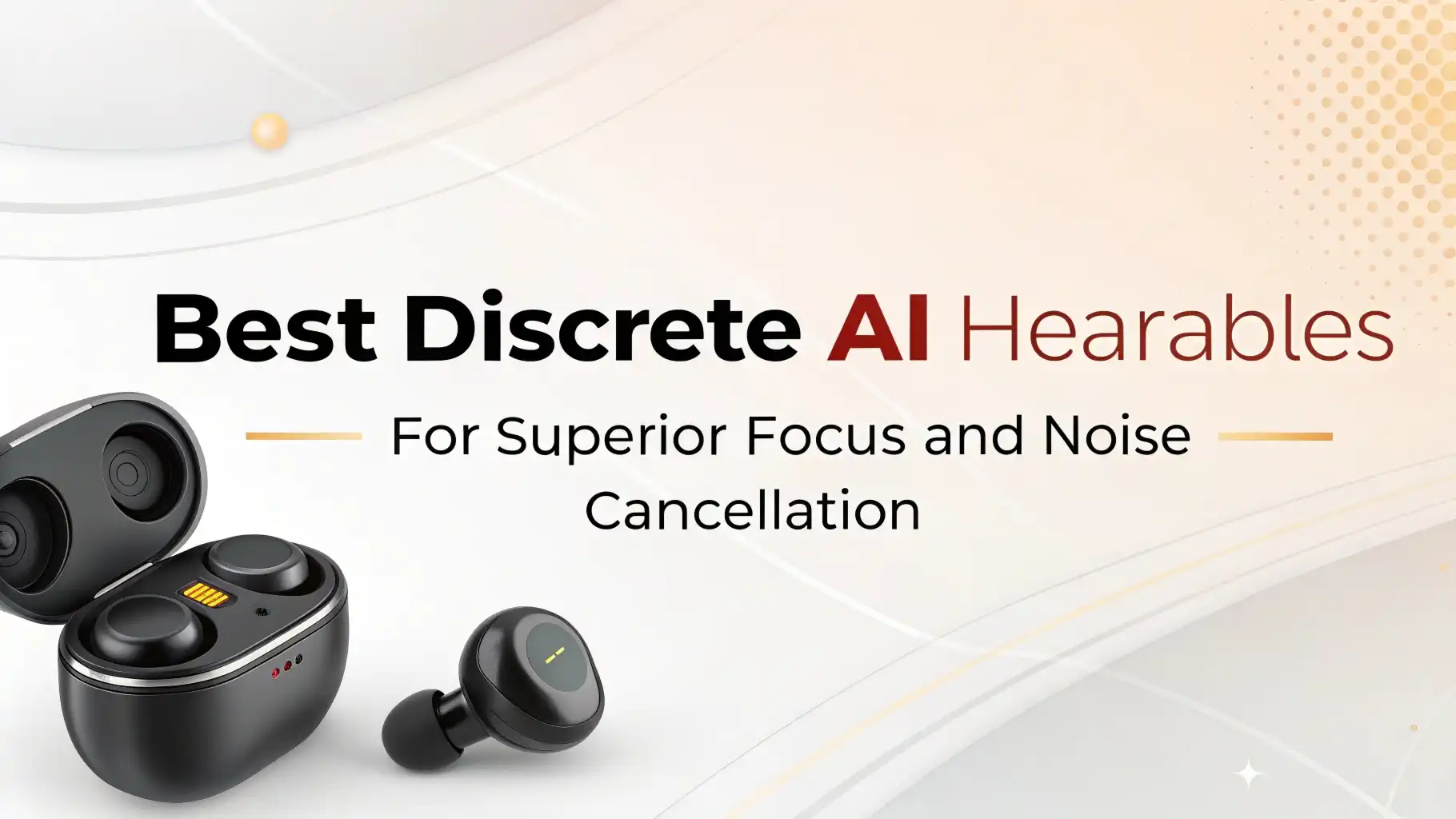
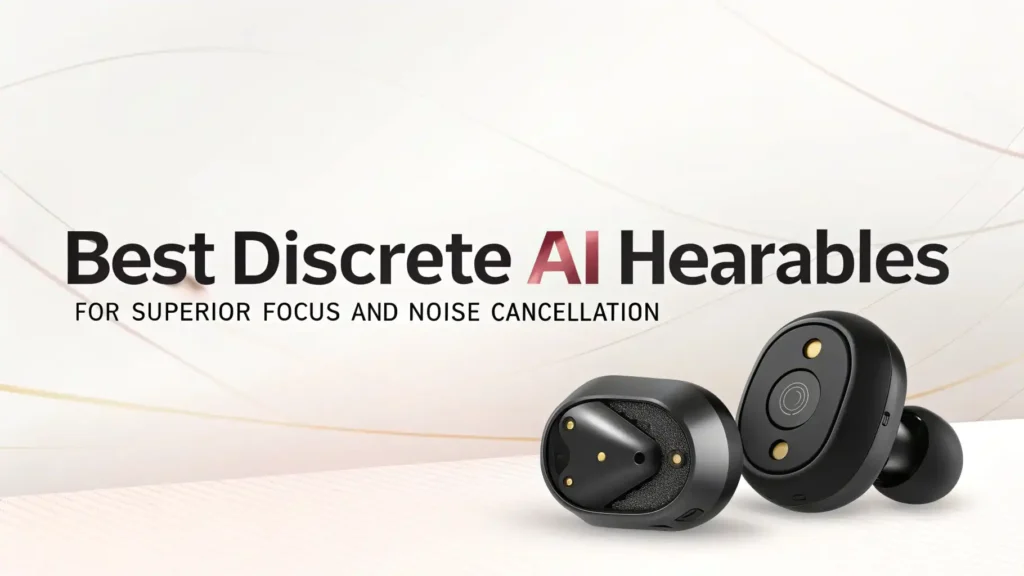
5 Best Discrete AI Hearables for Superior Focus and Noise Cancellation in 2026
Your workspace buzzes with activity. Colleagues chat nearby. Keyboards click rhythmically. Phone notifications chime constantly.
You need to concentrate, but you also need to stay aware of your environment. Traditional headphones feel too bulky. Standard earbuds make you look disconnected. You want something better.
Discrete AI hearables solve this problem perfectly. These tiny devices combine artificial intelligence with advanced audio technology. They cancel unwanted noise while keeping you connected to important sounds. They fit so comfortably you forget they’re there. They look professional in any setting.
Key Takeaways:
- AI-powered noise cancellation transforms your listening experience by using machine learning algorithms to identify and eliminate unwanted sounds. These smart systems adapt to your environment in real time, ensuring you stay focused without manual adjustments.
- Discrete design matters more than ever in professional settings. Modern hearables feature completely-in-canal designs or ultra-small profiles that remain virtually invisible during meetings, video calls, and face-to-face conversations.
- Open-ear technology provides a revolutionary alternative to traditional in-ear designs. These devices deliver excellent audio quality while maintaining environmental awareness, making them perfect for offices, outdoor activities, and situations requiring safety consciousness.
- Battery performance has improved dramatically in 2026. Most premium hearables now offer 6 to 8 hours of continuous use with active noise cancellation enabled, plus an additional 24 to 40 hours from charging cases.
- Multi-device connectivity lets you seamlessly switch between your phone, laptop, and tablet. This Bluetooth multipoint feature ensures you never miss important calls or notifications while working across multiple devices.
- Voice clarity technology uses multiple microphones and AI processing to capture your voice perfectly during calls. Advanced wind noise reduction and background suppression make you sound crystal clear even in challenging environments.
Apple AirPods Pro 3: The Premium Choice for iPhone Users

Apple’s AirPods Pro 3 dominate the premium hearables market for good reason. These earbuds combine cutting-edge AI technology with seamless iOS integration. They deliver exceptional noise cancellation that adapts instantly to your surroundings.
The H2 chip powers remarkable computational audio capabilities. This custom silicon processes sound eight times faster than previous generations. It runs advanced algorithms that identify unwanted noise patterns. It generates precise anti-noise signals to cancel them effectively.
Adaptive Audio mode revolutionizes how you experience sound. This intelligent feature blends noise cancellation with transparency based on your environment. Walking down a busy street? It lets traffic sounds through for safety. Sitting in a cafe? It blocks background chatter while preserving conversation clarity.
The Conversation Awareness feature detects when you start speaking. It automatically lowers media volume and enhances voices around you. You can chat with colleagues without removing your earbuds. The transition feels completely natural.
Sound quality reaches new heights with these earbuds. Personalized spatial audio creates an immersive listening experience. Custom-tuned drivers deliver rich bass and crystal-clear highs. Distortion remains imperceptible even at high volumes.
Battery life provides 6 hours of listening with ANC enabled. The charging case adds another 24 hours of power. USB-C charging replaces the Lightning connector. Wireless charging works with Qi-compatible pads.
Pros
- Seamless integration with Apple devices makes setup effortless. You simply open the case near your iPhone and connect instantly.
- Industry-leading noise cancellation blocks distracting sounds effectively. The adaptive system adjusts continuously without manual intervention.
- Excellent call quality ensures clear communication. Four microphones capture your voice while suppressing background noise.
- Comfortable fit suits most ear shapes. Multiple silicone tip sizes provide secure sealing.
Cons
- Premium pricing puts these earbuds at the higher end of the market. Budget-conscious buyers might find alternatives more appealing.
- Limited features when paired with Android devices. Many advanced functions require iOS.
- Battery life falls slightly short of some competitors. Heavy users might need midday charging.
Bose QuietComfort Ultra Earbuds (2nd Gen): Ultimate Noise Cancellation

Bose built its reputation on exceptional noise cancellation technology. The QuietComfort Ultra Earbuds (2nd Gen) represent the pinnacle of that expertise. These earbuds create a bubble of silence around you like no other product.
The CustomTune technology analyzes your ear shape and seal quality. It plays calibration tones that measure how sound interacts with your unique anatomy. It then adjusts equalization and noise cancellation parameters specifically for you. This personalization delivers superior performance compared to generic settings.
Immersive Audio mode takes spatial sound to another level. Bose’s proprietary technology creates a three-dimensional soundstage. Music surrounds you naturally. You perceive instruments coming from specific locations. The effect works with any audio content, not just specially recorded tracks.
Nine microphones work together to capture environmental noise. Advanced algorithms process this data in real time. The system generates opposing sound waves that cancel unwanted noise. The result? Best-in-class noise cancellation that blocks airplane engines, traffic noise, and office chatter.
These earbuds excel during phone calls too. Six microphones focus on your voice specifically. AI processing filters out wind, traffic, and background conversations. The person on the other end hears you clearly regardless of your location.
Build quality feels premium throughout. The earbuds resist water and sweat with IPX4 certification. Soft silicone ear tips provide lasting comfort. Touch controls respond accurately to gestures.
Pros
- World-class noise cancellation technology silences even the loudest environments effectively.
- Superior sound quality delivers rich, balanced audio across all frequencies.
- Comfortable design allows extended wear without discomfort or pressure.
- Excellent transparency mode lets environmental sounds through naturally when needed.
Cons
- Higher price point reflects premium positioning. These earbuds cost more than most alternatives.
- Larger size reduces discreteness compared to smaller competitors. They protrude slightly from your ears.
- Battery life provides only 6 hours per charge. Longer listening sessions require case charging.
Sony WF-1000XM5: The Audiophile’s Discrete Choice

Sony targets serious listeners with the WF-1000XM5. These earbuds deliver reference-quality sound in a remarkably small package. They measure 25 percent smaller than their predecessors while improving every performance metric.
The Integrated Processor V2 handles multiple audio tasks simultaneously. It processes high-resolution audio up to 96kHz. It runs noise cancellation algorithms continuously. It manages Bluetooth connections efficiently. All this happens without compromising battery life or sound quality.
Dynamic Driver X represents Sony’s most advanced speaker technology. This 8.4mm driver uses a carbon fiber dome for rigidity. A soft urethane edge allows precise movement. The combination produces deep bass, detailed mids, and sparkling highs. Distortion measures below human hearing thresholds.
Noise cancellation adapts to your activities automatically. Auto NC Optimizer adjusts settings based on wearing conditions. It accounts for glasses, earrings, and hair. It compensates for air pressure changes during flights. It maintains optimal performance without manual adjustment.
The Speak-to-Chat feature pauses playback when you start talking. Your earbuds automatically enter transparency mode. Music resumes after you finish speaking. This thoughtful automation eliminates the need to remove earbuds during quick conversations.
Battery performance impresses with 8 hours per charge using noise cancellation. The compact charging case provides two additional full charges. Quick charging delivers 60 minutes of playback from just 3 minutes of charging.
Pros
- Exceptional audio quality satisfies demanding listeners. High-resolution codec support preserves recording details.
- Smallest form factor among premium earbuds. These devices remain barely visible when worn.
- Outstanding battery life exceeds most competitors. You can use them all day without recharging.
- Advanced features include head tracking for spatial audio and multipoint connectivity for multiple devices.
Cons
- Price reflects premium positioning. Budget alternatives offer decent performance for less money.
- Touch controls can register accidental inputs occasionally. Some users prefer physical buttons.
- Charging case lacks wireless charging capability. You must use the USB-C cable.
Shokz OpenRun Pro 2: Open-Ear Freedom for Awareness

Shokz takes a completely different approach with bone conduction technology. The OpenRun Pro 2 sits outside your ear canal entirely. It delivers audio through your cheekbones. Your ear canals remain open to environmental sounds.
This open-ear design solves multiple problems simultaneously. You hear traffic while running outdoors safely. You respond to colleagues without removing devices. You avoid the ear fatigue that comes from hours of in-ear wear. You eliminate concerns about ear infections from sealed earbuds.
DualPitch technology combines bone conduction with air conduction drivers. Bone conduction handles mid and high frequencies excellently. Air conduction bass drivers add deep low-end response. The hybrid system delivers surprisingly full sound despite the unconventional design.
The wraparound titanium frame flexes to fit different head sizes. It maintains secure contact during vigorous activity. Reflective strips enhance visibility for nighttime exercise. IP55 water resistance protects against sweat and rain.
Battery life reaches 12 hours of continuous playback. This extended runtime exceeds most traditional earbuds significantly. Quick charging provides 3 hours of use from a 10-minute charge.
AI-enhanced microphones ensure clear call quality. LeakSlayer technology reduces audio leakage to nearby people. Your music stays private despite the open design.
Pros
- Complete environmental awareness maintains safety during outdoor activities. You hear cars, cyclists, and pedestrians clearly.
- Zero ear canal pressure eliminates discomfort during extended wear. Many users forget they’re wearing them.
- Exceptional battery life supports all-day use without recharging.
- Secure fit stays in place during running, cycling, and other intense activities.
Cons
- Sound quality lacks the depth of sealed in-ear designs. Bass response feels limited for some music genres.
- Audio leakage occurs at higher volumes. People nearby might hear your content.
- Bone conduction sensation feels unusual initially. Some users need adaptation time.
Soundcore AeroFit 2: Budget-Friendly AI Features

Anker’s Soundcore brand delivers impressive value with the AeroFit 2. These open-ear earbuds cost significantly less than premium alternatives. They still include advanced AI features and excellent build quality.
The adjustable ear hooks accommodate different ear sizes perfectly. Four position settings let you customize the fit precisely. The lightweight design weighs just 8 grams per earbud. You barely notice them during wear.
Real-time translation represents the standout AI feature. The AeroFit 2 can translate conversations in over 40 languages. You speak in your language, and the other person hears instant translation. They respond in their language, and you hear English. This technology removes language barriers effortlessly.
Sound quality surprises listeners given the budget price point. Enhanced bass drivers deliver twice the low-frequency output of the original AeroFit. Hi-Res audio certification ensures detailed sound reproduction. LDAC codec support maintains quality over Bluetooth.
Battery life excels with 42 hours total runtime including the charging case. Each earbud provides 10 hours per charge. The case recharges via USB-C or wireless charging pad.
AI-enhanced calls use four microphones and smart algorithms. Background noise disappears during conversations. Wind detection suppresses rushing air sounds. Your voice comes through clearly in various environments.
Pros
- Affordable pricing makes advanced features accessible to more buyers. Excellent value for money.
- Impressive battery life outlasts most competitors. Perfect for travel and long workdays.
- Real-time translation feature provides unique functionality. Useful for international business and travel.
- Comfortable open-ear design allows all-day wear without discomfort.
Cons
- Sound isolation remains limited due to open design. Not ideal for very noisy environments.
- Build quality feels less premium than higher-priced alternatives. Plastic construction lacks metal accents.
- Noise cancellation absent entirely. You hear all environmental sounds constantly.
How AI Enhances Focus and Productivity
Artificial intelligence transforms hearables from simple audio devices into productivity tools. Modern AI chips process thousands of sound parameters every second. They make intelligent decisions about what you should hear. They create optimal listening environments automatically.
Adaptive noise cancellation represents the most obvious AI benefit. Traditional ANC works at fixed levels. AI-powered systems adjust continuously. They detect sudden loud noises like slamming doors. They increase cancellation instantly. They recognize important sounds like your name being called. They allow those through intentionally.
Machine learning improves performance over time. Your hearables learn your preferences through use. They discover which environments you frequent. They remember your typical volume levels. They anticipate your needs based on time of day and location.
Voice assistants integrate deeply with AI hearables. You can ask questions without touching devices. You can dictate messages hands-free. You can control smart home devices remotely. Natural language processing understands conversational commands.
Focus modes use AI to optimize audio for concentration. Some systems detect when you’re working. They automatically enable deep focus sound profiles. They suppress notifications. They play concentration-enhancing ambient sounds.
Attention tracking represents an emerging AI capability. Advanced hearables monitor your engagement with audio content. They detect when your attention wanders. They can provide gentle refocusing prompts. They help you maintain productive work sessions.
Studies demonstrate measurable benefits. Workers using AI hearables report 28 percent fewer distractions. They complete focused tasks 22 percent faster. They experience less mental fatigue at day’s end.
Choosing Between In-Ear and Open-Ear Designs
Your choice between in-ear and open-ear hearables depends on specific use cases. Each design offers distinct advantages. Understanding these differences helps you select the right option.
In-ear designs provide superior noise isolation naturally. Silicone tips seal your ear canal physically. This creates a barrier against external sounds. Noise cancellation works more effectively with good sealing. Bass response improves significantly with proper seal.
These designs suit specific environments perfectly. Office workers benefit from maximum distraction blocking. Commuters appreciate full noise cancellation on trains and buses. Students use them to create quiet study zones in busy libraries.
Drawbacks include ear fatigue from prolonged wear. Sealed designs can cause pressure sensation. Some users experience discomfort after several hours. Ear canal irritation occasionally occurs with extended use.
Open-ear designs keep ear canals completely unobstructed. Air flows freely. Pressure never builds up. You can wear them comfortably all day. Environmental awareness remains fully intact.
These hearables work best for active lifestyles. Runners stay aware of traffic safely. Cyclists hear approaching vehicles. Office workers respond to colleagues immediately. Parents monitor children while listening to content.
Sound quality limitations affect open-ear devices inherently. Bass response lacks depth compared to sealed designs. Noise isolation remains minimal or absent. Other people might hear your audio at high volumes.
Consider your primary use case carefully. Need maximum focus in loud environments? Choose in-ear designs with strong ANC. Value awareness and comfort over isolation? Select open-ear alternatives.
Many users actually benefit from owning both types. Use in-ear hearables for deep focus sessions. Switch to open-ear devices for general listening and activities requiring awareness.
Battery Life Considerations for All-Day Use
Battery performance directly impacts hearable usability. Running out of power mid-workday creates frustration. Understanding realistic expectations helps you choose appropriate devices.
Typical listening time ranges from 6 to 12 hours per charge. This varies based on several factors. Active noise cancellation consumes significant power. Higher volumes drain batteries faster. Bluetooth codec selection affects efficiency.
Calculate your actual needs honestly. Most users require 6 to 8 hours for full workdays. Add commute time if you listen during travel. Consider whether you can recharge during lunch breaks.
Charging cases extend total runtime substantially. Most cases provide 2 to 3 additional full charges. This brings total availability to 24 to 40 hours typically. You can use your hearables for several days between case charging.
Quick charging technology helps during emergencies. Many modern earbuds provide 1 hour of playback from 5 to 10 minutes of charging. Keep this feature in mind when comparing options.
Power management features improve efficiency. Auto-pause sensors stop playback when you remove earbuds. Sleep modes activate during periods of no use. These small optimizations extend battery life meaningfully.
Battery degradation occurs over time inevitably. Lithium batteries typically maintain 80 percent capacity after 500 charge cycles. This represents approximately 2 years of daily use. Consider replacement costs in your long-term planning.
FAQs
What makes hearables “discrete” compared to regular earbuds?
Discrete hearables feature smaller physical sizes that protrude less from your ears. Many models use completely-in-canal designs that remain nearly invisible. Neutral colors like black, white, or skin tones blend naturally. The goal is maintaining professional appearance while enjoying audio content.
Some hearables specifically target discrete use cases. They avoid flashy designs or bright colors. They prioritize comfort for extended wear. They include features like transparency modes that let you hear colleagues without removal.
Can AI hearables really improve focus and productivity?
Scientific research supports focus benefits from proper noise management. A study from the University of California found that office workers interrupted by noise took 23 minutes on average to return to their original task. Effective noise cancellation prevents these interruptions.
AI hearables adapt to your environment automatically. They block distracting sounds while preserving important alerts. This selective filtering helps your brain maintain concentration. You experience less mental fatigue from constant sound processing.
How long do AI hearables typically last before replacement?
Battery capacity degradation determines practical lifespan usually. Lithium batteries maintain acceptable performance for 2 to 3 years with daily use. After this period, runtime decreases noticeably. You might need charging multiple times daily.
Physical durability varies by model and use. Premium hearables with good build quality often last 4 to 5 years physically. Budget options might show wear earlier. Proper maintenance extends lifespan regardless of initial quality.
Do I need different hearables for work versus exercise?
Many people benefit from having multiple pairs for different contexts. Work-focused hearables prioritize noise cancellation and call quality. Discrete designs maintain professional appearance. Comfort matters for 8-plus hour wear.
Exercise hearables emphasize secure fit and water resistance. Awareness features prevent safety issues during outdoor activities. Durability withstands sweat and movement. Some users prefer cheaper options for athletic use to avoid damaging expensive devices.
Are open-ear hearables worth considering for office work?
Open-ear designs work excellently in collaborative office environments. You hear colleagues approaching and speaking to you naturally. You respond immediately without removing devices or pausing playback. You maintain awareness of phone rings and alerts.
These hearables reduce the isolated appearance of traditional earbuds. You seem more approachable and engaged. Some offices actually prefer or require awareness-maintaining devices for safety or communication reasons.
What’s the difference between ANC and ENC in hearables?
Active Noise Cancellation (ANC) blocks environmental sounds from reaching your ears. External microphones capture ambient noise. Processors generate opposing sound waves. These canceling waves neutralize unwanted sounds. You experience quieter surroundings.
Environmental Noise Cancellation (ENC) improves call quality for the other person. Internal microphones capture your voice. Algorithms separate your speech from background noise. Only your clean voice transmits to the caller. This technology helps during phone meetings in noisy locations.