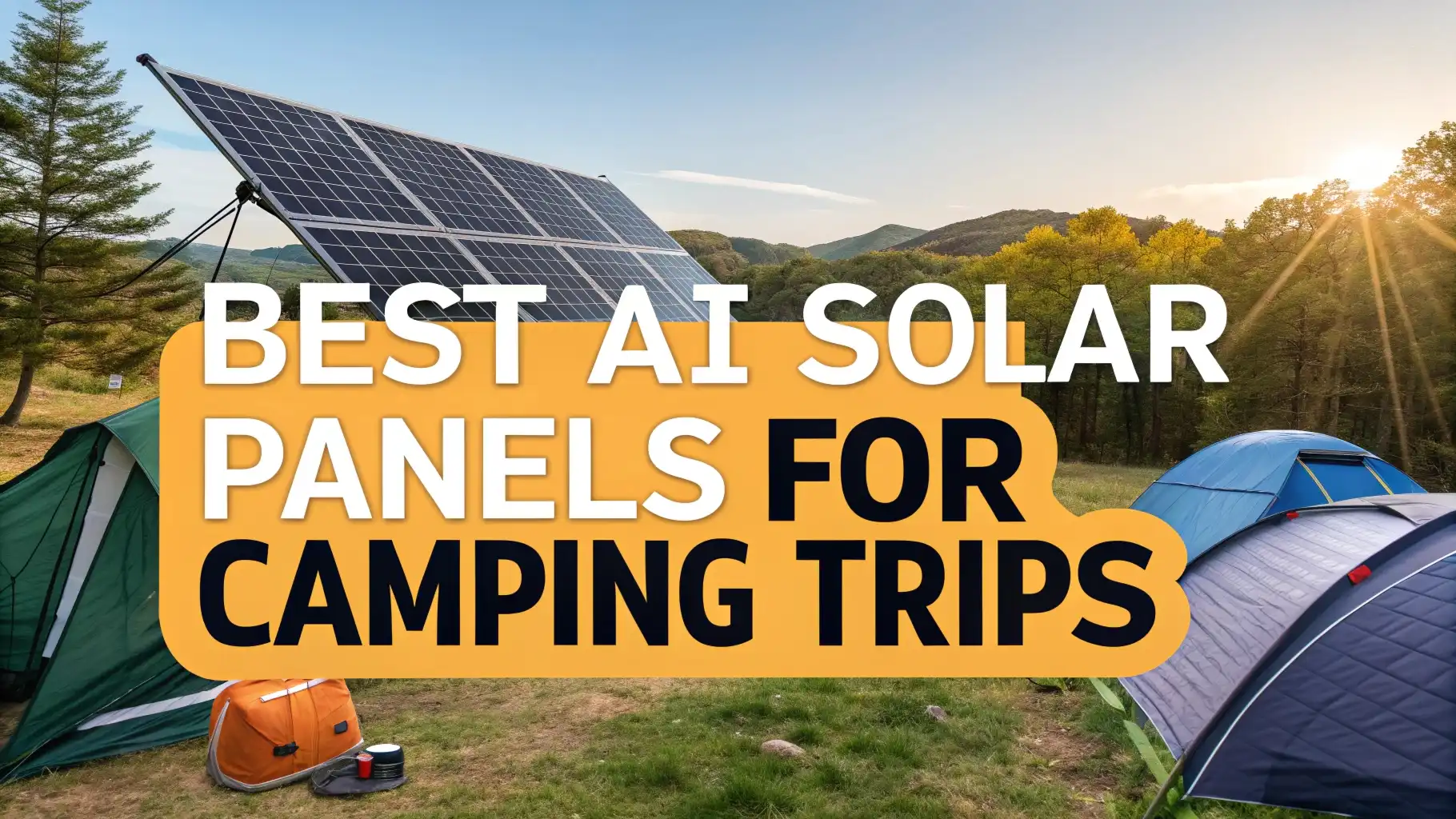
5 Best AI Solar Panels for Camping Trips in 2026
You want power at camp. You also want less stress. A good solar panel can keep your phone charged. It can run a cooler. It can top up a power station for lights at night.
In 2026, the best camping panels feel smarter because the full system helps you get more watts with less guesswork.
You get better cells. You get better kickstands. You also get smarter power stations with MPPT and apps that help you see input and improve placement.
In a nutshell
- Pick your watt goal first. A 200W class folding panel fits many camping trips. It can charge a mid size power station in daylight. It can also keep a fridge battery from dropping too fast. You should still expect lower real output in heat or shade. Your plan should allow extra time.
- Look for MPPT support in your power station. The panel does not do the tracking alone in most kits. The power station does it. MPPT can raise harvest in changing sun. Many guides report gains that can reach around 20 to 30 percent versus basic PWM in some conditions. This helps on cloudy mornings and late afternoons.
- Use angle control every day. You can get a big boost by pointing the panel at the sun. Many camping guides suggest a tilt in a practical range like 15 to 40 degrees for general use, then adjust by season and location. A simple kickstand makes this easy.
- Choose the right connector path. Most camping panels use MC4 for the main output. Some panels add USB ports. USB ports help for phones, but MC4 to a power station usually gives better flexibility for bigger loads. You should confirm cable type before you leave home.
- Weather claims need common sense. IP ratings help with light rain and dust. You should still keep the power station and connectors protected. You should also avoid soaking any gear. Dry gear lasts longer and charges more safely.
- Bifacial panels can help in bright campsites. A bifacial panel can collect light from the front and also from reflections behind it. This matters on sand, snow, light rock, and even bright concrete at an RV pad. You should still focus on direct sun first.
Why AI solar panels make camping easier in 2026
An AI solar panel for camping usually means a smarter charging experience, not a panel with a brain inside it. The panel gives DC power. The power station then uses MPPT to track the best voltage and current point.
Many modern power stations also use an app. The app shows input watts in real time. You can move the panel. You can see the number rise. This feels like AI because you get fast feedback and better results with simple actions.
Panel design also matters. Better folding hinges reduce setup time. Better kickstands help you aim at the sun. Better surface layers like ETFE help with scratches and heat.
Bifacial designs can add extra harvest when the ground reflects light. You get more usable energy when your system reduces wasted sun time. You also get a calmer camp routine because charging becomes predictable.
Quick buying checklist for camping solar panels
You should start with your daily energy. You can list devices and watts. You can estimate hours of use. Then you can decide a panel size. Many campers pick 100W for light use and 200W for mixed use. A 200W panel can feel like the sweet spot for weekend trips and longer stays.
Next, check voltage and connector type. Many panels use MC4 leads. Many power stations accept a voltage range. You should confirm that your panel fits that range. You should also check if you need an adapter cable. A great panel still fails if the cable does not match.
Then check carry style. Folding panels work well for tents and quick stops. Suitcase style panels work well for car camping because they stand well and pack flat. You should also check the kickstand design because angle control is the easiest free upgrade you can make at camp.
Best overall AI panel Jackery SolarSaga 200W

Jackery SolarSaga 200W is a strong choice for camping because it balances output, folding design, and durability. Many campers pair it with a Jackery Explorer power station, then use the station screen or app to watch input watts.
This creates a smart feedback loop. You set the panel. You check watts. You adjust angle. You lock in the best spot. That simple loop can raise daily harvest.
This model also uses a bifacial style in some versions. Bifacial collection can help when light bounces from sand or pale rock. This matters at open desert sites and beach camps. It also helps on bright winter days when the ground reflects more light.
Pros
- Strong 200W class output for most camping loads
- Folding format feels practical for tent camping
- Bifacial gain can help in reflective campsites
- Works well with MPPT power stations for better harvest in mixed sun
Cons
- Full 200W output needs strong sun and good angle
- Larger panels need space and wind care
- Premium brands can cost more than generic panels
Best for fast charging in mixed light EcoFlow 220W Portable Solar Panel

EcoFlow 220W is popular for campers who want high power in a folding panel. A 220W class panel can shorten solar refill time when conditions are good.
It also pairs well with EcoFlow power stations that use MPPT and app tracking. You can check input in watts and move the panel to improve it. That is the core of the AI style experience for campers.
This panel uses a bifacial design in many listings. You can get extra energy from reflected light behind the panel. You should place it on a bright surface when possible. You should still avoid shade on the front. Shade on one section can reduce output for the whole panel string.
Pros
- Higher watt class can reduce charging time
- Smart pairing with EcoFlow MPPT systems helps in changing sun
- Bifacial collection can add extra harvest in bright locations
- Folding build works for travel and storage
Cons
- Wind can push large folding panels if you do not anchor them
- Output drops fast if trees shade even part of the panel
- Higher watt panels need more setup space
Best for BLUETTI users BLUETTI PV200 200W

BLUETTI PV200 is a solid match for BLUETTI power stations because the ecosystem is simple. You connect the panel. You watch input on the station. You adjust placement for higher numbers. This is the practical version of smart solar. You do not guess. You measure.
Placement matters a lot for portable panels. BLUETTI has shared general guidance on choosing spots and directions for portable panels. The message stays simple. You avoid shade. You face the sun. You adjust tilt. This routine can change your result more than brand choice on many days.
PV200 class panels also fit many campers because they stay portable but still push enough power for lights, phones, and a power station refill during the day.
Pros
- Easy pairing with BLUETTI power stations
- Good balance of output and pack size for camping
- Kickstand style helps with tilt adjustments
- Strong results when you follow simple placement rules
Cons
- You still need full sun for best results
- Cable management can feel messy without a pouch
- Large folding panels can be awkward in tight tent sites
Best smart pairing for Anker users Anker SOLIX PS200

Anker SOLIX PS200 fits campers who already use Anker power gear and want a clean setup. The panel folds for travel. It uses kickstands so you can set a stable angle. Angle control matters because a small change can raise input. A panel that stands well helps you keep that angle without fuss.
This panel also works best when you pair it with a power station that has MPPT tracking. MPPT helps your station pull better power when conditions change. Clouds move fast in many camp areas. Trees shift shadows. MPPT can help you hold useful input instead of losing it.
Pros
- Simple folding design for quick camp setup
- Kickstands help you aim at the sun without extra gear
- Works well with MPPT stations for better harvest in variable light
- Good 200W class output for weekend trips
Cons
- Large panels still need space and wind care
- Real world watts can sit below the rated value
- You may need an adapter depending on your power station input
Best suitcase style for car camping Renogy 200W 12V Suitcase Solar Panel

Renogy suitcase panels fit car camping and base camps because the form feels stable. You open the case. You set it down. You aim it at the sun. Many suitcase kits also include a charge controller for direct battery charging in 12V systems. This can help if you run a simple battery box or a trailer battery. It can also work as part of a larger system if your setup supports it.
This style is also friendly for families. A suitcase panel often feels less delicate than thin folding mats. It also packs flat in a trunk. It feels like normal camping gear instead of a fragile gadget.
You still need smart habits. You should keep the panel out of shade. You should re aim it during the day. If you want an easy visual method, you can learn angle habits from practical solar angle guides that show common tilt ranges.
Pros
- Suitcase form feels stable for car camping
- Setup feels fast and simple for beginners
- Good match for 12V battery style camping systems
- Flat pack shape stores well in vehicles
Cons
- Suitcase panels can weigh more than folding fabric panels
- You must protect the controller and connectors from water
- It takes space in the trunk compared to slim fold panels
How to match panel watts to your power station and devices
You can make this simple. You start with watt hours. A 1000Wh power station can run a 50W cooler for about 20 hours in ideal math. Real life adds losses. You should plan less.
Then you look at your panel watts. You can estimate solar recharge time with a rough efficiency factor like 0.75 to account for losses and heat. Many calculator guides use that style of factor for a quick field estimate.
Here is an easy example. You have a 1000Wh station. You have a 200W panel. You get about 150W average in real sun. That can be 1000 divided by 150 which is about 6.7 hours of strong sun time. Your day may not give that. So you plan two days or you add a second panel.
You should also match voltage and amperage limits on the station input. A panel can fit in watts but still fail on voltage range. You should check the input specs before you buy.
How to set angle and placement for more watts
Angle and placement matter more than many people expect. You can buy the best panel and still get weak input if the sun hits it at a poor angle.
Many guides put a practical tilt range around 15 to 40 degrees for general use, then ask you to adjust by season. The key is simple. You face the panel at the sun. You tilt until the panel catches the most direct light.
You can also use real time watt reading as your guide. You set the panel. You check input watts. You tilt a bit. You check again. You keep the higher number. This is an easy smart workflow.
If you want a visual demo, you can watch this YouTube guide about getting the best solar panel angle with an EcoFlow angle guide.
Weather and dust handling in real campsites
Camping weather changes fast. Morning dew happens. Light rain happens. Wind happens. Dust happens. A good camping plan treats solar gear as weather resistant, not magic.
You should keep connectors dry when possible. You should keep the power station under a table or in a tent vestibule. You should wipe dust off the panel surface because dust blocks light.
You can also plan for heat. Hot panels can produce less power. You can place the panel where air moves behind it. You can avoid laying it flat on hot rock or dark asphalt. A few small habits can protect your gear and raise daily energy.
If your panel claims an IP rating, that helps with splashes and dust. It does not mean you should leave cables in puddles. You should pack a small towel and a dry bag for cables.
Packing, storage, and cable management tips
A solar panel works best when you use it often. Packing friction can stop you from using it. So you should make packing easy. You can keep MC4 cables in a small pouch. You can label adapters with a marker. You can store the panel near the top of your car load so you can deploy it at lunch.
You should also protect the panel face. You should avoid heavy gear on top of it. You should store it flat when possible. Folding panels can bend at hinges if you crush them. Suitcase panels can crack if you drop them on a rock.
Cable discipline reduces stress. A clean cable path also reduces trip hazards around camp. You can route cables along a tent edge. You can place the power station away from foot traffic. You can keep slack off the ground.
Common mistakes to avoid with portable solar panels
Many campers make the same mistakes. The first mistake is shade. Even light shade from branches can cut output hard. You should move the panel into full sun. The second mistake is poor angle. You should adjust tilt at least two times a day. Morning and afternoon need different angles.
The third mistake is bad expectations. A 200W panel rarely gives 200W all day. You should plan for a lower average. The fourth mistake is wrong connector planning. You should confirm your station input and adapter needs before you leave home.
The fifth mistake is unsafe placement. Panels can fall in wind. You should use stakes or weights. You should also keep panels away from active fire areas. Heat and smoke can damage surfaces.
FAQs
What does AI solar panel mean for camping?
AI solar panel usually means a smart charging experience. The panel feeds power. The power station uses MPPT and sometimes an app. You get live watts. You adjust placement. You get better results with less guessing.
Is a 200W portable panel enough for a camping fridge?
A 200W panel can help a lot. It can slow battery drain and refill a station in daylight. Your result depends on sun hours, shade, and fridge duty cycle. You should plan extra capacity if you camp in trees.
Do I need MPPT for portable solar charging?
MPPT helps many campers. It can increase harvest in changing light and cooler weather. Many guides report noticeable gains versus basic control methods in some cases.
Should I buy a bifacial portable panel?
A bifacial panel can help when the ground reflects light. It can help on sand, snow, and bright rock. It still needs direct sun on the front to shine.
What is the best angle for a portable solar panel at camp?
A common practical range is about 15 to 40 degrees for many situations. You should then adjust by season and location. You should also use the watt reading on your power station as the final judge.
Can I charge my phone directly from the solar panel?
Some panels include USB ports. Many campers instead charge a power station first, then charge phones from the station. This feels more stable because clouds can interrupt direct phone charging.