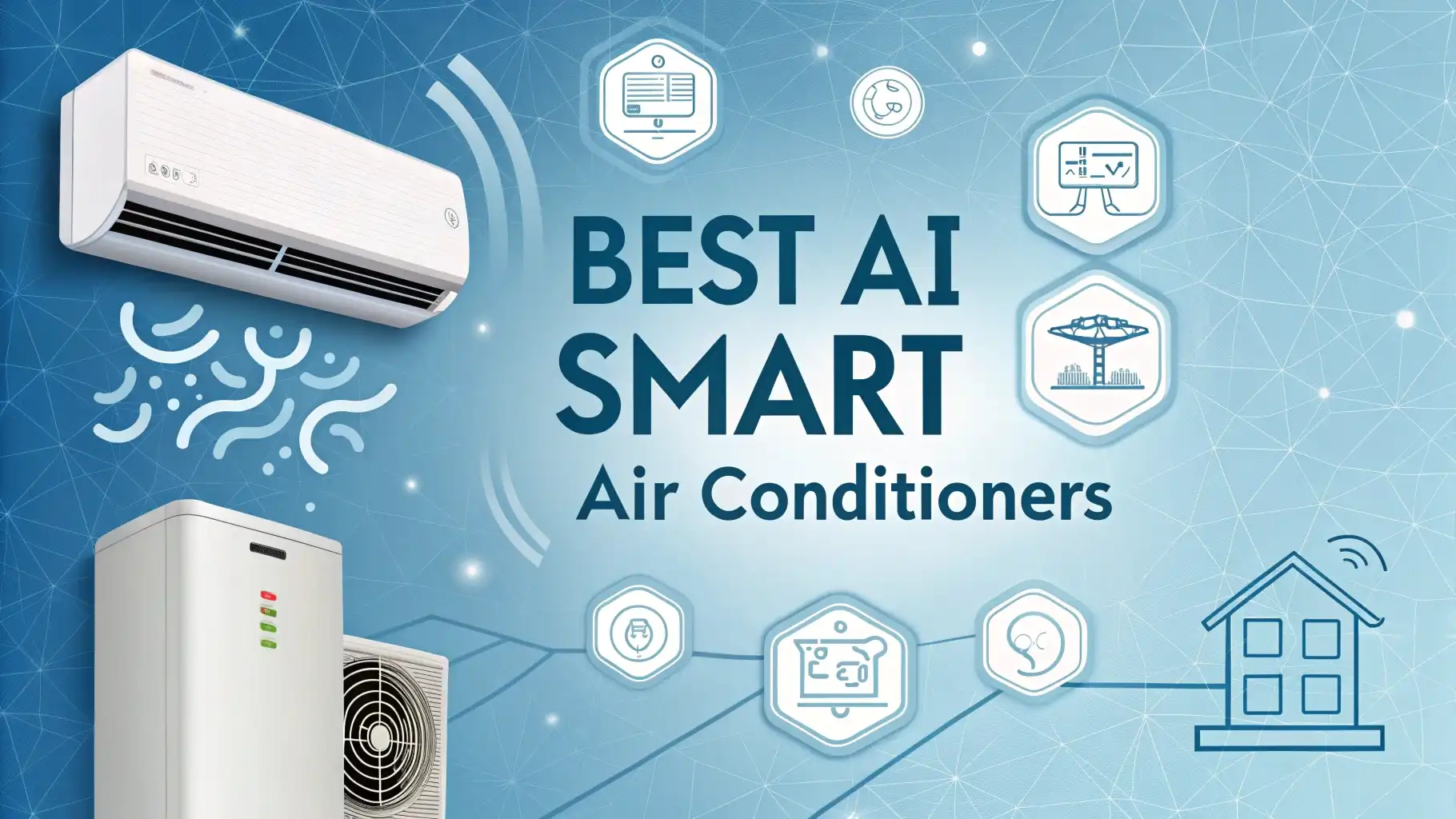
7 Best AI Smart Air Conditioners for Reducing Summer Energy Bills in 2026
Summer heat can be brutal on your comfort and your wallet. Your electricity bill climbs higher as temperatures rise. Traditional air conditioners keep running at full power even when they don’t need to. This wastes energy and costs you money every single month.
AI smart air conditioners change everything. These intelligent cooling systems learn your habits, adjust temperatures automatically, and optimize energy use throughout the day.
They connect to your phone through WiFi. They work with Alexa and Google Assistant. They can cut your cooling costs by up to 35% compared to standard AC units.

Key Takeaways:
- Energy Savings Are Real and Significant. AI smart air conditioners can reduce your cooling costs by 25% to 37% compared to traditional units. These savings come from inverter technology that adjusts compressor speed, smart scheduling that runs cooling during off-peak hours, and sensors that detect when rooms are empty.
- WiFi Connectivity Puts Control in Your Hands. Modern smart AC units connect to your smartphone through dedicated apps. You can adjust temperature, change modes, and monitor energy use from anywhere. Voice control through Alexa or Google Assistant lets you adjust settings without lifting a finger.
- Inverter Technology Makes the Biggest Difference. Unlike old air conditioners that turn on and off repeatedly, inverter ACs adjust compressor speed smoothly. This eliminates energy-wasting startup cycles and maintains steady temperatures. The result is quieter operation and dramatic energy savings.
- Size Matters for Maximum Efficiency. Choosing the right BTU rating for your space ensures optimal performance. An oversized unit wastes energy with frequent cycling. An undersized unit runs constantly and struggles to cool effectively. Most bedrooms need 6,000 to 8,000 BTUs, while larger living spaces require 10,000 to 14,000 BTUs.
- Smart Features Pay for Themselves Over Time. While AI smart air conditioners cost more upfront, the energy savings add up quickly. Most units pay for their extra cost within two to three cooling seasons through lower electricity bills.
Midea 12,000 BTU U-Shaped Smart Inverter Window Air Conditioner

The Midea U-Shaped design revolutionizes window AC installation and performance. This unit cools rooms up to 550 square feet with remarkable efficiency. The unique U-shape wraps around your window frame, allowing you to close the window for better insulation and security.
Inverter technology delivers 35% energy savings compared to traditional models. The compressor adjusts its speed continuously rather than cycling on and off. This maintains consistent temperatures while using less electricity. The system operates as quietly as 42 decibels, quieter than a normal conversation.
Smart connectivity works seamlessly with both Alexa and Google Assistant. The dedicated smartphone app lets you control temperature, fan speed, and modes from anywhere. You can create cooling schedules that align with your daily routine and electricity rates.
The open window flexibility stands out as a game-changing feature. You can open your window for fresh air while the unit continues operating. Traditional window ACs block your entire window opening, but the U-shape design leaves most of the window accessible.
Pros:
- 35% better energy efficiency than standard ACs
- Ultra-quiet operation at 42 decibels
- Allows window opening while running
- Full Alexa and Google Assistant integration
- Creates strong seal for better insulation
Cons:
- Higher upfront cost than basic models
- Requires specific window frame compatibility
- Installation needs careful measurement
LG 6000 BTU Dual Inverter Smart Window Air Conditioner

LG brings premium dual inverter technology to smaller spaces with this 6000 BTU model. The unit cools rooms up to 250 square feet efficiently, making it perfect for bedrooms, home offices, and small apartments.
The dual inverter compressor operates faster and more efficiently than conventional systems. It cools rooms 40% faster while using significantly less energy. The Energy Star certification confirms its excellent efficiency ratings. Your monthly electricity bills will reflect these impressive savings.
WiFi connectivity through the LG ThinQ app provides complete remote control capabilities. You can adjust settings, monitor energy consumption, and receive maintenance alerts directly on your smartphone. Voice commands through Alexa or Google Assistant make hands-free operation simple and convenient.
The washable filter design saves money on replacement costs while maintaining optimal air quality. Simply remove the filter, rinse it clean, and reinstall it. This easy maintenance keeps the unit running efficiently throughout the cooling season.
Pros:
- Dual inverter technology for maximum efficiency
- Cools rooms 40% faster than standard units
- Energy Star certified for proven savings
- Washable filter eliminates replacement costs
- Exceptionally quiet operation
Cons:
- Limited to smaller room sizes
- Premium pricing for this BTU range
- App requires stable WiFi connection
Windmill 6,000 BTU Smart Window Air Conditioner

Windmill combines sleek design with intelligent cooling technology in this 6,000 BTU window unit. The minimalist aesthetic looks modern and sophisticated in any room. No assembly required means you can install it and start cooling immediately.
Smart features focus on simplicity and effectiveness. The smartphone app offers intuitive controls for temperature, fan speed, and operating modes. Voice control compatibility ensures effortless operation through your existing smart home ecosystem. The included remote control provides convenient manual adjustments.
The unit cools spaces up to 250 square feet effectively while maintaining whisper-quiet operation. Advanced insulation and engineering reduce noise levels significantly compared to budget models. You can sleep comfortably without disruptive compressor sounds.
Energy efficiency meets modern standards with thoughtful engineering throughout the design. The unit adjusts cooling output based on current conditions rather than running at full blast constantly. This intelligent operation reduces electricity consumption while maintaining your desired comfort level.
Pros:
- No assembly required for quick installation
- Sleek modern design enhances room aesthetics
- Very quiet operation for bedrooms
- User-friendly app interface
- Included remote control for manual operation
Cons:
- Best suited for smaller spaces only
- Premium price point
- Limited advanced scheduling features
Frigidaire 14,000 BTU Smart Inverter Window Air Conditioner

Frigidaire delivers powerful cooling for larger spaces with this 14,000 BTU smart inverter model. The unit handles rooms up to 700 square feet with ease, making it ideal for master bedrooms, living rooms, and open-concept areas.
Inverter technology combined with Energy Star certification ensures excellent energy efficiency despite the high cooling capacity. The system adjusts compressor speed dynamically based on ambient temperature and desired settings. This intelligent operation prevents energy waste while maintaining consistent comfort.
WiFi connectivity provides full remote control through the Frigidaire app. You can monitor real-time energy usage, adjust temperature settings, and create customized cooling schedules. The app sends alerts when filter cleaning is needed, helping maintain optimal performance.
Multiple operating modes adapt to different situations throughout the day. Cool mode provides maximum cooling power. Energy-saving mode reduces electricity consumption. Fan-only mode circulates air without cooling. Sleep mode gradually adjusts temperature for comfortable overnight rest.
Pros:
- High 14,000 BTU capacity for large rooms
- Energy Star certified efficiency
- Ultra-quiet operation despite high power
- Comprehensive smart app features
- Multiple operating modes for flexibility
Cons:
- Requires 230V outlet installation
- Heavy unit needs secure mounting
- Higher operating cost than smaller models
DREO 8,000 BTU Smart Portable Air Conditioner

DREO revolutionizes portable cooling with this 8,000 BTU smart unit featuring drainage-free technology. The innovative design eliminates the hassle of emptying water tanks constantly. Auto-evaporation technology processes condensate automatically, making maintenance virtually effortless.
The remarkably quiet 45-decibel operation makes this portable AC perfect for bedrooms and workspaces. Advanced sound dampening technology reduces compressor noise to barely noticeable levels. You can sleep, work, or relax without annoying background sounds interrupting your activities.
Smart connectivity offers three convenient control methods. The smartphone app provides complete remote control from anywhere. Voice commands through Alexa or Google Assistant enable hands-free operation. The included remote control offers traditional manual adjustment options.
Portability combined with powerful cooling creates exceptional versatility. Roll the unit to any room that needs cooling. The window installation kit includes everything needed for quick setup. Cooling capacity suits rooms up to 350 square feet effectively.
Pros:
- Drainage-free operation eliminates water tank hassle
- Exceptionally quiet at 45 decibels
- Three control methods for maximum convenience
- True portability between rooms
- Easy installation with included kit
Cons:
- Portable units less efficient than window models
- Single hose design limits efficiency somewhat
- Takes up floor space
BLACK+DECKER 14,000 BTU Smart Portable Air Conditioner

BLACK+DECKER brings serious cooling power to portable format with this 14,000 BTU smart model. The high capacity handles rooms up to 700 square feet effectively, providing relief even during the hottest summer days.
The Follow Me remote control feature stands out as an intelligent innovation. The remote contains a temperature sensor that monitors conditions where you actually are. The AC adjusts cooling based on your location rather than the unit’s built-in sensor. This ensures optimal comfort exactly where you need it.
Smart connectivity enables remote control through your smartphone. Adjust temperature, change modes, and monitor operation from anywhere inside or outside your home. The intuitive app interface makes controlling your cooling environment simple and straightforward.
The included window installation kit fits most standard windows quickly and easily. Dual hose design improves efficiency compared to single-hose portable models. The unit exhausts hot air outside while drawing in fresh air for better cooling performance.
Pros:
- Powerful 14,000 BTU cooling capacity
- Follow Me remote for personalized comfort
- Best-seller status proves reliability
- Portable between multiple rooms
- Effective for large spaces
Cons:
- Higher energy consumption than window units
- Bulkier than smaller portable models
- Makes some operational noise
Hisense 6,000 BTU Smart Inverter Window Air Conditioner

Hisense delivers exceptional value with this 6,000 BTU smart inverter window unit. The three-mode operation provides cooling, fan-only, and dehumidifier functions in one compact system. This versatility handles different comfort needs throughout changing weather conditions.
Smart inverter technology achieves 24.5% greater energy savings compared to conventional models. The variable-speed compressor adjusts precisely to match cooling demands. This eliminates wasteful on-off cycling while maintaining stable temperatures throughout your space.
Easy installation design simplifies the setup process significantly. The included mounting hardware and detailed instructions make DIY installation achievable for most homeowners. The ultra-quiet operation ensures minimal noise disruption during day or night use.
The two-year warranty provides peace of mind and demonstrates manufacturer confidence in product quality. This coverage protects your investment and ensures reliable performance throughout multiple cooling seasons. Customer ratings consistently praise the unit’s reliability and efficiency.
Pros:
- 24.5% better energy efficiency
- Three operating modes for versatility
- Ultra-quiet operation
- Easy installation process
- Two-year warranty coverage
Cons:
- Lower capacity suits only smaller rooms
- Basic smart features compared to premium models
- WiFi connectivity can be temperamental
Understanding How AI Smart Air Conditioners Save Money
AI smart air conditioners reduce energy bills through multiple intelligent technologies working together. These systems think about cooling differently than traditional units. They analyze conditions, predict needs, and optimize operation continuously.
Inverter compressor technology forms the foundation of modern efficiency. Traditional air conditioners run at full power until the target temperature is reached, then shut off completely. This constant cycling wastes enormous amounts of energy during startup. Inverter systems adjust compressor speed smoothly across a wide range. They maintain target temperatures with minimal energy consumption.
Learning algorithms study your cooling patterns over time. The system notices when you typically arrive home and pre-cools spaces just before your arrival. It recognizes when certain rooms remain unoccupied and reduces cooling there automatically. These intelligent adjustments happen without requiring any manual programming from you.
Smart scheduling capabilities maximize savings by leveraging time-of-use electricity rates. Many power companies charge less during off-peak hours, typically overnight and early morning. Smart ACs can pre-cool your home during these cheaper periods, then coast through expensive peak hours while maintaining comfort.
Key Features That Maximize Energy Savings
Several specific features separate highly efficient smart air conditioners from basic models. Understanding these features helps you choose units that deliver maximum savings on your electricity bills.
Motion and occupancy sensors detect when rooms are empty. The system reduces or stops cooling in unoccupied spaces automatically. This prevents wasting energy cooling empty rooms throughout the day. Some advanced models even detect the number of people present and adjust cooling capacity accordingly.
Smart temperature sensors provide more accurate readings than traditional thermostats. Multiple sensors throughout the room measure conditions at different locations. The system uses this data to maintain consistent comfort everywhere rather than creating hot and cold spots.
Geofencing technology uses your smartphone location to control cooling automatically. The system detects when you leave home and switches to energy-saving mode. As you approach home, it resumes active cooling to have your space comfortable upon arrival. This automation eliminates wasted cooling when nobody is home.
App-based energy monitoring shows exactly how much electricity your AC consumes. You can track usage by day, week, or month. This visibility helps identify opportunities to adjust settings for better efficiency. Some apps even provide personalized recommendations for reducing consumption.
Installation and Setup Considerations
Proper installation ensures your smart air conditioner operates at peak efficiency. Poor installation wastes energy and reduces cooling effectiveness significantly. Understanding installation requirements helps avoid costly mistakes.
Window units require accurate measurements before purchase. Measure your window width, height, and sill depth carefully. Check weight limits for your window frame. Many modern units weigh 50 to 80 pounds and need secure mounting. The U-shaped designs need specific window configurations but offer superior efficiency once installed properly.
Portable air conditioners offer easier installation but require attention to hose routing. Position the unit near a window for exhaust hose connection. Keep the hose as short and straight as possible. Every bend and extra foot of hose reduces efficiency. Some rooms simply aren’t suited for portable units due to window locations.
WiFi setup needs a strong signal at the AC location. Smart features become frustrating or unusable with weak connectivity. Consider WiFi extenders if your AC location has poor signal. Most units operate on 2.4GHz networks, not 5GHz, so check your router settings.
Electrical requirements vary significantly between models. Units under 10,000 BTU typically work with standard 115V outlets. Larger units need 230V circuits that require professional electrical work. Never use extension cords with air conditioners, as this creates fire hazards and voids warranties.
Maintaining Your Smart AC for Optimal Performance
Regular maintenance keeps your smart air conditioner running efficiently throughout its lifespan. Neglecting simple maintenance tasks reduces cooling power and increases energy consumption dramatically.
Clean or replace filters every two weeks during heavy use periods. Dirty filters restrict airflow and force the system to work harder. This wastes energy and reduces cooling effectiveness. Many smart ACs send app notifications when filter cleaning is needed, making this task easy to remember.
Keep the unit’s exterior and interior coils clean. Dust and debris accumulation reduces heat transfer efficiency. Vacuum external vents monthly during cooling season. Professional cleaning every few years maintains optimal performance for internal components.
Check window seals and installation security regularly. Gaps around the unit let cool air escape and hot air enter. This forces the AC to work harder and wastes energy constantly. Foam weather stripping fills small gaps effectively.
Update firmware when manufacturers release new versions. These updates often improve efficiency algorithms, fix bugs, and add new features. Most smart AC apps notify you when updates are available. The update process typically takes just a few minutes.
Choosing the Right BTU Capacity
Selecting appropriate cooling capacity ensures efficient operation and comfortable results. An incorrectly sized unit wastes energy regardless of how smart its features are.
Calculate required BTUs based on room size as your starting point. The basic formula provides 20 BTUs per square foot for standard rooms. A 250-square-foot bedroom needs approximately 5,000 to 6,000 BTUs. A 550-square-foot space requires 10,000 to 12,000 BTUs.
Several factors modify this basic calculation. Rooms with high ceilings need extra capacity. Spaces with large windows or southern exposure require more cooling power. Kitchens need additional BTUs due to heat from appliances. Rooms with many occupants benefit from extra capacity.
Oversizing seems appealing but creates problems. Units too large for their space cool quickly but don’t run long enough to remove humidity effectively. This creates clammy, uncomfortable conditions. The system cycles on and off frequently, wasting energy during repeated startups.
Undersizing forces the unit to run constantly without achieving comfortable temperatures. The compressor never gets rest periods, leading to premature wear. Energy consumption stays high as the system struggles futilely against heat load.
Smart AC vs. Traditional AC: Real Cost Comparison
Understanding actual cost differences helps evaluate whether smart air conditioners justify their higher prices. The complete picture includes purchase price, installation, operation, and maintenance over several years.
Initial purchase prices for smart inverter units run $100 to $300 higher than comparable non-smart traditional models. A basic 8,000 BTU window unit might cost $200, while a smart inverter version costs $350. This upfront difference stops some buyers from choosing smart options.
Operating costs tell a different story. Smart inverter ACs typically use 25% to 35% less electricity than traditional models. Assume your old AC costs $50 monthly to operate during summer. A smart inverter unit running the same amount would cost $32.50 to $37.50 monthly. That’s $150 to $210 in annual savings for a typical four-month cooling season.
The higher initial cost gets recovered through energy savings within two to three years. After that point, you continue saving money every single cooling season. Over a typical 10-year AC lifespan, total savings reach $1,500 to $2,100 compared to traditional units.
Additional value comes from improved comfort, quieter operation, and convenience features. Remote control capabilities let you adjust settings without getting up. Voice control integration fits seamlessly into smart homes. These quality-of-life improvements have real value beyond just dollar savings.
Future Trends in Smart Cooling Technology
The smart air conditioner market continues evolving rapidly with new innovations appearing regularly. Understanding upcoming trends helps you choose units that remain relevant for years.
AI learning capabilities grow more sophisticated with each product generation. Current systems learn basic patterns like arrival times and preferred temperatures. Future models will understand complex lifestyle patterns and adjust preemptively. They’ll recognize vacation schedules, seasonal habit changes, and household routine variations automatically.
Integration with solar power systems creates exciting efficiency opportunities. Smart ACs can prioritize operation during peak solar production hours when your panels generate excess electricity. This maximizes use of free solar power rather than grid electricity. Some systems already offer basic solar integration with much more sophisticated versions coming soon.
Improved air quality monitoring expands beyond just temperature control. New smart ACs incorporate sensors for particulates, VOCs, and allergens. The system automatically switches to filtration mode when air quality degrades. This health-focused functionality becomes increasingly important as awareness of indoor air quality grows.
Zone cooling technology allows smart management of multiple AC units throughout larger homes. The system coordinates operation to cool only occupied spaces while reducing or stopping cooling elsewhere. This whole-home approach delivers maximum efficiency impossible with individual units operating independently.
Frequently Asked Questions
Do smart air conditioners really save enough money to justify their higher cost?
Yes, smart air conditioners typically save 25% to 35% on cooling costs compared to traditional models. For most households, these savings recover the higher purchase price within two to three years. After that point, you continue saving money throughout the unit’s 10-year lifespan. The combination of inverter technology, smart scheduling, and occupancy detection creates substantial ongoing savings that far exceed the initial price difference.
Can I control a smart air conditioner without a smartphone?
Absolutely. All smart air conditioners include traditional remote controls for basic operation. The units also have manual controls directly on the device itself. Smart features enhance convenience but aren’t required for daily use. You can adjust temperature, fan speed, and modes without ever connecting to WiFi or downloading an app. The smart capabilities simply provide additional control options when you want them.
Will a smart AC work if my WiFi goes down?
Yes, smart air conditioners continue operating normally during WiFi outages. You lose remote control and app-based features temporarily, but the unit keeps cooling according to its last settings. Manual controls on the unit and the remote control remain fully functional. Once WiFi connectivity restores, smart features resume automatically without requiring any reset or reconfiguration.
How difficult is it to install a smart window air conditioner?
Installation difficulty matches traditional window AC units for most smart models. If you’ve installed a regular window AC before, smart versions follow the same basic process. The main additions are connecting to WiFi and downloading the control app, which typically takes just 5 to 10 minutes. Some innovative designs like U-shaped models require specific window types but include detailed instructions. Professional installation remains available if you prefer expert help.
Do smart air conditioners require monthly subscription fees?
No, the vast majority of smart air conditioners have no ongoing subscription costs. All basic smart features including app control, voice assistant integration, and scheduling work without any monthly fees. The manufacturer provides cloud services for connectivity at no charge. This contrasts with some other smart home devices that charge monthly fees for advanced features or cloud storage.
Which voice assistants work with smart air conditioners?
Most smart air conditioners work with both Amazon Alexa and Google Assistant. Some models also support Apple HomeKit and Samsung SmartThings. The product listing specifies compatible voice assistants clearly. Once connected, you can control temperature, modes, and power with simple voice commands. Integration typically requires linking the AC manufacturer’s app with your voice assistant app through a simple authorization process.
Are smart air conditioners more reliable than traditional models?
Smart air conditioners demonstrate comparable or better reliability than traditional units. The core cooling components use proven technology. The addition of smart features doesn’t significantly impact mechanical reliability. Many users report that app-based maintenance reminders actually improve reliability by ensuring timely filter cleaning and service. Most manufacturers offer warranties of one to three years, with some premium models including even longer coverage periods.