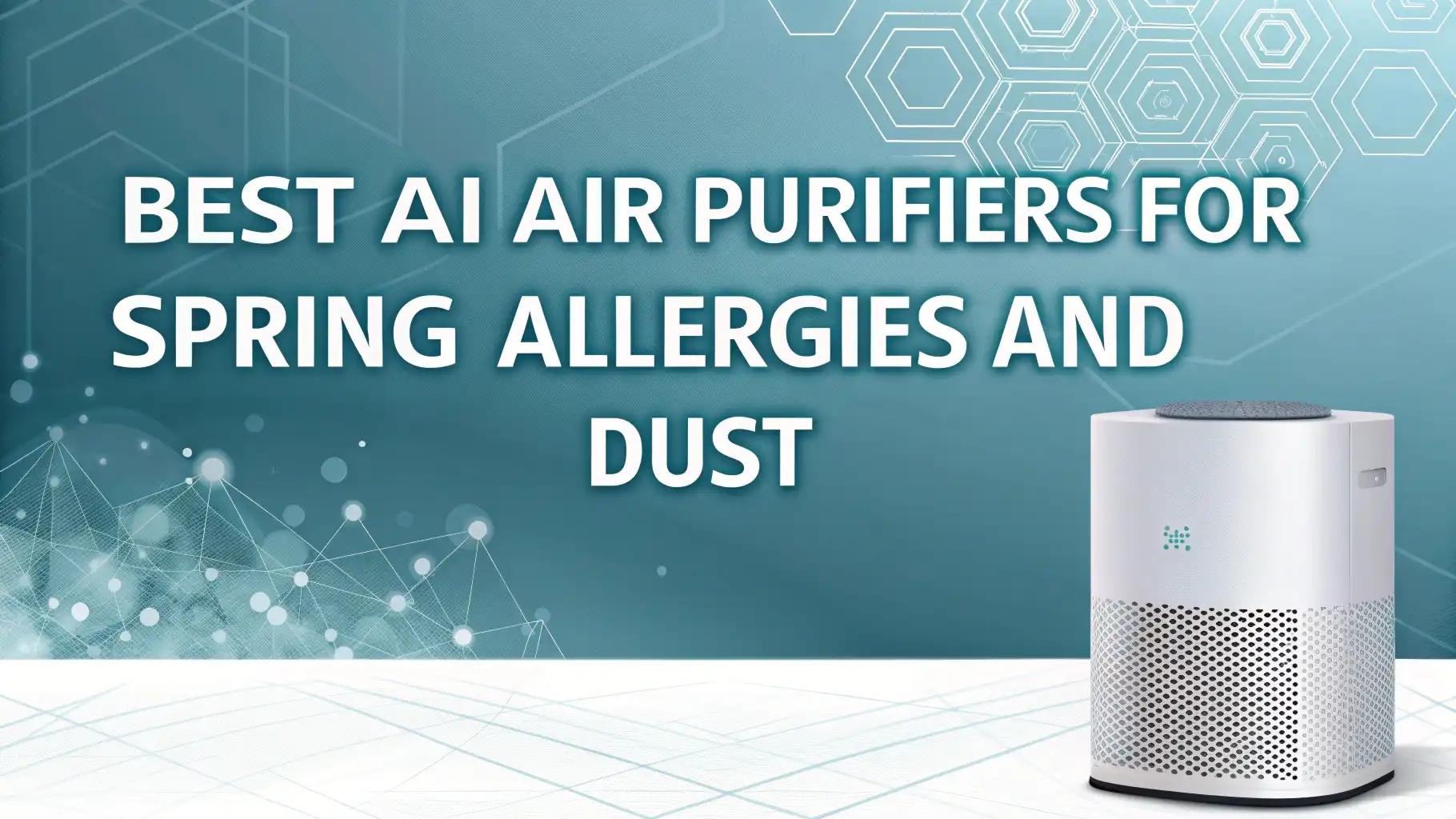
9 Best AI Air Purifiers for Spring Allergies and Dust in 2026
Spring is beautiful. But for millions of people, it also brings itchy eyes, runny noses, and relentless sneezing. Pollen counts rise. Dust fills every corner. And your indoor air? It can actually be worse than the air outside. That is where a smart, AI-powered air purifier changes everything.
Today’s best AI air purifiers do more than just filter air. They sense pollutants in real time, adjust fan speeds automatically, connect to your phone, and even learn your habits. Whether you suffer from hay fever, dust mite allergies, or just want fresher air at home, the right purifier can make a huge difference this spring.
We researched and compiled the 9 best AI air purifiers available on Amazon in 2026. This list covers every room size, every budget, and every need, so you can stop guessing and start breathing better today.
Key Takeaways
- AI-powered air purifiers use real-time sensors to detect dust, pollen, PM2.5 particles, and VOCs, then auto-adjust fan speed without you touching anything.
- True HEPA filtration is a must for spring allergy relief. It captures 99.97% of airborne particles as small as 0.3 microns, including pollen, dust mite debris, and mold spores.
- Room size matters a lot. Always match the purifier’s CADR (Clean Air Delivery Rate) to your actual room square footage for best results.
- Smart app connectivity lets you monitor your indoor air quality, set schedules, and control the device remotely, which is especially handy during peak pollen season.
- Energy efficiency is worth checking. Look for Energy Star certified models if you plan to run the purifier 24/7, which most allergy sufferers need to do.
- Filter replacement costs add up over time. Factor in annual filter costs when comparing products, as some premium models have expensive replacement filters.
Why Spring Allergies and Dust Are So Hard to Beat
Spring allergy season typically runs from March through May, though in many parts of the country, tree pollen can start as early as February. Grass and weed pollen then extend the misery through summer.
The problem is that pollen and dust particles are invisible to the naked eye. You cannot see them floating in your living room, bedroom, or kitchen, but your immune system certainly reacts to them.
Indoor dust contains more than just dirt. It holds dust mite particles, pet dander, mold spores, and pollen tracked in from outside. Standard fans and ventilation systems just move these particles around. They do not remove them.
That is why a dedicated air purifier with smart AI features is one of the best investments you can make for your home this spring. Modern AI purifiers detect pollution spikes automatically and respond before your symptoms even start.
Key Features to Look for in an AI Air Purifier
Not every air purifier deserves the “AI” label. Before buying, check for these important features:
True HEPA Filter: This is non-negotiable for allergy sufferers. A True HEPA filter captures 99.97% of particles at 0.3 microns in size. Some models go even further with HEPA H13 standards, which offer even finer filtration.
Smart Air Quality Sensor: A real AI purifier uses a built-in laser or optical particle sensor to measure pollution levels continuously. This data drives the auto mode, speeding up the fan when air quality drops and quieting down when the air is clean.
Auto Mode: The auto mode uses sensor data to adjust the fan speed without manual input. This feature alone saves energy and ensures your air is always clean.
WiFi and App Control: Most top models connect to a smartphone app. You can check air quality readings, set schedules, and control the unit from anywhere.
Activated Carbon Filter: A carbon filter handles odors, VOCs, and gases that a HEPA filter alone cannot remove. This is great for kitchen smells, pet odors, and chemical fumes.
Room Coverage (CADR Rating): The CADR (Clean Air Delivery Rate) tells you how fast the purifier cleans the air. Match it to your room size for proper coverage.
Coway Airmega AP-1512HH Mighty Air Purifier — Best Overall

The Coway Airmega AP-1512HH Mighty is one of the most tested and trusted air purifiers on the market. It has earned the title of “best overall” from multiple major review outlets, and for good reason. This compact unit packs serious power for rooms up to 360 square feet, making it ideal for bedrooms, living rooms, and home offices.
It uses a 4-stage HyperCaptive filtration system that includes a pre-filter, an activated carbon deodorization filter, a True HEPA filter, and Coway’s Vital Ion technology.
The real-time air quality indicator glows in different colors to show pollution levels at a glance. The auto mode kicks in automatically when it detects particles in the air, which is perfect during high-pollen spring days.
The unit is Energy Star certified and extremely quiet on its lowest settings, making it comfortable to run all night long. It also has a filter replacement indicator so you never forget to change the filters. For the price, this is genuinely hard to beat.
Pros:
- Highly effective 4-stage filtration system
- Real-time color-coded air quality sensor
- Energy Star certified and very efficient
- Quiet sleep mode, great for bedrooms
- Affordable price point for the features offered
Cons:
- Coverage limited to 360 sq. ft. (not ideal for large open spaces)
- No WiFi or app connectivity in the base model
- Vital Ion ionizer cannot be fully disabled on some versions
Levoit Core 400S Smart Air Purifier — Best Value Smart Pick

The Levoit Core 400S is the go-to choice if you want smart features without a premium price tag. It covers up to 1,733 square feet and connects to the VeSync app for full remote control. You can set schedules, monitor air quality, and activate sleep mode right from your phone.
This model uses Levoit’s ARC Formula technology and a 3-in-1 HEPA filter that combines a pre-filter, HEPA layer, and activated carbon filter in one unit.
The PM2.5 laser sensor provides accurate, real-time readings that drive the auto mode. It also works with Amazon Alexa and Google Assistant for voice control, which is a great convenience during spring cleaning.
The Core 400S runs at just 24 dB in sleep mode, which is whisper-quiet. The 360-degree air intake pulls in air from all sides efficiently. For people who want a connected, smart purifier at a fair price, this is the one to beat in 2026.
Pros:
- Large room coverage up to 1,733 sq. ft.
- Works with Alexa and Google Assistant
- VeSync app with schedules and real-time air quality data
- Extremely quiet 24 dB sleep mode
- Affordable for the coverage and features provided
Cons:
- Replacement filters can be pricey over time
- The app can occasionally have connectivity issues
- Filter indicator has been reported as inconsistent by some users
Dyson Purifier Cool TP07 — Best Premium AI Air Purifier

If you want the top-of-the-line experience, the Dyson Purifier Cool TP07 delivers it. This is not just an air purifier. It is also a cooling fan, and it is fully sealed to the HEPA H13 standard, meaning air cannot bypass the filter. Every single cubic inch of air that passes through this machine is cleaned before it reaches you.
The TP07 automatically senses and reacts to changes in air quality, then reports pollution data in real time through the MyDyson app. It monitors PM2.5, PM10, VOCs, NO2, and humidity levels simultaneously. The app gives you detailed air quality history so you can see exactly when your home’s air quality dipped.
Dyson’s Air Multiplier technology projects purified air across the entire room without using fast-spinning blades, making it remarkably quiet for its output. This machine is a statement piece as much as it is a purifier. It is the best choice for allergy sufferers who also want premium design and the most detailed air quality data available.
Pros:
- Fully sealed HEPA H13 filtration, no air bypass
- Doubles as a powerful cooling fan
- Monitors PM2.5, PM10, VOCs, and NO2 in real time
- Sleek, award-winning design
- Excellent MyDyson app with detailed air quality history
Cons:
- Very expensive compared to most competitors
- Replacement filters are costly
- Cooling function may not be useful in winter months
- Fan noise increases noticeably at higher speeds
Blueair Blue Pure 311i Max — Best for Medium Rooms

The Blueair Blue Pure 311i Max is one of the most stylish and effective mid-size purifiers available today. It covers up to 1,858 square feet in one hour using Blueair’s patented HEPASilent dual filtration technology, which combines electrostatic and mechanical filtration for higher particle capture with lower energy use.
This unit connects via WiFi and works with the Blueair app, Alexa, and Google Assistant. The smart auto mode adjusts fan speed based on real-time air quality data, and the washable fabric pre-filter makes ongoing maintenance easy and affordable. It also doubles as a side table, which is a clever design touch for smaller rooms.
The 311i Max is one of the quietest purifiers in its class, making it ideal for open-plan living areas and bedrooms. If you want powerful, near-silent filtration with smart controls in a medium-sized space, this is a fantastic option.
Pros:
- HEPASilent technology uses less energy for the same performance
- Covers up to 1,858 sq. ft. in one hour
- Washable pre-filter saves on replacement costs
- Smart auto mode with real-time sensor feedback
- Doubles as a side table, space-saving design
Cons:
- Higher upfront cost than similarly-sized competitors
- The app interface can feel less intuitive for first-time users
- Electrostatic filtration may produce trace ozone (very low levels)
Rabbit Air MinusA2 — Best Wall-Mountable AI Air Purifier

The Rabbit Air MinusA2 is one of the most customizable air purifiers you can buy. It covers up to 815 square feet and can be mounted directly on the wall, freeing up valuable floor space. This is especially useful in smaller apartments or in rooms where floor space is limited.
It uses a 6-stage filtration system that includes a pre-filter, medium filter, BioGS HEPA filter, activated carbon filter, a customizable filter, and negative ion generator. The customizable filter layer lets you choose the type based on your specific needs, including options for germ defense, odor remover, pet allergy relief, and toxin absorber.
The MinusA2 connects via the Rabbit Air app and is compatible with Amazon Alexa. The BioGS HEPA filter is designed to self-sterilize, slowing the growth of bacteria and viruses trapped in the filter. For renters, small-space dwellers, or design-conscious buyers, this is the most versatile option on this list.
Pros:
- Wall-mountable design saves valuable floor space
- 6-stage filtration with customizable filter layer
- BioGS HEPA filter that self-sterilizes
- Ultra-quiet operation, great for bedrooms
- Stylish, modern design that looks good on any wall
Cons:
- Smaller coverage area than some competitors in this price range
- Premium price point for the coverage offered
- Wall mounting requires careful installation planning
Winix 5510 Air Purifier — Best Budget-Friendly Smart Purifier

The Winix 5510 is the upgraded, app-connected successor to the beloved Winix 5500-2, one of the best-selling air purifiers on Amazon for years. It covers up to 1,881 square feet in one hour and uses a True HEPA filter, a high-deodorization carbon filter, and PlasmaWave technology to clean the air at multiple levels.
The new Winix 5510 adds WiFi app support to the already proven 5500-2 formula. The smart auto mode reads air quality in real time and adjusts fan speed accordingly. The high-deodorization carbon filter is particularly strong, making this an excellent choice for homes with pets, smokers, or strong cooking smells.
PlasmaWave technology creates hydroxyls that neutralize odors, viruses, and bacteria at a molecular level. At its price point, the Winix 5510 delivers features that cost significantly more in other brands. This is the top pick for allergy sufferers who need smart features but have a tight budget.
Pros:
- Excellent value for the coverage and features offered
- True HEPA plus PlasmaWave technology combination
- Now includes WiFi app support in the upgraded 5510 model
- High-deodorization carbon filter handles strong odors well
- Smart auto mode with real-time air quality monitoring
Cons:
- PlasmaWave technology cannot be fully disabled on all settings
- The app is less polished compared to Levoit or Dyson apps
- Design is more utilitarian compared to competitors
Honeywell HPA300 HEPA Air Purifier — Best for Extra-Large Rooms

The Honeywell HPA300 has been the #1 recommended air purifier by allergists for years. It is designed for extra-large rooms of up to 465 square feet (AHAM-verified) and circulates air up to 5 times per hour. This rapid air circulation rate is what makes it so effective during high-pollen spring days.
It uses a True HEPA filter that captures up to 99.97% of microscopic airborne allergens including dust mites, mold spores, pet dander, and pollen. The activated carbon pre-filter helps reduce odors and VOCs. The unit has 4 cleaning levels including Turbo, making it capable of dealing with sudden air quality spikes quickly.
While the HPA300 lacks app connectivity compared to some competitors, its raw filtration power is hard to match at this price. For anyone who needs serious allergen removal in a large open room, living area, or basement, this remains one of the best pure performers available.
Pros:
- Allergist recommended, proven performance record
- Circulates air 5 times per hour in rooms up to 465 sq. ft.
- 4 cleaning levels including a powerful Turbo mode
- Simple, reliable controls with no technology learning curve
- One of the most affordable options for extra-large room coverage
Cons:
- No WiFi or smartphone app connectivity
- The design is functional but not particularly stylish
- Honeywell uses carbon pre-filters that need frequent replacement
Molekule Air Mini+ — Best AI Air Purifier for Small Rooms

The Molekule Air Mini+ is the most technologically advanced purifier for small spaces on this list. It covers rooms up to 250 square feet and uses Molekule’s unique PECO-HEPA Tri-Power filtration technology, which goes beyond standard HEPA by using photochemical oxidation to destroy pollutants at a molecular level rather than just capturing them.
The Air Mini+ includes an air quality sensor that monitors particle levels in real time and adjusts operation automatically. It connects to the Molekule app for detailed air quality reporting, scheduling, and remote control. The PECO layer can destroy bacteria, viruses, mold, and VOCs that standard HEPA filters simply cannot address.
This unit is FDA-cleared for use in medical settings, which speaks volumes about its performance. For small bedrooms, nurseries, home offices, or allergy sufferers who need the highest level of protection in a compact space, the Molekule Air Mini+ is in a class of its own.
Pros:
- PECO-HEPA Tri-Power technology destroys pollutants, not just traps them
- FDA-cleared, trusted medical-grade air purification
- Real-time air quality sensor with smart auto mode
- Compact size fits in any room without taking up much space
- Detailed Molekule app with air quality tracking
Cons:
- Covers only 250 sq. ft., not suitable for larger rooms
- Premium price for a small-room purifier
- Replacement filters are expensive compared to competitors
Alen BreatheSmart 75i — Best AI Air Purifier for Very Large Spaces

The Alen BreatheSmart 75i is the powerhouse on this list. It is built for very large spaces up to 2,800 square feet, making it the best choice for open-plan homes, large living areas, and commercial spaces. It can clean an entire open floor plan in a single unit, which is something few purifiers can claim.
The BreatheSmart 75i uses a True HEPA filter combined with your choice of specialty filter, including options for heavy odors, fresh air, and allergy-focused filtration. It has a laser smart sensor that monitors air quality 24/7 and drives the auto mode in real time. The unit also comes with a lifetime guarantee, which is exceptional in this category.
Alen’s proprietary technology includes WhisperMax technology, making it one of the quietest large-room purifiers available at just 25 dB on its lowest setting. The BreatheSmart 75i works with the Alen app, allowing you to monitor air quality, control the unit remotely, and track filter life. For large homes where spring pollen and dust settle everywhere, this machine provides comprehensive whole-room protection.
Pros:
- Covers an impressive 2,800 sq. ft., ideal for large homes
- Laser smart sensor with real-time auto mode adjustment
- Lifetime guarantee, exceptional long-term value
- Whisper-quiet 25 dB operation at low settings
- Customizable filter options for specific allergy needs
Cons:
- High upfront cost due to its large-room capabilities
- Bulky unit, requires dedicated floor space
- Specialty filter replacements can add to ongoing costs
How to Get the Most Out of Your AI Air Purifier
Buying a great AI air purifier is step one. Using it correctly is step two. Here are some practical tips to get maximum benefit this spring:
Run it continuously. Spring allergy season does not stop, and neither should your purifier. Set it to auto mode and let the AI handle the rest. Most Energy Star models cost less than a dollar per day to run continuously.
Place it strategically. Position your purifier in the room where you spend the most time, usually the bedroom or living room. Keep it at least 18 inches away from walls and furniture to allow proper airflow around the unit.
Keep windows closed on high-pollen days. Even the best air purifier cannot compete with an open window during peak pollen hours (typically between 5 AM and 10 AM). Check the daily pollen count and keep windows shut when levels are high.
Change filters on schedule. A clogged filter reduces performance significantly. Follow the manufacturer’s recommended replacement schedule, and do not wait for the filter indicator to turn red before ordering a replacement filter.
Use the app to track patterns. Most smart AI purifiers log air quality data over time. Review this data to understand when your indoor air is worst and adjust your habits, like vacuuming more regularly or removing shoes at the door.
Frequently Asked Questions
What does an AI air purifier do differently from a regular air purifier?
An AI air purifier uses a built-in sensor to monitor air quality in real time. It automatically adjusts fan speed based on current pollution levels, so it works harder when the air is dirty and quieter when the air is clean. A regular purifier runs at a fixed speed regardless of what is actually in the air. The AI-driven approach saves energy, reduces noise, and ensures you always have clean air without manual adjustments.
Do air purifiers actually help with spring allergies?
Yes, they do. Air purifiers with True HEPA filters capture pollen, dust mite particles, mold spores, and pet dander. These are the primary triggers for spring allergy symptoms. Studies show that running a HEPA air purifier in your bedroom can reduce allergen exposure significantly during sleep, which is when your body recovers. Many allergy sufferers report fewer symptoms, better sleep, and reduced need for antihistamines after using a quality air purifier consistently.
How big of an air purifier do I need for my room?
Match the purifier’s CADR rating to your room size. A general rule is that the purifier should be rated to clean your room’s square footage at least 4 to 5 times per hour for allergy relief. If your bedroom is 200 sq. ft., look for a purifier rated for at least 300 to 400 sq. ft. to ensure adequate air changes per hour. Most product listings on Amazon clearly state the recommended room size.
Where should I place my air purifier for the best results?
Place your purifier in the center of the room or near the main source of pollutants for best results. Avoid placing it in corners or against walls, as this restricts airflow. In bedrooms, placing the unit near your bed is ideal because you breathe that air for 7 to 8 hours every night. Keep it off the floor if possible, as placing it on a table or dresser allows it to capture more airborne particles before they settle.
How often do I need to replace the filters?
Most HEPA filters need replacement every 6 to 12 months, depending on usage and air quality. Pre-filters and carbon filters may need more frequent attention, often every 1 to 3 months. AI purifiers with app connectivity usually send you a filter replacement reminder automatically. Always use genuine manufacturer replacement filters to ensure the purifier performs as rated.
Can I run an air purifier 24/7 during allergy season?
Absolutely. Running your purifier continuously during spring allergy season is actually the recommended approach. Most modern AI air purifiers are Energy Star certified and cost very little to run around the clock. The auto mode ensures the machine only works as hard as necessary, keeping energy use low when the air is already clean. Think of it like your refrigerator. It runs all the time, and so should your air purifier during peak allergy season.
Is a more expensive air purifier always better?
Not necessarily. The Coway AP-1512HH and Winix 5510 deliver outstanding performance at accessible price points, while the Dyson TP07 and Molekule Air Mini+ offer premium features like advanced sensors and dual-purpose functionality. Match your choice to your room size, your specific allergy triggers, and your budget. A purifier rated for your room size at a mid-range price will often outperform a premium model that is too small for the space.