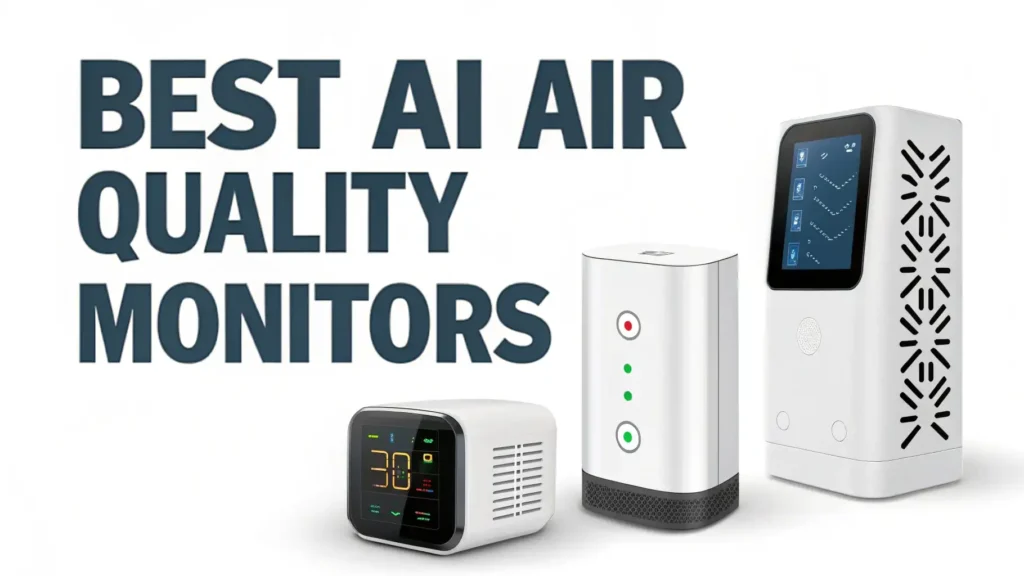
7 Best AI Air Quality Monitors That Actually Work in 2026
Your home should be your safe space, but did you know the air inside can be up to five times more polluted than outdoor air? Cooking fumes, cleaning products, dust, and even furniture release invisible particles that affect your health every single day.
The good news is that AI air quality monitors have become smarter, more affordable, and incredibly easy to use in 2026. These intelligent devices go beyond simple air testing.
This guide walks you through the seven best AI air quality monitors available on Amazon right now, helping you choose the perfect device for your needs and budget.
Key Takeaways:
- Smart monitoring saves lives. Modern AI air quality monitors detect multiple pollutants simultaneously, including PM2.5 particles, volatile organic compounds, carbon dioxide, and carbon monoxide. These devices provide instant feedback about your indoor environment.
- AI makes the difference. Unlike basic sensors, AI powered monitors learn your home’s patterns, predict air quality changes, and send proactive alerts before problems become serious. They integrate with smart home systems for automated responses.
- Price does not always equal quality. You can find excellent air quality monitors ranging from $40 to $300. The best choice depends on which pollutants you need to track and whether you want advanced features like radon detection or outdoor monitoring.
- Multiple sensors provide complete protection. The most effective monitors track at least five different air quality factors, giving you a comprehensive view of your indoor environment rather than just one or two measurements.
- App connectivity enhances usefulness. Modern monitors sync with smartphone apps, allowing you to track historical data, receive notifications anywhere, and share information with family members or healthcare providers.


Amazon Smart Air Quality Monitor
The Amazon Smart Air Quality Monitor brings professional grade air quality tracking to everyday homes. This compact device measures five critical factors that impact your health: PM2.5 particles, volatile organic compounds, carbon monoxide, humidity, and temperature.
The setup process takes just minutes through the Alexa app, and the device immediately starts tracking your air quality. The LED indicator provides quick visual feedback with color coded alerts.
Green means your air is healthy, yellow signals moderate concern, and red indicates poor air quality requiring immediate attention. You can ask Alexa for detailed reports or check the app for comprehensive data analysis.
Pros:
Easy setup with Alexa integration
Affordable price point under $70
Compact design fits anywhere
Works with smart home automation
Clear visual indicators
Cons:
Does not measure CO2 levels
Requires stable WiFi connection
No built in display for readings
Limited to Amazon ecosystem
Cannot detect radon
GoveeLife Smart Air Quality Monitor

The GoveeLife Smart Air Quality Monitor delivers impressive performance at an entry level price. This wired device features a clear LED display showing all measurements simultaneously.
The monitor tracks PM2.5 particles, temperature, and humidity with a refresh rate of just two seconds, providing near instant feedback about air quality changes. The WiFi connectivity allows the Govee app to store up to two years of historical data.
You can review trends, identify patterns, and understand how your daily activities affect air quality. The device sends push notifications when pollutant levels exceed safe thresholds.
The Govee app includes detailed graphs and charts, making complex air quality data easy to understand. You can set custom alert thresholds based on your family’s sensitivity levels. The monitor also integrates with smart home platforms, allowing automated responses when air quality declines.
Pros:
Two year data storage capability
Fast two second refresh rate
Clear LED display
Budget friendly price
Works with multiple platforms
Cons:
Requires constant power connection
Limited to PM2.5 detection
Basic design aesthetic
App interface needs improvement
No battery backup option
Temtop M10+ Indoor Air Quality Monitor

The Temtop M10+ stands out with its comprehensive six in one monitoring system. This device tracks CO2 levels, PM2.5 particles, VOCs, along with temperature and humidity. The large color display makes readings easy to see from across the room.
The device includes app connectivity for detailed analysis and historical tracking. The Temtop app provides clear visualizations of air quality trends over time. You can export data for health records or share with doctors.
The monitor uses professional grade sensors that deliver laboratory accurate results. The rechargeable battery allows portable use, so you can test air quality in different rooms or take it to work.
The device updates readings every second, providing immediate feedback when you change your environment. The M10+ includes customizable alerts that notify you through the app when pollutant levels rise above safe thresholds.
Pros:
Comprehensive six factor monitoring
Professional grade sensor accuracy
Portable with rechargeable battery
Large color display
Detailed app analytics
Cons:
Higher price than basic models
Battery life needs regular charging
Bulkier than compact monitors
Learning curve for app features
Occasional connectivity issues
18 in 1 Air Quality Monitor Indoor

This comprehensive monitor features dual chip technology for enhanced accuracy across 18 different measurements. The device tracks all major air quality factors including CO2, temperature in Fahrenheit, humidity, VOC, PM2.5, PM1.0, and PM10.
The large display shows multiple readings simultaneously with clear labeling. The time display function adds convenience. The dual chip design cross references measurements between two independent processors, ensuring reading accuracy and reducing false alerts.
The portable design allows you to move the monitor between rooms to identify problem areas in your home. The device stores historical data that you can review to understand long term air quality trends.
The high accuracy sensors meet professional standards used in laboratories and industrial applications. The monitor includes visual and audio alerts when any measurement exceeds safe levels. The bright display remains visible even in well lit rooms.
Pros:
Dual chip for superior accuracy
Tracks 18 different measurements
Portable between rooms
Professional grade sensors
Clear multi reading display
Cons:
No smart home integration
Requires frequent charging
Limited app functionality
Higher price point
Complex interface initially
16 in 1 Air Quality Monitor Indoor with Large Display

This monitor features an impressive seven inch display that dominates its category. The large screen shows nine different AQI measurements plus seven customizable alert indicators. The device monitors CO2, TVOC, PM2.5, PM1.0, PM10, formaldehyde, temperature, humidity, and overall AQI.
The display also includes time, making the monitor serve double duty as a clock. The visual interface uses color coding for quick interpretation. Green indicates healthy air, yellow shows moderate concerns, and red signals immediate action needed.
The alert system provides both visual and audio warnings when any measurement exceeds preset thresholds. You can customize alert levels based on your family’s sensitivity.
The device stores data internally and provides historical trend analysis. The substantial display makes this monitor ideal for larger rooms where you want visible air quality information. The unit stands on a desk or mounts on walls.
Pros:
Seven inch display easily visible
Nine AQI measurements tracked
Customizable alert system
Includes formaldehyde detection
Built in clock function
Cons:
No app connectivity
Bulky size requires space
Higher power consumption
Limited portability
No smart home features
Setting Up and Optimizing Your Air Quality Monitor
Proper placement maximizes your monitor’s effectiveness. Position the device at breathing height, typically three to six feet from the floor. Avoid placing monitors directly next to windows, doors, or air vents where readings might not represent typical indoor air. Keep monitors away from direct sunlight, which can affect temperature readings.
Place the device in areas where you spend the most time, like bedrooms, living rooms, or home offices. If you have multiple monitors, distribute them strategically throughout your home. After installation, allow 24 to 48 hours for initial calibration.
During this period, the monitor establishes baseline readings for your home. Avoid making major changes to ventilation or cleaning during calibration. Once calibrated, review the app settings and customize alert thresholds. Set notification preferences so you receive timely warnings without alert fatigue.
Establish a routine for reviewing historical data weekly to identify patterns. Take action based on readings. When PM2.5 spikes, run air purifiers. When CO2 rises, increase ventilation. When VOCs appear, identify and remove the source. Regular maintenance ensures accuracy. Clean sensor openings monthly with a soft brush. Update firmware when available. Recalibrate annually for best results.
Airthings View Plus

The Airthings View Plus represents the premium tier of home air quality monitoring. This battery powered device measures seven different factors including radon gas, a unique feature among home monitors.
The device tracks PM2.5 air pollution, carbon dioxide, VOCs, humidity, temperature, and air pressure. The WiFi connection enables continuous monitoring through the Airthings app. The app provides detailed analytics, historical trends, and personalized recommendations.
The View Plus uses professional sensors that match accuracy standards used in scientific research. The radon detection capability makes this monitor essential for homes in high risk areas. Radon causes thousands of lung cancer deaths annually, yet remains undetectable without specialized equipment.
The device displays current readings on its e ink screen, which updates when you wave your hand near the monitor. This preserves battery life while keeping information accessible. The Airthings app integrates with IFTTT, allowing custom automation scenarios based on air quality readings.
Pros:
Includes radon detection
Professional grade accuracy
Battery powered portability
Comprehensive seven sensor system
Excellent app experience
Cons:
Premium price point
Battery replacement needed
E ink display not always on
Requires strong WiFi signal
Limited smart home integration
Maintaining Your Air Quality Monitor
Regular maintenance ensures your monitor continues providing accurate readings for years. Clean the device monthly using a soft, dry cloth to remove dust from sensor openings. Never use liquids or compressed air, which can damage sensitive components.
Check battery levels regularly if your monitor uses battery power. Replace batteries promptly to avoid gaps in monitoring. For plug in models, ensure power cables remain securely connected. Update firmware whenever manufacturers release new versions.
Firmware updates often improve accuracy, add features, or fix bugs. Most monitors notify you through their apps when updates become available. Recalibrate your monitor annually by following manufacturer instructions.
Some devices calibrate automatically when exposed to known good air quality, while others require manual calibration procedures. Replace sensors according to manufacturer schedules. Most monitors need sensor replacement every two to five years.
Mark replacement dates on your calendar to avoid accuracy degradation. Store user manuals and warranty information in accessible locations. Document unusual readings or behaviors to share with customer support if needed. Consider purchasing extended warranties for premium monitors, as sensor repairs can be expensive.
Professional Indoor Air Quality Monitor

This professional grade monitor brings laboratory accuracy to home use. The device achieves a remarkable 4.9 star rating from users who appreciate its precision and reliability. The monitor provides real time detection capabilities suitable for homes, cars, plants, and pets.
The comprehensive sensor array tracks all major air quality indicators with professional precision. The portable design includes a built in rechargeable battery, allowing you to test air quality in various locations. The white finish blends seamlessly with any decor.
The monitor includes a high resolution display showing all measurements clearly. The device responds quickly to air quality changes, updating readings within seconds. The professional sensors maintain accuracy across wide ranges, from very clean to highly polluted environments.
This makes the monitor suitable for specialized uses like testing new construction, verifying cleaning effectiveness, or ensuring safe conditions for sensitive individuals. The device includes detailed documentation helping users understand measurements and take appropriate action.
Pros:
Professional laboratory accuracy
Excellent user ratings
Portable for multiple locations
Fast sensor response
Suitable for specialized testing
Cons:
Premium pricing
Limited third party reviews
No mentioned app connectivity
Newer market entry
Availability may vary
Common Air Quality Problems and Solutions
Understanding common air quality issues helps you respond effectively to monitor readings. High PM2.5 levels often result from cooking, especially frying or grilling. Solutions include using range hood fans, opening windows during cooking, and running air purifiers.
Outdoor wildfire smoke can also increase PM2.5. Keep windows closed during poor outdoor air quality days. Elevated VOC readings typically indicate new furniture, fresh paint, cleaning products, or air fresheners. Improve ventilation when introducing new items.
Choose low VOC or VOC free products when possible. Allow new furniture to off gas in garages before bringing indoors. Rising CO2 levels mean insufficient fresh air circulation. Open windows periodically, even in winter.
Ensure HVAC systems bring in adequate outdoor air. Consider CO2 levels above 1000 ppm problematic. High humidity promotes mold growth and dust mites. Use dehumidifiers in damp areas. Fix leaks promptly. Ensure proper bathroom and kitchen ventilation.
Low humidity causes dry skin and respiratory irritation. Use humidifiers during winter. Keep humidity between 30 and 50 percent. Carbon monoxide requires immediate action. Evacuate if levels rise. Have fuel burning appliances inspected annually. Install CO alarms as backup protection.
Frequently Asked Questions
Do air quality monitors really work?
Yes, modern air quality monitors use proven sensor technology that accurately measures pollutants. Professional grade sensors in quality monitors match accuracy found in scientific equipment. The key is choosing monitors with reputable sensors from manufacturers like Sensirion or Bosch. Regular calibration and proper placement ensure continued accuracy. Reviews and testing by independent organizations confirm that quality monitors provide reliable data.
What pollutants should my monitor detect?
At minimum, your monitor should track PM2.5 particles and VOCs, which affect most people’s health. Add CO2 monitoring if you worry about ventilation quality. Include carbon monoxide detection if you have gas appliances or attached garages. Consider radon monitoring if you live in high risk areas. Temperature and humidity tracking help maintain comfort and prevent mold. More measurements provide better understanding, but focus on pollutants relevant to your specific situation.
How often should I check my air quality monitor?
Check your monitor daily during the first week to understand normal patterns. After that, weekly checks suffice unless you receive alerts. Modern monitors send notifications when problems occur, so you do not need constant monitoring. Review historical data monthly to identify trends. Take immediate action when alerts indicate poor air quality. Position monitors where you can glance at displays naturally during daily activities.
Can air quality monitors detect mold?
Air quality monitors cannot directly detect mold, but they measure conditions that indicate mold problems. High humidity above 60 percent creates ideal mold conditions. Elevated VOC readings may signal mold releasing organic compounds. Increased PM2.5 could indicate mold spores in the air. If your monitor shows these patterns, inspect for visible mold growth. Use dedicated mold test kits or professional inspections for confirmation.
Do I need multiple air quality monitors?
One monitor works for small apartments or single rooms. Larger homes benefit from multiple monitors in different areas. Place monitors in bedrooms where you sleep, main living areas where families gather, and basements prone to moisture problems. Different rooms often have different air quality due to activities, ventilation, and outdoor connections. Multiple monitors provide comprehensive home coverage. Start with one monitor in your most used space, then expand based on findings.
How accurate are budget air quality monitors?
Budget monitors under $50 provide reasonable accuracy for basic measurements like PM2.5 and humidity. However, they typically use less expensive sensors with wider error margins. Mid range monitors between $80 and $150 offer significantly better accuracy approaching professional standards. Premium monitors above $200 match laboratory equipment. For general home use, mid range monitors provide the best balance of accuracy and value.
Can air quality monitors prevent health problems?
Air quality monitors serve as early warning systems, alerting you to problems before serious health effects develop. By tracking pollutants daily, you can maintain healthy indoor air quality. Taking action based on monitor readings reduces exposure to harmful particles and gases. Studies show that monitoring and improving air quality reduces respiratory problems, allergies, and cardiovascular issues.