Polar H10 Heart Rate Monitor Review 2026: A Scam or Legit?
You want accurate heart rate data. You want a chest strap that does not slip during a hard run. You want a device that connects to every app and watch you own. The Polar H10 Heart Rate Monitor promises all of this and more. But does it actually deliver in 2026?
I have tested the Polar H10 across running sessions, cycling rides, gym workouts, and even swimming. This review covers everything you need to know before buying.
I will break down its accuracy, comfort, battery life, app support, and how it compares to the competition. Whether you are a beginner or a seasoned athlete, this review will help you decide if the Polar H10 deserves a spot on your chest.
Key Takeaways
- The Polar H10 uses ECG-level measurement technology, which makes it one of the most accurate consumer heart rate monitors available today. Multiple scientific studies back its precision.
- It connects via both Bluetooth and ANT+, allowing you to pair it with two Bluetooth devices and one ANT+ device at the same time. This is ideal for people who use a watch and a phone during training.
- The built-in memory stores one training session without a phone or watch. You can sync the data later through the Polar Beat or Polar Flow app.
- Battery life reaches up to 400 hours on a single CR2025 coin cell. Most users report getting about a year of regular use before needing a replacement.
- Water resistance is rated at 30 meters, so you can wear it while swimming. The GymLink 5 kHz connection works underwater, though Bluetooth does not.
- The Polar Pro chest strap is soft and comfortable, with a secure fit that stays in place during high-intensity movements. It rarely causes skin irritation, even during long sessions.


Polar H10 Heart Rate Monitor Chest Strap Overview
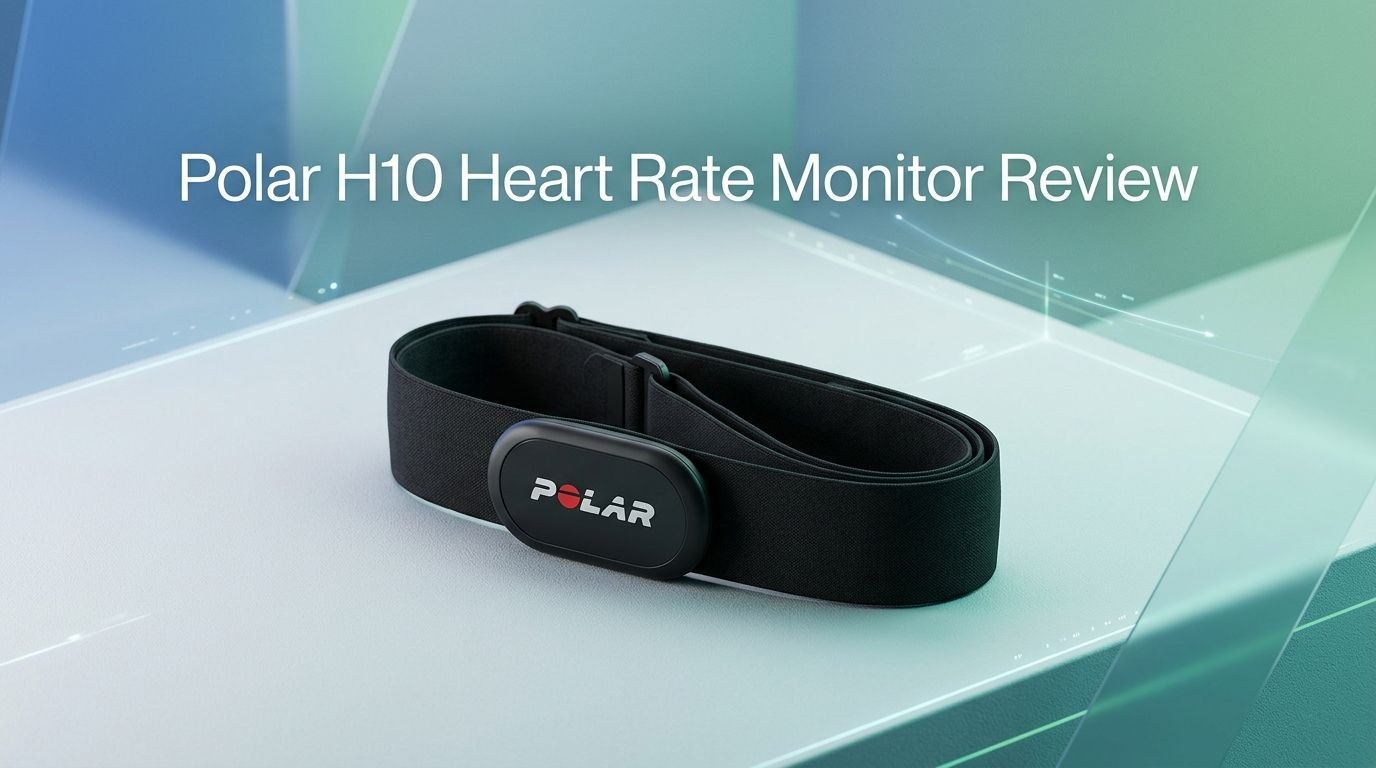
The Polar H10 is a chest strap heart rate monitor made by Polar Electro, a Finnish company with decades of experience in heart rate technology. It sits just below your chest muscles and reads your heart’s electrical signals directly through your skin.
This sensor uses electrocardiography (ECG) measurement, which captures heart rate data the same way a medical ECG device does. That is why experts often call it the gold standard for consumer heart rate tracking. The sensor snaps onto the Polar Pro chest strap, which comes included in the box.
The H10 works with a wide range of apps and devices. You can pair it with Polar Beat, Polar Flow, Strava, Nike Run Club, Wahoo Fitness, Peloton, Zwift, and many more. It also connects to most fitness watches from Garmin, Apple, Suunto, and COROS.
The design is simple and focused. There is no screen. There is no GPS. It does one thing extremely well: measure your heart rate with high accuracy. For many athletes, that singular focus is exactly what they need.
Heart Rate Accuracy and ECG Technology
The biggest reason people buy the Polar H10 is accuracy. Wrist-based optical sensors can struggle during fast heart rate changes, like interval training or sprinting. The H10 does not have this problem.
A 2022 study published in Sensors (MDPI) found that the Polar H10 showed strong agreement with medical-grade ECG recordings for heart rate variability (HRV) measurements. The bias was small and clinically acceptable. This makes it a trusted tool for both athletes and researchers.
The sensor reads your heart’s electrical impulses through the skin on your chest. This method is far more reliable than optical light sensors on your wrist. During high-intensity intervals, the H10 tracks sudden spikes and drops without lag.
Many users on Reddit and fitness forums confirm that the H10 matches readings from medical chest leads almost perfectly. If you care about data quality for training zone accuracy, the Polar H10 gives you confidence in every number.
Top 3 Alternatives for Polar H10 Heart Rate Monitor
Garmin HRM-Pro Plus

Wahoo TICKR Heart Rate Monitor

COROS Heart Rate Monitor

Bluetooth and ANT+ Dual Connectivity
The Polar H10 supports Bluetooth Low Energy (BLE) and ANT+ at the same time. This dual connectivity is a major advantage over cheaper heart rate monitors that only support one protocol.
You can connect the H10 to two Bluetooth devices simultaneously. For example, you can send your heart rate to your phone running Strava and your Garmin watch at the same time. On top of that, it broadcasts on ANT+ for gym equipment, cycling computers, and other devices.
This matters for triathletes, cyclists, and gym users. If you use a Wahoo ELEMNT bike computer and want your phone to log the session too, the H10 handles that without switching connections. Many competing straps limit you to a single Bluetooth connection, which forces you to choose one device.
The pairing process is also straightforward. You snap the sensor onto the wet strap, and it turns on automatically. Your paired devices detect it within seconds. There is no button to press or app to open before starting.
Comfort and Fit of the Polar Pro Strap
Comfort can make or break a chest strap experience. Nobody wants to think about their heart rate monitor during a hard workout. The Polar H10 comes with the Polar Pro chest strap, which is a noticeable upgrade from older Polar straps.
The strap material is soft, flexible, and slightly textured on the inside. It grips your skin gently and stays in place even during bouncing movements like running or jumping. The silicone dots on the electrode area help maintain contact without excessive tightness.
You can adjust the strap length to fit chest sizes from M to XXL (the standard package). Polar also sells an XS-S strap separately. The buckle is easy to clasp behind your back once you get used to it.
Many long-distance runners report wearing the H10 for two to three hours without discomfort. The strap does not dig into your ribs or leave red marks. It is also machine washable, which keeps it clean and extends its lifespan.
Battery Life and Replacement
The Polar H10 uses a CR2025 coin cell battery. Polar rates it at 400 hours of use, which translates to roughly 8 to 12 months for most active users. That is impressive for a device this small.
The battery is user-replaceable. You pop open the back of the sensor with a coin or your fingernail, swap in a new CR2025, and you are back in action. A pack of replacement batteries costs just a few dollars on Amazon.
There is no charging cable to carry, no charging dock to forget, and no waiting for the sensor to charge before a workout. You get instant power restoration by swapping the battery.
The Polar Beat app and Polar Flow app both show a battery indicator so you know when it is time for a replacement. Low battery can cause erratic readings, so it is smart to keep a spare CR2025 in your gym bag.
Water Resistance and Swimming Use
The Polar H10 is water resistant up to 30 meters. You can wear it in the pool, the ocean, or a rainstorm without worry. It handles sweat, splashes, and full submersion.
There is one important detail, though. Bluetooth does not work underwater. Water blocks the Bluetooth signal. However, the Polar H10 supports 5 kHz GymLink transmission, which does work in water. If your Polar watch supports GymLink, you can get real-time heart rate data while swimming.
Even without a live connection, the built-in memory saves your session data. You start a recording on the Polar Beat app before entering the water, swim with the strap, and sync the data after your session. This makes it a solid choice for triathletes and lap swimmers.
The strap dries quickly after use. Polar recommends rinsing it with fresh water after pool or ocean sessions to prevent salt and chlorine buildup.
Built-In Memory for Phone-Free Workouts
The Polar H10 has a feature many chest straps lack: internal memory. It can store one complete training session directly on the sensor. This is perfect for activities where carrying a phone is impractical.
You start a session through the Polar Beat app, then leave your phone behind. The sensor records your entire heart rate data set. After your workout, you open the app and sync the stored session.
The memory holds one session at a time. If you forget to sync and start a new recording, the old data gets overwritten. This is the one limitation worth remembering. Make syncing a post-workout habit.
This feature is useful for open-water swimming, group fitness classes, and contact sports where phones are not allowed or practical. It also helps in situations where Bluetooth connectivity is unreliable, like crowded gyms with many wireless devices.
Polar Beat and Polar Flow App Integration
The Polar H10 works best with Polar Beat (for real-time workout tracking) and Polar Flow (for long-term data analysis and planning). Both apps are free and available on iOS and Android.
Polar Beat shows your live heart rate, heart rate zones, calories burned, and session duration. It also lets you set training targets based on heart rate zones, time, or calories. The interface is clean, fast, and easy to read during a workout.
Polar Flow is where deeper analysis happens. It stores your training history, shows weekly and monthly summaries, tracks your training load, and provides recovery insights. You can also plan training programs and export data to other platforms like Strava and TrainingPeaks.
Firmware updates for the H10 are delivered through these apps. Polar has continued to push updates that improve connectivity and fix minor bugs. The update process takes only a few minutes over Bluetooth.
Third-Party App Compatibility
One of the Polar H10’s strongest features is its wide third-party app support. You are not locked into the Polar ecosystem. The sensor works with dozens of popular fitness apps and platforms.
Confirmed compatible apps include Strava, Nike Run Club, Wahoo Fitness, Zwift, Peloton, MapMyRun, Endomondo, Elite HRV, and HRV4Training. It also connects to cycling computers from Garmin, Wahoo, and Hammerhead.
Gym equipment compatibility is another plus. Many modern treadmills, ellipticals, and rowing machines accept Bluetooth or ANT+ heart rate signals. The H10 pairs with them quickly, so you see your heart rate right on the machine’s display.
If you switch between apps or devices often, the H10 adapts without fuss. You do not need to re-pair every time. Once a device is saved, the connection restores automatically when the sensor is active.
Polar H10 vs. Garmin HRM-Pro Plus
The Garmin HRM-Pro Plus is the Polar H10’s closest competitor. Both use ECG chest strap technology. Both offer Bluetooth and ANT+ connectivity. But there are key differences.
The Garmin HRM-Pro Plus adds running dynamics data like ground contact time, stride length, and vertical oscillation. If you own a Garmin watch, these extra metrics integrate directly into your Garmin Connect dashboard. The Polar H10 does not offer running dynamics.
However, the Polar H10 wins on dual Bluetooth connectivity. It supports two simultaneous Bluetooth connections, while the Garmin HRM-Pro Plus supports one Bluetooth and one ANT+ connection. The Polar H10 also tends to cost less, often by $20 to $30.
For pure heart rate accuracy, both devices perform at a similar level. Your choice comes down to ecosystem preference. Garmin users who want running dynamics should pick the HRM-Pro Plus. Everyone else will likely prefer the Polar H10’s flexibility and lower price.
Who Should Buy the Polar H10?
The Polar H10 is an excellent choice for a wide range of users. Runners, cyclists, swimmers, gym-goers, and triathletes all benefit from its accuracy and versatility.
If you train with heart rate zones, this monitor gives you data you can trust. Wrist sensors can lag or misread during high-intensity efforts. The H10 eliminates that uncertainty. Coaches and personal trainers also use the H10 to monitor clients in real time.
People who do HRV-based recovery tracking will appreciate the H10’s precision. Apps like Elite HRV and HRV4Training recommend chest straps for the best HRV readings. The Polar H10 is their most recommended sensor.
It is also a smart buy if you use multiple devices and apps. The dual Bluetooth plus ANT+ setup means you never have to choose which device gets your heart rate data.
Potential Drawbacks to Consider
No product is perfect. The Polar H10 has a few limitations you should know about.
The chest strap form factor is not for everyone. Some people find any chest strap uncomfortable or restrictive. If you dislike the feeling of a band around your ribcage, an armband sensor like the COROS HRM or Polar Verity Sense might suit you better.
The built-in memory only holds one session. If you forget to sync, your previous workout data is gone once you start a new recording. A larger memory or multi-session storage would be a welcome improvement.
The strap can wear out over time. After 12 to 18 months of heavy use, the elastic and electrode contacts may degrade. Replacement straps cost around $25 to $35, which adds to the long-term cost.
There is no on-device indicator for battery level. You need the app to check your battery status. A simple LED indicator on the sensor would help.
Pricing and Value for Money
The Polar H10 typically retails at around $89 to $105 depending on the size and color. Sale prices can drop it to the $70 to $80 range, as seen during Amazon’s seasonal sales events.
For what you get, the value is strong. You receive a medical-grade accurate heart rate sensor, dual Bluetooth and ANT+ connectivity, built-in memory, water resistance to 30 meters, and 400 hours of battery life. Competing products with similar features often cost more.
The ongoing cost is minimal. A replacement battery costs under $5 and lasts most of a year. A replacement strap runs about $30 if needed. Over a two-year period, total ownership cost stays well under $150.
Compared to wrist-based heart rate monitors that cost $200 or more and deliver less accurate data, the Polar H10 offers outstanding value. It is one of the best investments you can make in your fitness tracking setup.
Final Verdict on the Polar H10 in 2026
The Polar H10 remains the top recommendation for chest strap heart rate monitors in 2026. Its accuracy is backed by science. Its connectivity covers every major platform. Its comfort level sets the bar for all competitors.
If you value reliable, precise heart rate data for training, racing, or health monitoring, the Polar H10 delivers consistently. It has earned its reputation as the gold standard, and nothing on the market has dethroned it yet.
For most athletes and fitness enthusiasts, the Polar H10 is the chest strap to buy. It is simple, dependable, and built to last.
Frequently Asked Questions
Is the Polar H10 accurate enough for medical use?
The Polar H10 uses ECG-level measurement and has been validated in peer-reviewed studies. However, it is classified as a consumer fitness device, not a medical device. Doctors may use it for general monitoring, but it is not FDA-approved for clinical diagnosis.
Can I wear the Polar H10 while swimming?
Yes. The Polar H10 is water resistant up to 30 meters. Bluetooth does not work underwater, but the 5 kHz GymLink signal does. The built-in memory can also record your session for syncing after your swim.
How long does the Polar H10 battery last?
Polar rates the battery at 400 hours of active use. Most users get 8 to 12 months from a single CR2025 coin cell battery. Replacement is easy and costs only a few dollars.
Does the Polar H10 work with Garmin watches?
Yes. The Polar H10 connects to Garmin watches via ANT+ or Bluetooth. It shows up as an external heart rate sensor in the Garmin device settings. However, you will not get Garmin-specific running dynamics data.
Can the Polar H10 connect to two devices at the same time?
Yes. The Polar H10 supports two simultaneous Bluetooth connections and one ANT+ connection. You can send heart rate data to your phone and your watch at the same time.
Is the Polar H10 comfortable for long workouts?
Most users find the Polar Pro strap comfortable for sessions lasting two to three hours or more. The soft material and secure fit prevent slipping and skin irritation. Wetting the electrode area before use improves both comfort and signal quality.
What apps work with the Polar H10?
The Polar H10 works with Polar Beat, Polar Flow, Strava, Nike Run Club, Wahoo Fitness, Zwift, Peloton, Elite HRV, HRV4Training, MapMyRun, and many other Bluetooth or ANT+ compatible apps.