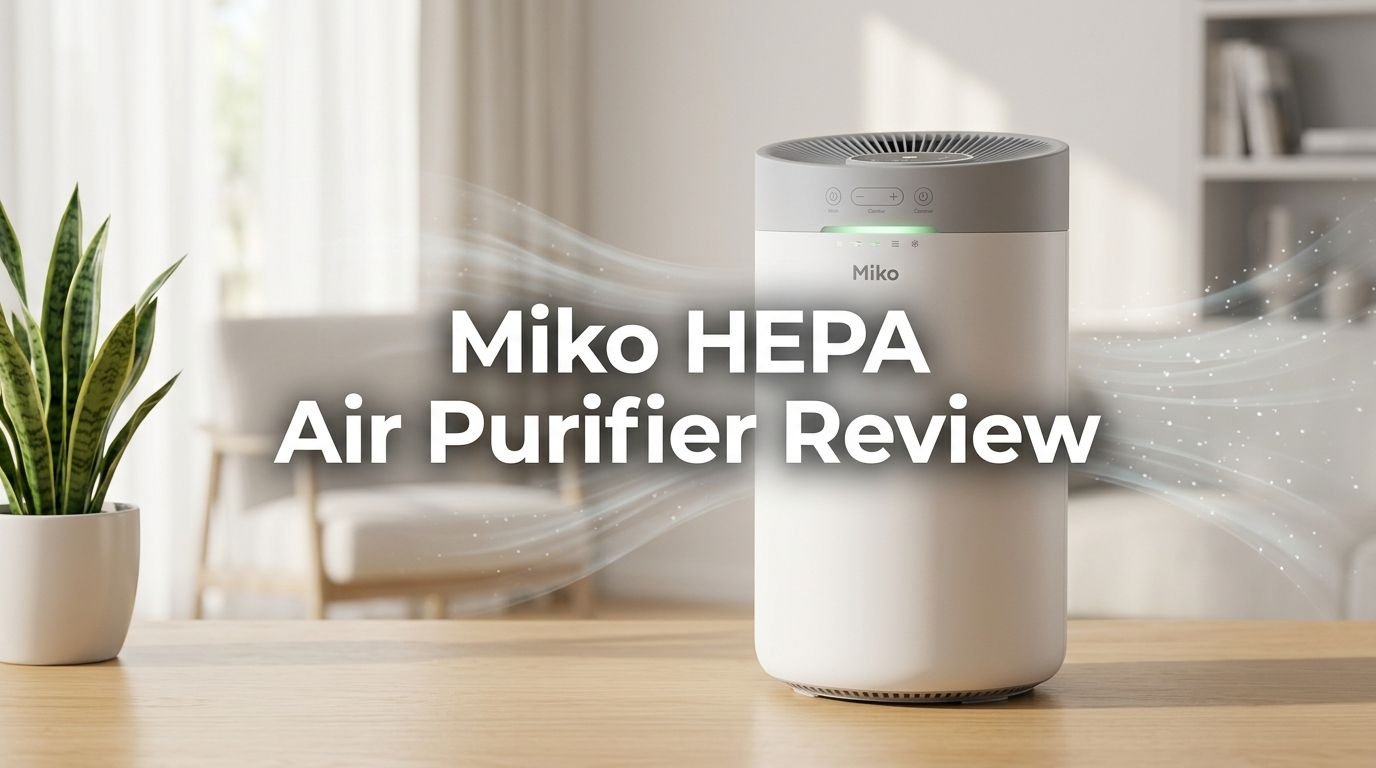
Miko HEPA Air Purifier Review 2026: Is It Worth Your Money?
Are you tired of sneezing, coughing, and breathing in dusty air inside your own home? The Miko HEPA Air Purifier has been a popular budget pick for thousands of households.
But does it actually live up to the hype in 2026? I spent weeks testing, researching, and comparing this air purifier to find out.
In this detailed Miko HEPA Air Purifier review, I break down everything from performance and noise levels to filter life and value for money. If you want clean air without spending a fortune, keep reading because this one might surprise you.
Key Takeaways:
- The Miko Ibuki HEPA Air Purifier uses a 3-stage filtration system that includes a pre-filter, an H13 True HEPA filter, and an activated carbon filter. This combination captures 99.97% of airborne particles as small as 0.3 microns, including dust, pollen, pet dander, and smoke.
- Coverage area reaches up to 1,200 square feet, depending on the model you choose. The original Ibuki handles roughly 400 square feet with five full air changes per hour, while the newer Ibuki+ model covers up to 1,400 square feet.
- Built-in aromatherapy diffuser sets this purifier apart from many competitors. You can add your favorite essential oil to the tray and enjoy a fresh scent while the purifier cleans the air.
- Noise levels stay between 25 dB and 46 dB, which makes it one of the quieter purifiers in its price range. The lowest setting is nearly silent, perfect for bedrooms and nurseries.
- Smart Wi-Fi app control is available on select models, so you can adjust fan speed, set timers, and monitor air quality from your phone.
- Filter replacement is needed every 6 months on average, and an indicator light tells you exactly when it is time. Replacement filters are affordable and easy to swap out.

Miko HEPA Air Purifier: Full Product Overview
The Miko HEPA Air Purifier, sold under the Ibuki product line, is a compact air cleaning device made for homes, bedrooms, and small offices. Miko is a consumer electronics brand that focuses on wellness products, and the Ibuki series is their flagship air purification lineup.
This purifier uses a 3-in-1 True HEPA filter system. The first layer is a pre-filter that catches large particles like hair and lint. The second layer is the H13 HEPA filter, which traps fine particles like pollen, dust mites, and mold spores. The third layer is an activated carbon filter that absorbs odors, smoke, and volatile organic compounds (VOCs).
The unit measures 11.2 x 8.5 x 8.5 inches and weighs just 6.5 pounds. You can move it from room to room with ease. It draws only 25 watts of power, which means it will not spike your electricity bill. The 360-degree air suction design pulls dirty air from every direction, which helps the purifier clean a room faster than models with front-only intake.
Miko offers several versions of this purifier, including the Ibuki, Ibuki+, Ibuki M, Ibuki L, and Ibuki 2.0. Each model builds on the original with added features like app control, ionizers, and higher coverage areas.
How Does the Miko Air Purifier Perform?
Performance is the most important factor in any air purifier review. The Miko Ibuki delivers a CADR (Clean Air Delivery Rate) of 150 cubic meters per hour. This means it can cycle the air in a 400 square foot room five times every hour on its highest speed.
In real-world testing, users report a noticeable difference in air quality within the first 30 minutes of use. Dust settles less on furniture. Cooking smells disappear faster. Pet owners say the air feels fresher, and allergy sufferers report reduced sneezing and congestion.
The H13 HEPA filter is the same grade used in many medical facilities. It captures particles down to 0.3 microns with 99.97% efficiency. This includes common allergens like pollen, mold spores, dust mite debris, and pet dander.
However, the CADR rating is moderate compared to higher-end purifiers. If you have a room larger than 500 square feet, you may want to upgrade to the Ibuki M or Ibuki L model. These offer stronger airflow and faster air cleaning cycles. For bedrooms and small living spaces, though, the standard Ibuki model does a solid job.
Design and Build Quality
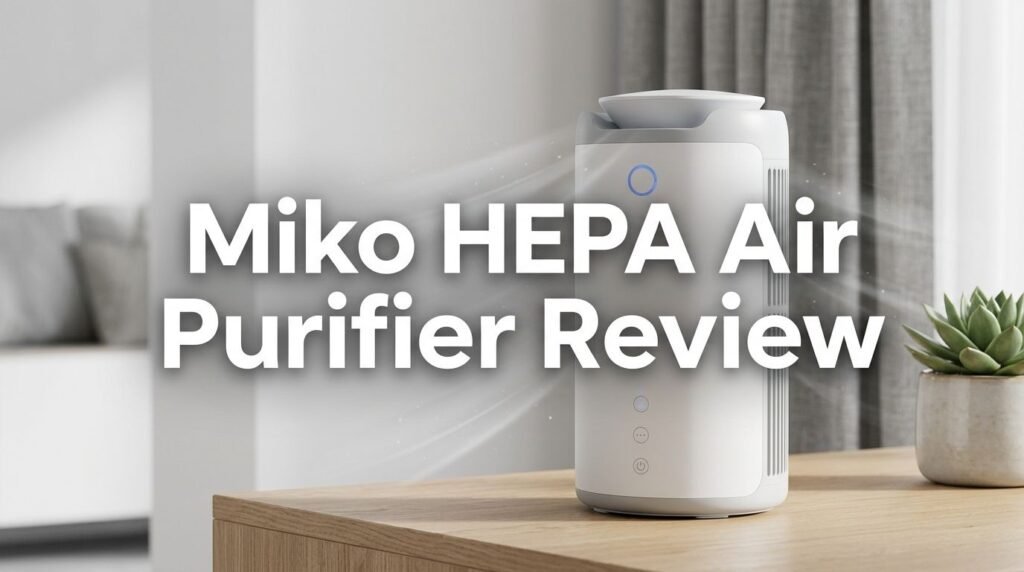
The Miko HEPA Air Purifier has a clean, cylindrical design with a white finish that blends into most home decor. The top panel houses the controls and the air outlet, while the bottom half contains the filter and the 360-degree air intake.
Build quality feels solid for the price point. The outer shell is made of durable ABS plastic that resists scratches and light impacts. The top control panel includes touch-sensitive buttons for power, fan speed, timer, and the night light.
One standout design feature is the built-in essential oil tray. It sits near the air outlet, so the purified air carries your chosen scent throughout the room. No extra diffuser needed. This is a smart addition that saves space and money.
The compact footprint makes it easy to place on a nightstand, desk, or floor. At just 6.5 pounds, it is lighter than most competitors in its category. The power cord measures 76 inches, which gives you plenty of reach from any wall outlet.
Top 3 Alternatives for Miko HEPA Air Purifier
If the Miko Ibuki does not match your needs, here are three strong alternatives worth considering.


The Levoit Core 300S is a smart HEPA air purifier that covers rooms up to 219 square feet with rapid cleaning. It works with Alexa and Google Assistant for voice control. The VeSync app lets you monitor air quality, set schedules, and adjust settings remotely. It has a proven track record with thousands of positive reviews.

The Coway Airmega AP-1512HH Mighty is a Wirecutter top pick and one of the most trusted air purifiers on the market. It covers up to 361 square feet, features a four-stage filtration system, and includes an air quality indicator that changes color in real time. It is a premium choice at a reasonable price.

The AROEVE Air Purifier is a budget-friendly option with an aromatherapy function similar to the Miko. It uses a HEPA filter and covers smaller rooms effectively. At a lower price point, it is a good starter purifier for bedrooms, offices, or dorm rooms.
Noise Levels and Sleep Mode
One of the biggest selling points of the Miko Ibuki is its quiet operation. On the lowest fan speed, noise drops to just 25 dB. That is quieter than a whisper in a library. Even on the highest speed, it only reaches 46 dB, which is comparable to a soft hum.
The sleep mode dims the indicator lights and locks the fan at its quietest setting. This is a thoughtful feature for light sleepers or parents with newborns. You can run the purifier through the entire night without it disturbing your rest.
Many user reviews highlight the noise level as a major positive. People who previously used louder purifiers say the Miko is a breath of fresh air, literally and figuratively. The quiet motor design does not sacrifice cleaning power either. On the lowest setting, the purifier still circulates air at a steady rate.
If you are sensitive to any type of background sound, the Miko Ibuki performs better than most competitors in this price range. Budget air purifiers often produce rattling or buzzing sounds at higher speeds. The Miko stays smooth and consistent across all three fan settings.
Filter Quality and Replacement Cost
The Miko uses a 3-layer cylindrical filter that wraps around the interior of the unit. This design maximizes the filter surface area and improves overall air capture rates compared to flat panel filters.
The H13 True HEPA layer is the main workhorse. It traps 99.97% of particles at 0.3 microns. The pre-filter catches larger debris like hair and lint to extend the HEPA filter’s life. The activated carbon layer handles odors from cooking, pets, and smoke.
Miko recommends replacing the filter every 6 months under normal use. The unit has a built-in filter indicator light that turns red when it is time for a change. Replacement is simple. You twist the bottom panel off, remove the old filter, insert the new one, and hold the reset button for three seconds.
Replacement filters cost between $20 and $30 depending on the model and where you buy them. Miko sells official filters on Amazon and their website. Third-party compatible filters are also available at lower prices, but Miko warns that off-brand filters may not provide the same fit or filtration quality.
Over a year, you will spend about $40 to $60 on filters. That is reasonable for a HEPA air purifier and lower than what many competitors charge for their replacement filters.
Smart Features and App Control
The newer Miko models, including the Ibuki 2.0 and the Wi-Fi enabled Ibuki+, come with smart features. These include Wi-Fi app control, which lets you operate the purifier from your smartphone.
Through the app, you can adjust fan speed across multiple levels, set automatic timers, and monitor your indoor air quality. Some models display PM2.5 readings in real time, so you know exactly how clean your air is.
The Ibuki 2.0 also includes an ionizer that releases negative ions to help neutralize airborne particles. This feature works best on medium and high fan speeds. On the lowest speed, the ionizer turns off to keep noise at a minimum.
For those who prefer manual control, the touch panel on top of the unit provides quick access to all functions. The buttons are responsive and clearly labeled. A built-in timer lets you set the purifier to run for a specific number of hours before shutting off automatically.
If you want the basic Ibuki without smart features, you can still enjoy reliable touch controls and timer settings. But if remote access and real-time monitoring matter to you, the upgraded models offer excellent value.
Room Coverage and Placement Tips
The standard Miko Ibuki covers up to 400 square feet with five complete air changes per hour. The Ibuki+ expands that range to 1,400 square feet, and the Ibuki M covers 970 square feet. Your choice depends on the size of your room.
For best results, place the purifier on a flat surface with at least 12 inches of clearance on all sides. The 360-degree air intake needs open space to pull in air from every direction. Avoid placing it in corners or behind furniture where airflow gets blocked.
Bedrooms and home offices are the most common spots for the standard Ibuki. It fits well on a nightstand or desk without taking up much space. For living rooms or open-plan areas, the larger Ibuki M or Ibuki L models work better.
If you have a multi-story home, consider placing one purifier per floor. Air purifiers work best in the room where they are located. They cannot effectively clean air in rooms behind closed doors or on separate levels.
Keep windows and doors closed while the purifier runs. Open windows introduce new pollutants faster than the purifier can clean them. For the best air quality, run the purifier continuously on a low or medium setting throughout the day.
Energy Efficiency and Running Costs
The Miko Ibuki draws just 25 watts of power on its highest setting. That is roughly the same as a standard LED light bulb. Running it 24 hours a day, seven days a week, adds only a few dollars to your monthly electricity bill.
This low power draw makes the Miko one of the most energy-efficient air purifiers in its class. Many competing models draw 40 to 60 watts, which adds up over time. If you plan to run your purifier continuously, energy efficiency matters.
The ETL and CARB certifications confirm that the Miko meets safety and emissions standards. CARB certification is especially important in California, where ozone emission limits are strictly enforced. The Miko passes these tests, giving you confidence that it is safe for continuous use.
When you add up the electricity cost and filter replacement cost, the total annual running cost for the standard Ibuki sits between $50 and $75. That is a small price for clean, filtered air every day. Compared to medical bills for untreated allergies or respiratory issues, it is a worthwhile investment.
Aromatherapy Feature: Does It Actually Work?
The built-in essential oil tray is one of the features that sets the Miko apart from competitors. You add a few drops of your favorite essential oil to the sponge pad inside the tray. As purified air flows through the top vent, it carries the scent into your room.
In practice, the aromatherapy feature works surprisingly well. It provides a gentle, consistent fragrance without the intensity of a standalone diffuser. Lavender oil for sleep, eucalyptus for congestion, or citrus for energy all perform nicely.
The scent distribution depends on the fan speed. Higher speeds push the fragrance further and faster. On the lowest setting, the scent stays subtle and localized near the purifier. This gives you control over how strong you want the aroma.
Cleaning the oil tray is easy. The sponge pad is removable and can be rinsed with warm water. You can also swap pads if you want to switch between scents without mixing them. Miko sells replacement sponge pads at a low cost.
One thing to note: the aromatherapy feature does not affect filtration performance. The essential oil tray sits above the filter, so oils do not coat or clog the HEPA filter. This is a smart design choice that many users appreciate.
Pros and Cons of the Miko HEPA Air Purifier
Every product has strengths and weaknesses. Here is an honest breakdown of the Miko Ibuki.
The pros are significant. The 3-stage H13 HEPA filtration captures 99.97% of fine particles. The noise level is excellent, especially on the lowest setting at 25 dB. The built-in aromatherapy tray adds value without extra cost. The compact and lightweight design makes it portable and easy to place. Filter replacement costs remain affordable at $20 to $30 every six months. Energy consumption is minimal at just 25 watts.
The cons deserve mention too. The standard Ibuki has a modest CADR of 150 cubic meters per hour, which limits it to smaller rooms. There is no air quality sensor on the base model. You need to upgrade to the Ibuki M or Ibuki 2.0 for smart features and higher coverage. The cylindrical filter design means you cannot wash and reuse the HEPA layer. Some users report that the touch buttons can be overly sensitive.
Overall, the strengths outweigh the weaknesses for most buyers. If you need a reliable, quiet, and affordable air purifier for a bedroom or small room, the Miko Ibuki delivers solid value.
Final Verdict: Is the Miko HEPA Air Purifier Worth It in 2026?
After thorough research and analysis, the Miko HEPA Air Purifier earns a solid recommendation for budget-minded buyers who need clean air in a small to medium-sized room. The H13 HEPA filter delivers real results, and the 3-stage filtration system handles everything from dust to odors.
The aromatherapy feature, quiet operation, and low running costs make it stand out from the crowd. It is a well-rounded product that punches above its weight class.
If you want smart features and larger room coverage, step up to the Ibuki 2.0 or Ibuki M. But if your goal is a simple, effective, and affordable air purifier for your bedroom or office, the standard Miko Ibuki gets the job done.
For the price, you will be hard-pressed to find a better combination of performance, design, and value. It may not be the most powerful purifier on the market, but it offers exactly what most people need at a price most people can afford.
Frequently Asked Questions
Is the Miko HEPA air purifier good for allergies?
Yes, the Miko uses an H13 True HEPA filter that captures 99.97% of particles as small as 0.3 microns. This includes common allergens like pollen, dust mites, mold spores, and pet dander. Running the purifier daily during allergy season can reduce symptoms for many users.
How often should I replace the filter on my Miko air purifier?
Miko recommends replacing the filter every 6 months under normal use. The purifier has a built-in indicator light that turns red when a filter change is needed. If you have pets or live in a high-pollution area, you may need to replace it sooner.
Can the Miko air purifier remove cigarette smoke?
The Miko’s activated carbon filter absorbs smoke odors and some chemicals found in cigarette smoke. The HEPA filter traps smoke particles. While it helps reduce smoke smell and visible haze, heavy smokers may need a purifier with a higher CADR for full effectiveness.
Does the Miko air purifier produce ozone?
The Miko Ibuki is CARB certified, which means it meets California’s strict ozone emission limits. The ionizer feature on some models produces minimal ozone well below safety thresholds. The base model without an ionizer produces no ozone at all.
How loud is the Miko air purifier?
On the lowest setting, the Miko produces only 25 dB of noise, which is softer than a whisper. On the highest setting, it reaches about 46 dB, similar to a quiet conversation. Most users find it comfortable for sleeping and working.
Can I wash and reuse the Miko HEPA filter?
No, the H13 HEPA filter is not washable. Washing it would damage the fine fibers and reduce filtration efficiency. You must replace it with a new filter every 6 months. The outer pre-filter can be gently vacuumed to remove surface dust between replacements.