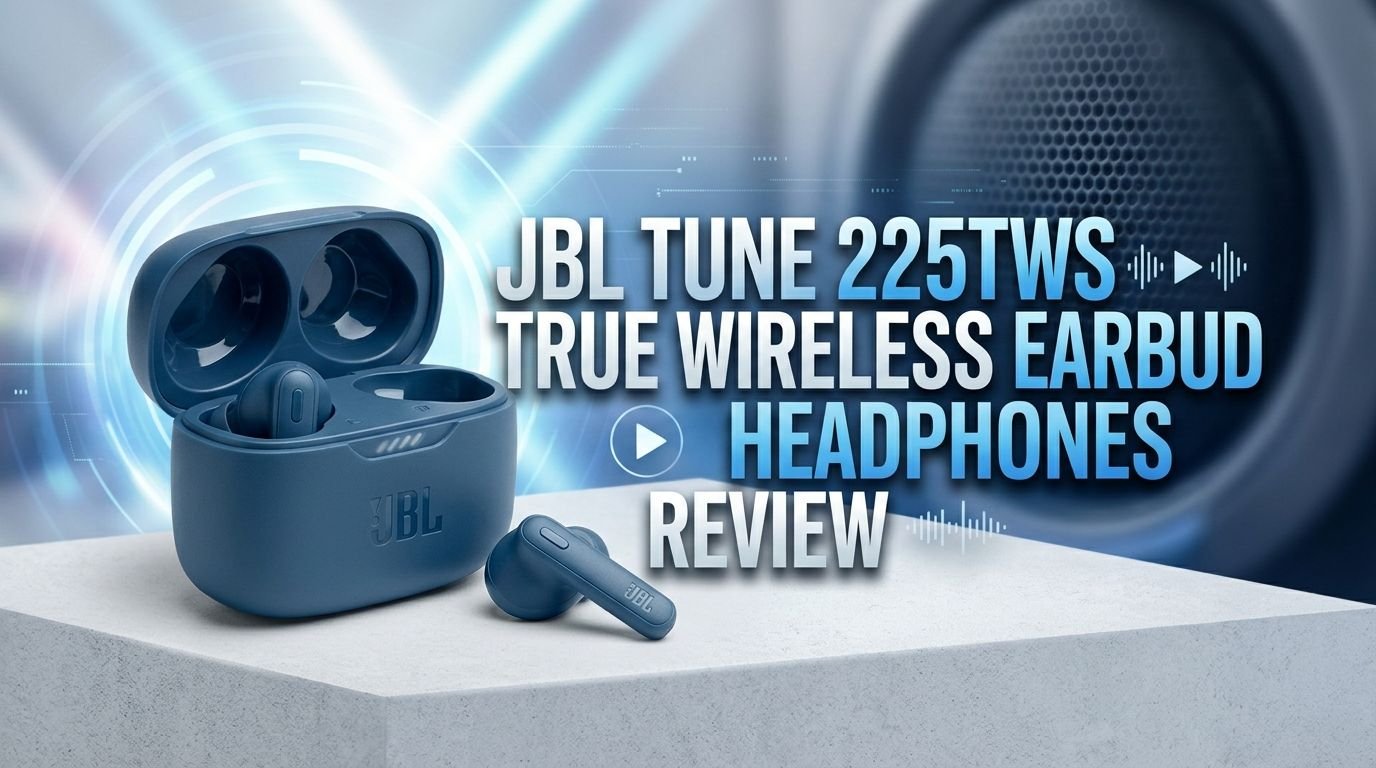
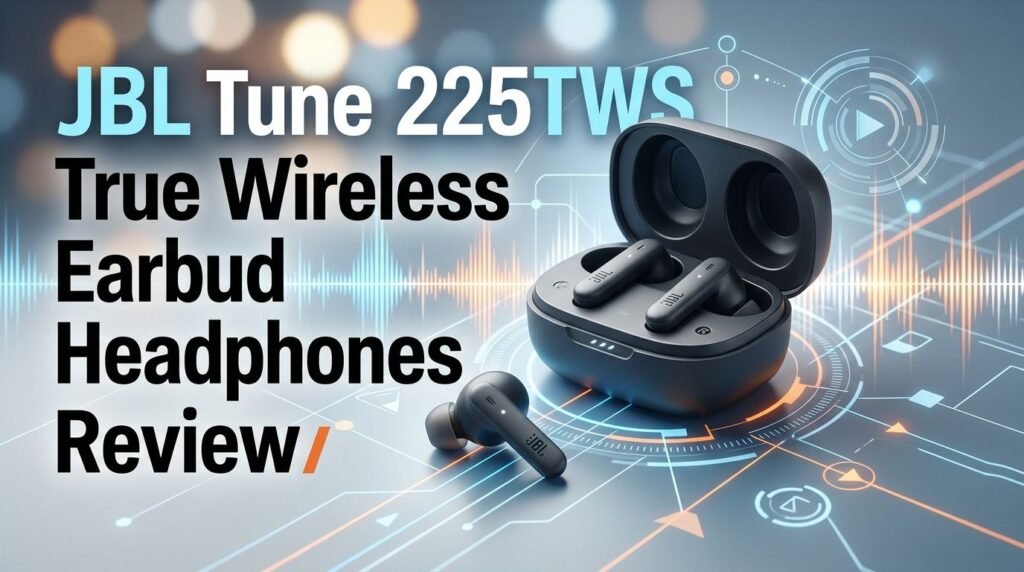
JBL Tune 225TWS True Wireless Earbud Headphones Review 2026
Are you thinking about picking up the JBL Tune 225TWS True Wireless Earbud Headphones but not sure if they hold up in 2026? You are not alone. Thousands of buyers search for honest feedback on these earbuds every single month.
JBL is a brand that has earned trust over the years with its signature Pure Bass sound. The Tune 225TWS arrived as a budget friendly option with an AirPods style design, promising clean audio and easy portability.
But here’s the thing. The wireless earbuds market has changed a lot. New models with active noise cancellation, longer battery life, and app support now sit at the same price point.
Key Takeaways:
- The JBL Tune 225TWS deliver clear, clean audio with JBL’s signature Pure Bass sound. The mids and highs sound bright and detailed. However, the sub-bass below 60Hz is almost missing due to the half in-ear design.
- Comfort is a strong point for casual use. The lightweight build (under 10 grams for both buds) and smooth matte plastic make these earbuds easy to wear for hours. They are not suitable for workouts or running because they tend to slip out with movement.
- Battery life falls short of modern standards. JBL advertises 5 hours per charge with 25 hours total using the case. Real world tests show closer to 4 hours and 18 minutes per charge, which is below average in 2026.
- There is no active noise cancellation, no app support, and no IP water resistance rating. These missing features are hard to overlook given the original asking price of around $100.
- Bluetooth 5.0 offers stable connectivity with a 10 meter range. The earbuds support SBC and AAC codecs. A slight audio delay during video playback on iOS is worth noting.
- The microphone works well for phone calls in quiet rooms. Voice clarity is decent, but quality drops in noisy environments. These are not ideal for frequent conference calls.


JBL Tune 225TWS True Wireless Earbud Headphones Overview
The JBL Tune 225TWS are true wireless earbuds that JBL released as part of its popular Tune series. They feature a half in-ear (semi in-ear) design that looks very similar to Apple AirPods. Long stems hang below each earbud, and the housing sits lightly in your ear without silicone tips pushing into the ear canal.
JBL packed these earbuds with 12mm dynamic drivers and a frequency response of 20Hz to 20,000Hz. The impedance sits at 32 Ohms. On paper, these specs are solid for a mid-range pair of wireless earbuds.
The earbuds come in several color options including black, white, blue, pink, and gray. Each pair ships with a compact charging case, a USB-C cable, and a user guide. The case holds a 410mAh battery and provides multiple recharges on the go.
One thing to keep in mind is the original retail price of around $99.95. In 2026, you can often find these earbuds at a significant discount, sometimes under $60. At that lower price, the value proposition changes quite a bit.
Design and Build Quality
The JBL Tune 225TWS have a clean, minimal design that appeals to fans of the classic earbud shape. The stem-style build gives them a modern look without feeling bulky. Each earbud weighs just about 4.9 grams, so they feel almost weightless in your ears.
The body uses matte plastic across most of the surface. This finish feels smooth and gives the earbuds a premium touch. There is a small silver ring around the housing that adds a bit of style. However, this silver section is slippery, which does not help with grip or stability.
The charging case matches the earbuds in design language. It has a thick metal hinge that feels durable. The lid clicks shut with a satisfying snap. The overall case size is compact enough to fit in a jeans pocket or a small bag compartment.
One downside is the lack of any water resistance rating. JBL did not certify these earbuds with an IP rating. This means sweat, rain, or accidental splashes could cause damage. For a brand as established as JBL, this omission is surprising.
Sound Quality and Audio Performance
Sound quality is the strongest selling point of the JBL Tune 225TWS. These earbuds deliver JBL’s Pure Bass sound, and the results are mostly positive. The mids are forward and bright, creating a sense of clarity across most genres. Vocals sound clean and present.
The highs have a nice shimmer to them. Cymbals and acoustic instruments come through with decent detail. However, there is a dip between 7kHz and 15kHz that takes away some sparkle from the upper treble range. This means certain high-frequency sounds may feel slightly muted.
The bass is where things get tricky. The half in-ear design cannot create a proper seal inside the ear canal. This limits the low-end extension. Sub-bass below 60Hz is essentially absent. If you listen to hip-hop, EDM, or bass-heavy pop, you will notice this gap.
That said, the mid-bass punch is decent when the earbuds sit snugly in your ears. Drums sound tight, and bass guitars carry enough weight to keep songs engaging. The soundstage is also slightly wider than average for earbuds in this price range. Imaging is good, so instruments feel placed in distinct positions around your head.
Top 3 Alternatives for JBL Tune 225TWS True Wireless Earbud Headphones
If the JBL Tune 225TWS do not check all your boxes, these three alternatives offer strong performance at similar or lower price points.
1. JBL Tune Buds offer active noise cancellation, Bluetooth 5.3, 4-mic technology, and up to 48 hours of total battery life. They are a direct upgrade from the 225TWS in almost every category.

2. Samsung Galaxy Buds FE provide active noise cancellation, a secure wing-tip fit, and excellent integration with Samsung devices. They also include a companion app for full EQ customization.
![Samsung Galaxy Buds FE True Wireless Bluetooth Earbuds, Comfort and Secure in Ear Fit, Auto Switch Audio, Touch Control, Built-in Voice Assistant, Graphite [US Version, 1Yr Manufacturer Warranty]](https://lijaai.blog/wp-content/plugins/aawp/public/image.php?url=YUhSMGNITTZMeTl0TG0xbFpHbGhMV0Z0WVhwdmJpNWpiMjB2YVcxaFoyVnpMMGt2TXpGbGNrdGxRMVJpUTB3dWFuQm58MTc4MTQ0MjQ3Ng=)
3. JBL Vibe Beam deliver JBL Deep Bass sound with Bluetooth 5.2, IP54 water and dust resistance, and up to 32 hours of total battery. They cost less than the Tune 225TWS and offer more features.

Comfort and Fit
The JBL Tune 225TWS score high on comfort for seated or low-movement activities. The lightweight plastic body rests gently in the ear. There are no silicone tips pressing against the ear canal, which many people find more comfortable for long listening sessions.
The matte plastic helps the earbuds grip the inner ear to a certain degree. You can wear them for two to three hours straight without feeling any discomfort or ear fatigue.
However, stability is a real concern. These earbuds slide out easily with head movements. Tilting your head to one side, looking down at your phone, or walking briskly can cause them to shift or fall out. Running or gym workouts are out of the question.
The overall dimensions are also slightly larger than expected. The stems are long, and the housing is wider than some competitors. People with smaller ears may find the fit less secure than those with average or larger ears.
If you plan to use these primarily at a desk, on a couch, or during a relaxed commute, the comfort is great. For anything active, look elsewhere.
Battery Life and Charging
JBL advertises 5 hours of playback per charge for the Tune 225TWS. The charging case adds roughly 20 more hours for a total of 25 hours. In real-world testing, the earbuds typically last closer to 4 hours and 18 minutes at 50% volume.
This battery performance is below the 2026 average. Many true wireless earbuds now offer 6 to 8 hours per charge with cases that deliver 30+ hours total. The Tune 225TWS feel outdated in this department.
The case charges through a USB-C port. A full charge from zero takes about 2 hours. There is a quick charge feature that gives you roughly one extra hour of playtime after just 15 minutes of charging. This is useful when you are in a rush.
Wireless charging is not supported. This is a notable gap, especially for users who rely on Qi charging pads for their phones and accessories. At the original $100 price point, wireless charging should have been standard.
Bluetooth Connectivity and Codecs
The JBL Tune 225TWS use Bluetooth 5.0 for wireless connectivity. This version provides stable connections with minimal dropouts during normal use indoors. You can expect reliable performance within the standard 10 meter (33 feet) range.
The supported codecs are SBC and AAC. AAC works well on iOS devices, delivering slightly better audio quality than SBC. On Android, the earbuds default to AAC, but SBC often performs more reliably on that platform.
One frustration is the audio latency during video playback. There is a noticeable lip-sync delay when watching YouTube or streaming video content. On Android, you can force the SBC codec to reduce this delay. On iOS, there is no fix, and you have to accept the slight mismatch.
Multipoint connection is not available. You cannot connect to two devices at the same time. However, the earbuds do support Dual Connect (mono mode), which lets you use either earbud independently. This is handy for phone calls or saving battery during lighter listening.
The pairing process is simple. Remove the earbuds from the case, and they enter pairing mode automatically the first time. Android users get a Google Fast Pair popup for quick setup.
Controls and Button Layout
The JBL Tune 225TWS use physical buttons instead of touch controls. Each earbud has a small button on the outer housing. You press these buttons to control playback, answer calls, and activate voice assistants like Siri or Google Assistant.
The button commands are basic. A single press on the right earbud pauses or plays music. A single press on the left earbud skips to the next track. A double press on either side activates the voice assistant. Holding for 4 seconds turns the earbuds on or off.
There is no volume control built into the earbuds. You must adjust volume on your connected device. This is a significant drawback for many users who prefer quick volume changes without reaching for their phone.
The buttons themselves are narrow and stiff. Pressing them can push the earbud deeper into your ear, which feels uncomfortable. Over time, you get used to the button placement. But the experience is far from smooth compared to modern touch controls.
There is also no companion app. You cannot remap button functions or customize EQ settings. What you get out of the box is all you get.
Microphone Quality for Calls
The Tune 225TWS feature a built-in microphone in each earbud. The long stem design helps position the mic closer to your mouth. This generally improves voice pickup compared to earbuds with shorter housings.
In quiet environments, the call quality is good. Your voice comes through clear and distinct. The person on the other end can understand you without asking you to repeat yourself.
However, there are some downsides. The voice sounds slightly thin and lacks the fullness you might hear from earbuds with multi-mic setups. In noisier areas, background sound leaks into the call, and some static distortion can appear.
For casual personal calls and short work check-ins, these earbuds work fine. For lengthy video conferences or professional calls, you may want earbuds with better noise isolation and multi-mic arrays. The JBL Tune Buds or Samsung Galaxy Buds FE handle calls much better in noisy settings.
Noise Isolation Performance
The JBL Tune 225TWS offer very little passive noise isolation. This is a direct result of the half in-ear design. Without silicone or foam tips creating a seal inside the ear canal, ambient sound passes through freely.
The difference between wearing the earbuds and not wearing them is minimal. You will hear conversations, traffic, and office noise almost as clearly with the earbuds in. This makes them impractical for noisy commutes, busy offices, or airplane travel.
On the flip side, this open design can be a safety advantage. You stay aware of your surroundings while listening to music or podcasts during a walk. Some users actually prefer this level of awareness, especially in urban environments.
There is no active noise cancellation (ANC) on these earbuds. In 2026, ANC has become standard even on earbuds priced under $50. The lack of ANC on the Tune 225TWS feels like a major oversight, particularly at their original retail price.
JBL Tune 225TWS vs Apple AirPods
Many buyers compare the JBL Tune 225TWS to Apple AirPods because of their similar design. Both feature a half in-ear shape with long stems. Both skip silicone tips and rely on a universal fit.
In terms of sound, the two are surprisingly close. The JBL Tune 225TWS have slightly more depth in the mid-bass. The AirPods lean a bit warmer with smoother mids. For most casual listeners, the difference is hard to notice.
The price gap is the biggest factor. AirPods cost significantly more than the Tune 225TWS, especially at current discounted rates. If you do not need the Apple ecosystem integration, the JBL earbuds deliver comparable audio at a fraction of the cost.
AirPods win on features like seamless iOS integration, the H1 chip for instant pairing, and spatial audio support. The Tune 225TWS cannot match these software advantages. But for pure sound quality per dollar spent, the JBL holds its own.
Who Should Buy the JBL Tune 225TWS?
These earbuds work best for a specific type of user. If you prefer the open feel of classic earbuds without silicone tips, the Tune 225TWS provide good comfort. They sit lightly in the ear and cause zero fatigue during long listening sessions.
Casual listeners who enjoy music at home, in an office, or during light commuting will appreciate the clean sound. The JBL Pure Bass tuning keeps things lively without distortion at moderate volumes.
People who want a budget friendly AirPods alternative will find value here, especially at the discounted prices available in 2026. The sound, design, and build quality punch above their current street price.
However, active users, frequent travelers, and remote workers should look at other options. The poor fit stability, missing ANC, limited battery life, and no water resistance make these earbuds unsuitable for demanding daily use.
Pros and Cons of JBL Tune 225TWS
Every product has strengths and weaknesses. Here is a clear breakdown for the JBL Tune 225TWS.
Pros: The sound quality is clean and detailed with a good soundstage. The lightweight design feels comfortable for hours. The matte plastic build looks and feels premium for the price. USB-C charging with quick charge support is convenient. Multiple color options give you choices.
Cons: The sub-bass is nearly absent due to the open design. Battery life falls short at just over 4 hours per charge. No water resistance rating limits safe usage. No ANC and no app support means no customization. The physical buttons are stiff and uncomfortable to press. Fit stability is poor during any movement.
Are the JBL Tune 225TWS Worth It in 2026?
The honest answer depends on your priorities and how much you pay. At the original $100 price, these earbuds are hard to recommend. The missing features and average battery life do not justify that cost in a market filled with better options.
At the current discounted price of around $50 to $60, the picture changes. The sound quality holds up well. The comfort is great for seated use. The JBL brand name carries a track record of reliability and audio expertise.
If you find them at a deep discount and you value clean audio and comfortable half in-ear design, the Tune 225TWS can still be a decent purchase. Just go in with realistic expectations about battery life, noise isolation, and missing features.
For most buyers in 2026, the JBL Tune Buds or JBL Vibe Beam offer far more features at competitive prices. These newer models include ANC, better battery life, water resistance, and app support. They represent where JBL has moved as a brand.
Final Verdict
The JBL Tune 225TWS True Wireless Earbud Headphones had a good run. They deliver enjoyable sound quality with JBL’s Pure Bass signature. The design is sleek and the comfort is solid for low-activity listening.
But in 2026, the competition has left these earbuds behind in key areas. The lack of ANC, app support, water resistance, and adequate battery life makes them a tough sell at full price. At a discount, they still offer decent value for casual users who want a clean-sounding, no-fuss pair of earbuds.
If sound quality and comfort matter most to you and you can live without extra features, the JBL Tune 225TWS remain a respectable budget pick. For everyone else, newer JBL models and competing brands deliver a much better overall package.
Frequently Asked Questions
Do the JBL Tune 225TWS have active noise cancellation?
No. The JBL Tune 225TWS do not include active noise cancellation. They also offer very little passive noise isolation because of the half in-ear design. If you need ANC, consider the JBL Tune Buds or Samsung Galaxy Buds FE instead.
Are the JBL Tune 225TWS waterproof?
No. The JBL Tune 225TWS have no IP rating for water or dust resistance. They are not waterproof or splash-proof. Avoid using them during workouts with heavy sweat or in rainy conditions.
How long does the JBL Tune 225TWS battery last?
JBL rates the battery at 5 hours per charge with 25 total hours using the case. Real-world testing shows the earbuds last about 4 hours and 18 minutes at 50% volume. The case adds roughly 20 more hours.
Can I use one JBL Tune 225TWS earbud at a time?
Yes. The JBL Tune 225TWS support Dual Connect mode. You can use either the left or right earbud independently. This is useful for phone calls or when you want to save battery.
Do the JBL Tune 225TWS work with both iPhone and Android?
Yes. These earbuds are compatible with both iOS and Android devices. They connect through Bluetooth 5.0 and support SBC and AAC codecs. Android users also benefit from Google Fast Pair for quick setup.
Is there a JBL app for the Tune 225TWS?
No. The JBL Tune 225TWS do not have companion app support. You cannot adjust EQ settings, remap buttons, or update firmware through an app. All controls are limited to the physical buttons on the earbuds.